
Islamabad: Pakistan's federal government has introduced a sweeping new regulatory framework for foreign media operating in the country, making it mandatory for all accredited international journalists to obtain government clearance before travelling outside three designated cities for any reporting work. The Foreign Media Facilitation Guidelines, 2026, issued by Pakistan's Ministry of Information and Broadcasting, lay down a comprehensive framework for the registration, accreditation and movement of foreign media organisations and journalists operating in the country.
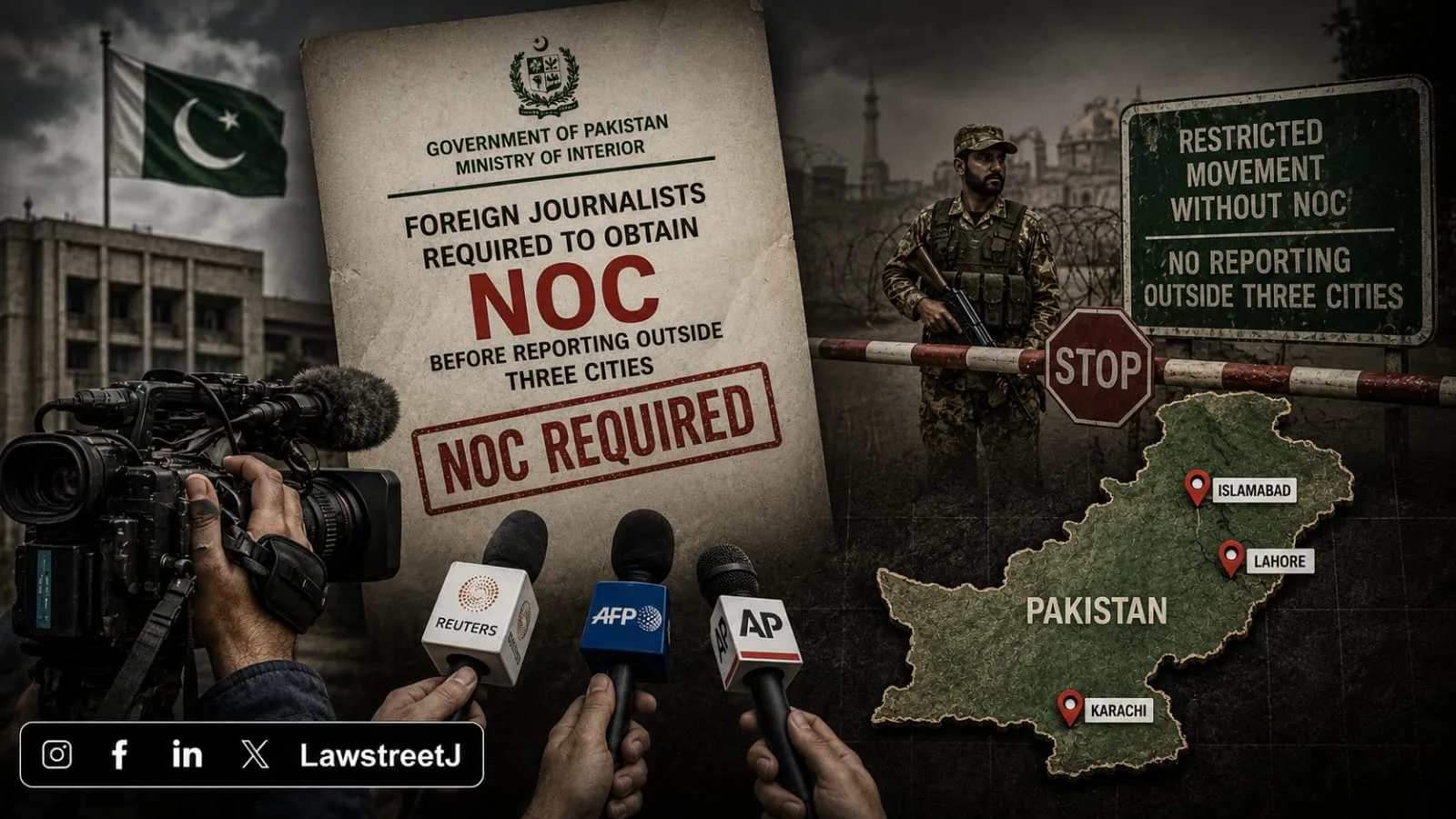
All foreign journalists, media professionals and other personnel already registered or accredited with the Ministry's External Publicity Wing will now be required to secure a mandatory No Objection Certificate from the EP Wing before travelling to any other city to produce news content, stories, videos, films, documentaries or social media content for official use. The guidelines exempt Islamabad, Lahore and Karachi from the NOC requirement.
The five-page policy, issued by the Ministry of Information and Broadcasting's External Publicity Wing, significantly expands government oversight of foreign media operations in the country. The new framework applies to print, electronic, digital, social media, and web-based international media platforms.
The guidelines were issued at a moment of acute international attention on Pakistan's handling of the ongoing civil unrest in Pakistan-occupied Jammu and Kashmir, a direct and documented connection that press freedom organisations have drawn between the timing of the regulations and the government's stated objective of controlling information flows from the region.
What the Guidelines Require: Registration, Accreditation and Movement Controls

The new framework is structured across three broad areas: who must register, what accreditation process they must follow, and where they are permitted to travel without prior government approval.
Issued under the Foreign Media Facilitation Guidelines, 2026, the policy applies to all international print, electronic, digital and social media organisations operating in Pakistan, along with their journalists, freelancers, fixers, production staff and other associated personnel.
Under the new guidelines, every Pakistan-based journalist working for a foreign media outlet must register through the EP Wing's online portal. Pakistani journalists living abroad are also required to submit applications through the online portal as well as the nearest Pakistani embassy or high commission.
Pakistani journalists residing abroad and contributing to foreign media must also apply through the same portal and, at the same time, route their case through the nearest press attaché, counsellor or minister posted in Pakistan's missions, consulates, high commissions or embassies.
The geographical boundaries of the new rules are precisely defined. For leisure travel to Abbottabad and Murree, journalists may obtain an NOC from the EP Wing upon request, with approvals expected within three working days. Every other city and district in Pakistan including Peshawar, Quetta, Multan, Faisalabad, and crucially the entirety of Azad Kashmir and Gilgit-Baltistan, requires formal clearance before a foreign journalist can travel there to conduct any form of reporting.
Registered or accredited foreign media personnel will need prior EP Wing approval before conducting official reporting, documentaries, films, or social media productions anywhere outside Islamabad, Lahore, and Karachi. The only relaxation applies to private or recreational visits to Abbottabad and Murree, where NOCs may be issued within three working days upon request.
On the accreditation side, the guidelines introduce a formal tiered system. Permanent press accreditation will remain valid for one year, while foreign journalists visiting Pakistan can receive temporary accreditation for up to three months after submitting the required documents online. QR-enabled accreditation cards are to be issued, creating a digitally verifiable identity system for all credentialled foreign media personnel in the country.
The PoJK Connection: Why the Timing Matters
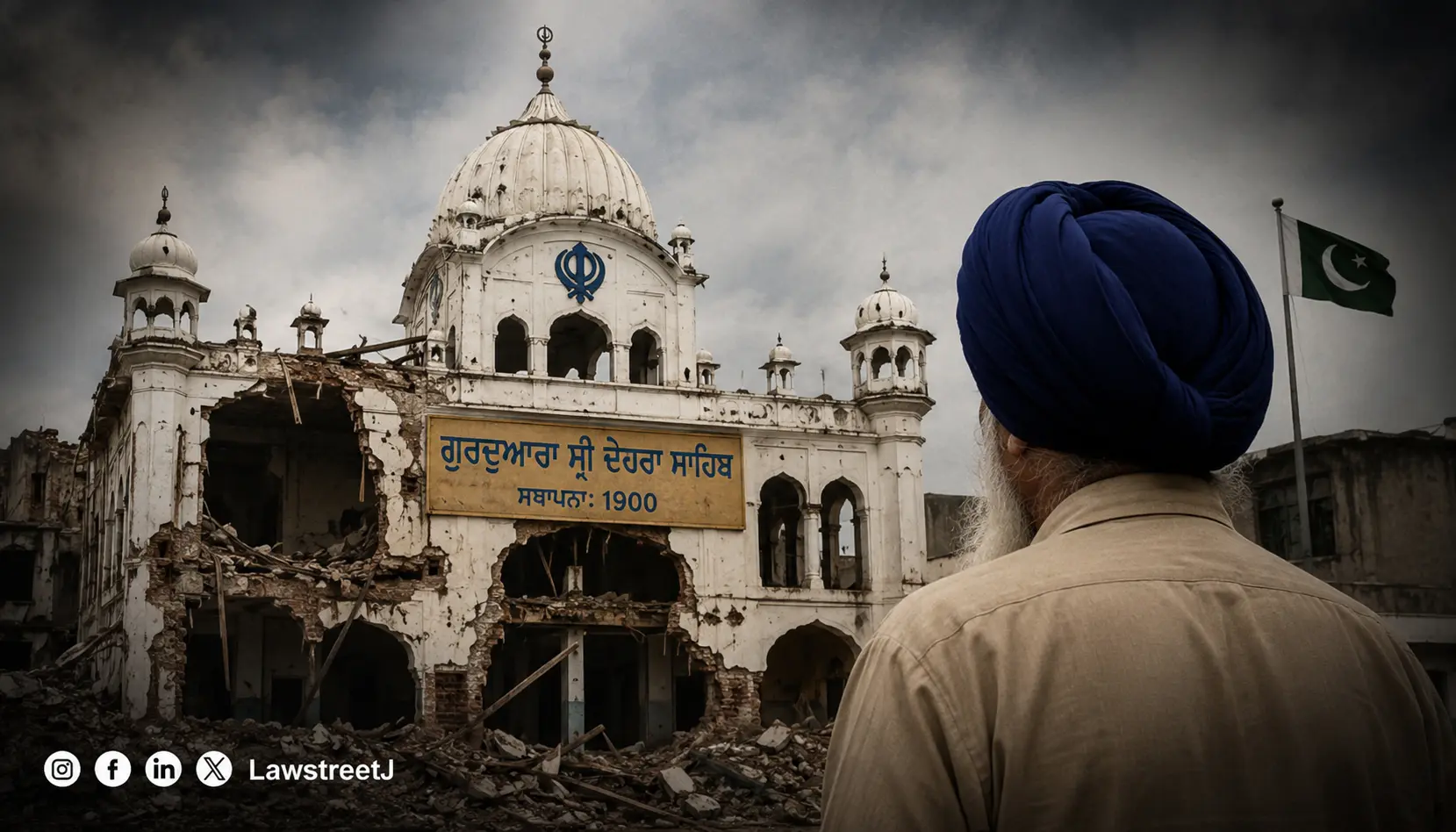
The Foreign Media Facilitation Guidelines, 2026 were not issued in a neutral political environment. They arrived during one of the most serious episodes of civil unrest in Pakistan-occupied Jammu and Kashmir in decades, an unrest that has seen over 40 civilian deaths, mass arrests, and consistent allegations of security forces firing on unarmed protesters across multiple districts including Muzaffarabad, Rawalakot, and Siraha.
The restrictions come amid heightened scrutiny over media access following protests in Pakistan-occupied Jammu and Kashmir, with human rights groups expressing concern. Amnesty International and CPJ Asia have called for independent investigations into alleged restrictions and excessive force against demonstrators.
The practical effect of the new NOC requirement is that any foreign journalist who wishes to travel to PoJK, a territory that is not one of the three exempt cities, must first obtain government permission to do so. This places the government of Pakistan in the position of acting as the gatekeeper for all formal international media coverage of the unrest in the region.
This is consistent with a pattern of information restriction that Pakistan has pursued in parallel with its crackdown in PoJK. In the days preceding the issuance of these guidelines, multiple digital news websites had been blocked within Pakistan for covering the protests, and international broadcaster Al Jazeera English had become inaccessible in parts of the country. The External Publicity Wing's new travel clearance mechanism adds a physical dimension to those digital restrictions, requiring government approval not just for what is published, but for where a journalist can physically go to gather information.
What Press Freedom Organisations Are Saying
The new guidelines have drawn immediate concern from press freedom and human rights organisations, though a formal coordinated response from the international journalist community had not been issued as of the time of publication.
Amnesty International and CPJ Asia have called for independent investigations into alleged restrictions and excessive force against demonstrators in PoJK. The Committee to Protect Journalists has a documented record of raising concerns about Pakistan's treatment of journalists, particularly in conflict-affected and sensitive border areas.
The regulations raise press freedom concerns. The central issue is structural: an NOC requirement places the burden of proof on the journalist to demonstrate to the government that their travel serves a legitimate purpose and it gives the government the legal authority to deny that clearance without explanation or appeal mechanism. There is no publicly stated timeline for NOC processing beyond the three-day window for recreational trips to Abbottabad and Murree, and the guidelines do not specify what grounds the EP Wing may use to reject an application for a reporting assignment.
The absence of a clear appeals process and the breadth of the geography covered essentially all of Pakistan outside three cities, means that the new framework gives the Ministry of Information and Broadcasting effective discretionary control over where international journalism can take place within the country's territory.
Pakistan's Pattern of Media Restriction
The Foreign Media Facilitation Guidelines, 2026 are the latest in a series of regulatory steps Pakistan has taken in the information domain over the past several years. Pakistan has consistently ranked among the more restrictive environments for press freedom in South Asia, with the 2025 and 2026 editions of global press freedom indices placing it in the lower quartile globally.
Previous restrictions have included limitations on the movement of foreign journalists to tribal districts and FATA, restrictions on access to Balochistan, and periodic suspension of internet and mobile services during periods of civil unrest. The new guidelines formalise and expand what had previously been enforced informally translating ad hoc restrictions on journalist movement into a standing legal requirement with bureaucratic machinery to enforce it.
The inclusion of social media content producers within the scope of the guidelines is particularly significant. By explicitly including journalists who produce content for web-based platforms and social media outlets, the Ministry of Information and Broadcasting has extended the NOC requirement beyond the traditional press corps to encompass the full range of modern digital journalism including video journalists, documentary filmmakers, and content creators who report through online channels.
As the situation in PoJK continues and international scrutiny of Pakistan's conduct in the territory grows, the Foreign Media Facilitation Guidelines, 2026 will increasingly function not merely as a regulatory framework for media management, but as a documented element of Pakistan's information strategy in one of its most politically sensitive territories.