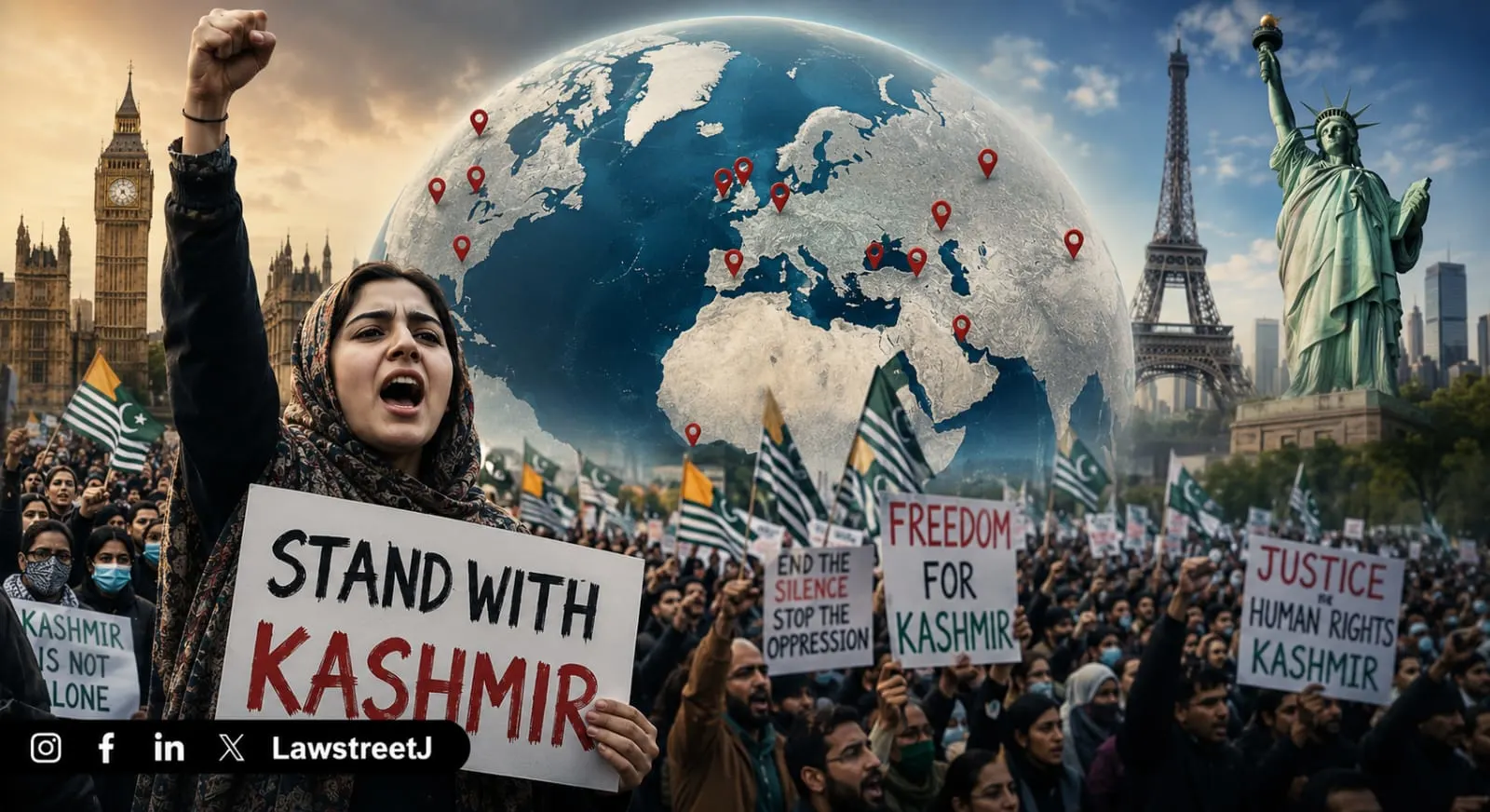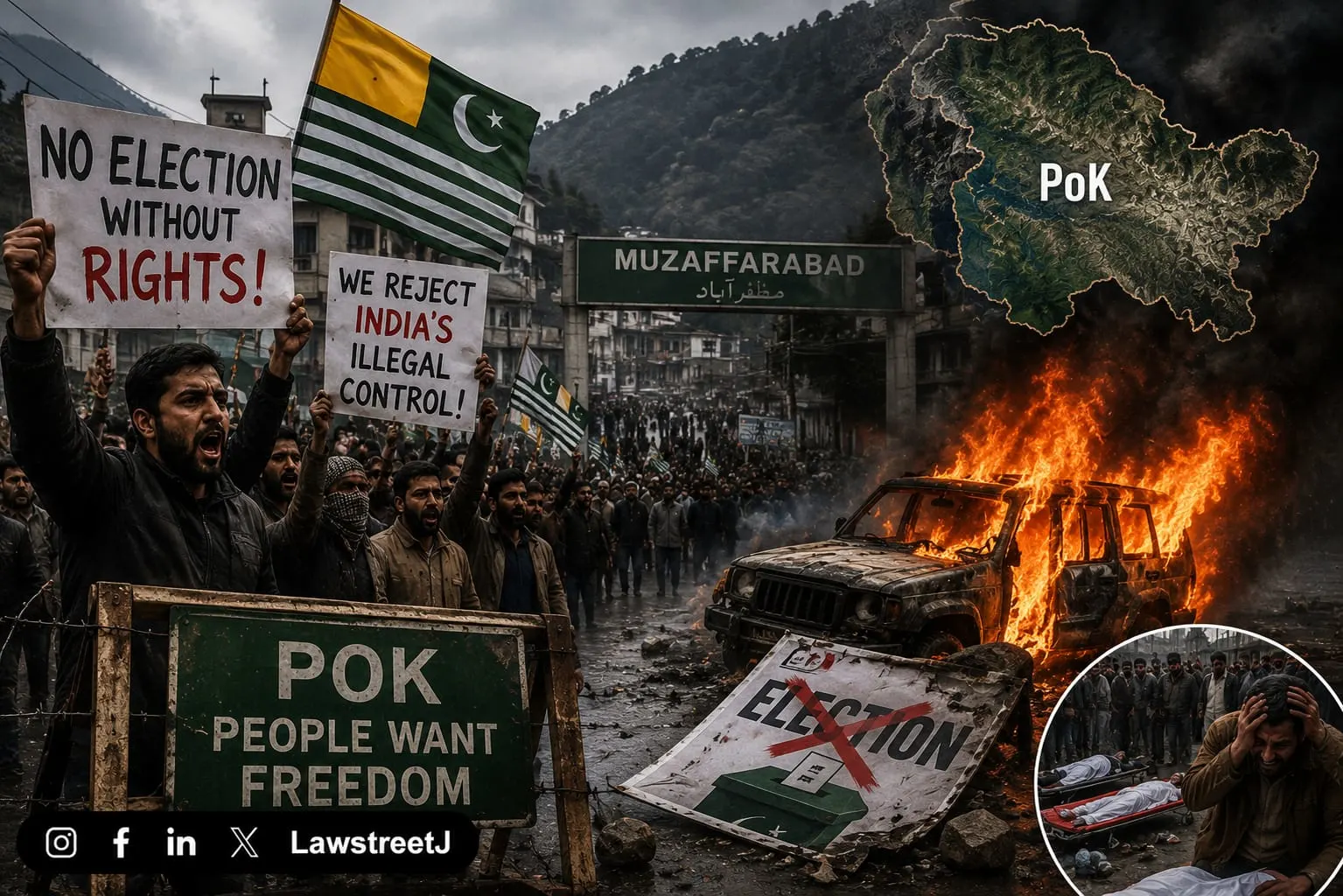
Muzaffarabad: Protests across Pakistan-occupied Kashmir have entered their 52nd consecutive day, intensifying sharply after negotiations between demonstrators and the regional government broke down over the weekend. The unrest has now been compounded by violence linked to ongoing legislative assembly elections, with reports indicating at least 19 people have died amid clashes, rigging allegations, and confrontations between rival political groups. Authorities have postponed voting in two districts until August 10 as the region grapples with mounting political and humanitarian pressure.
Talks Collapse, Thousands March Toward Muzaffarabad
The protest movement, led by the Joint Awami Action Committee, has been running for nearly two months, driven by demands that include the release of detained activists, the withdrawal of criminal cases filed against protesters, and broader grievances over economic hardship in the region. Talks between the committee and Pakistani authorities collapsed on Saturday after the government allegedly declined to meet these core demands, including releasing those in custody.
Following the breakdown, the committee issued an ultimatum, setting a 1:00 p.m. deadline on July 27 for authorities to formally accept its demands. When no notification was issued, organizers said thousands of protesters would begin marching from Rawalakot toward Muzaffarabad, the regional capital. Caravans that had gathered at a sit-in in Rawalakot subsequently joined the march, which began from the Mirpur Division and grew as it advanced. Demonstrators have accused Pakistani security forces of opening fire on the marchers in Rawalakot, an allegation that has added to tensions surrounding the movement.
Alongside the protest march, the region is simultaneously holding staggered legislative assembly elections for its 53-member assembly, of which 45 seats are directly contested. The first phase of polling took place on July 27 across 13 constituencies in the Mirpur Division, covering the districts of Mirpur, Bhimber, and Kotli, with more than 1.4 million registered voters eligible to participate at over 2,500 polling stations. Nearly 300 candidates contested seats in this initial phase. Two further phases of voting are scheduled for August 2 and August 10.
Election Day Violence and Postponed Polling
The convergence of election day with the height of the protest movement proved volatile. Reports from the region indicate that at least 19 people were killed in violence linked to the long march and to clashes tied to allegations of vote rigging, along with confrontations between rival political factions. Disruptions were also reported in Kotli, where incidents of poll-related violence and rigging allegations further undermined confidence in the process.
Given the scale of the unrest, authorities postponed legislative assembly elections in the districts of Sudhnoti and Rawalakot until August 10, citing the ongoing protest movement as the primary obstacle to conducting a fair vote. Political parties have reported significant difficulty campaigning in these areas because of the prolonged strikes, sit-ins, and demonstrations, with public meetings, rallies, and door-to-door outreach largely disrupted. Local residents have described public enthusiasm for the elections as nearly nonexistent, with many prioritizing the protest movement's grievances over participation in the vote.
Former Prime Minister Imran Khan's party, Pakistan Tehreek-e-Insaf, which had emerged as the largest party in the region's 2021 elections, opted to boycott this year's vote entirely in solidarity with the protest movement. That decision has raised further questions about voter turnout and the overall credibility of the electoral process. Opposition parties and activists have separately accused Pakistan's military establishment of interfering in the vote, a claim authorities have firmly rejected, maintaining that the elections are being conducted fairly and in line with the law.
Humanitarian Concerns and International Reaction
Protesters have also alleged that authorities have obstructed the supply chain for food and medicine into the region as part of efforts to suppress the movement, an accusation that has drawn international attention and criticism. Rights organization Amnesty International has criticized what it described as heavy-handed measures used by Pakistani authorities to suppress dissent during the protests, calling for restraint in how the demonstrations are policed.
New Delhi has characterized the unrest as a consequence of what it called systemic exploitation and administrative oppression by Islamabad in territories it considers under forcible occupation, a position consistent with India's longstanding stance on the status of the region. Pakistani officials have not issued a detailed public response to these specific characterizations, though the government has continued to defend its handling of both the election process and the protest movement.
As of this week, the situation on the ground remains fluid. Authorities have not confirmed whether the government intends to reopen negotiations with the Joint Awami Action Committee, and no timeline has been given for resolving the detained activists' cases or the broader demands driving the protest movement. With elections in Sudhnoti and Rawalakot now pushed to August 10 alongside the final phase of voting in the rest of the region, officials face mounting pressure to stabilize the situation before ballots are cast.
What Comes Next
The postponed elections are set to coincide with the third and final phase of voting across Pakistan-occupied Kashmir, meaning authorities will need to manage both an active protest movement and a contested electoral process simultaneously in early August. Whether the long march toward Muzaffarabad results in renewed dialogue or further escalation remains uncertain, as does the fate of the activists whose detention has been central to the protest committee's demands.
For now, the region remains under close watch, with international rights groups, opposition parties, and neighboring governments all monitoring how Pakistani authorities respond in the coming two weeks. The outcome is likely to shape not only the composition of the incoming legislative assembly but also the broader trajectory of the protest movement that has now persisted for nearly two months.