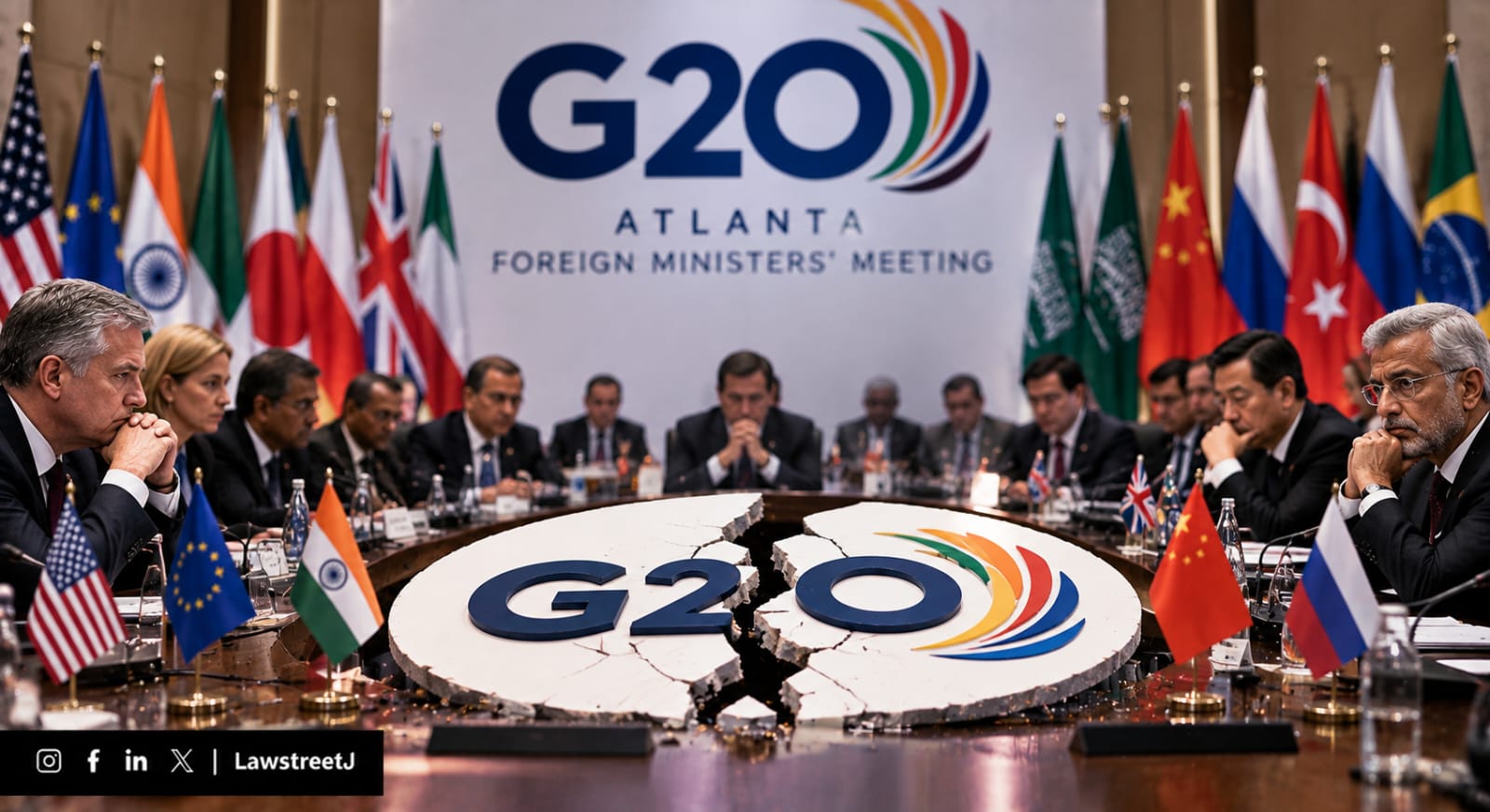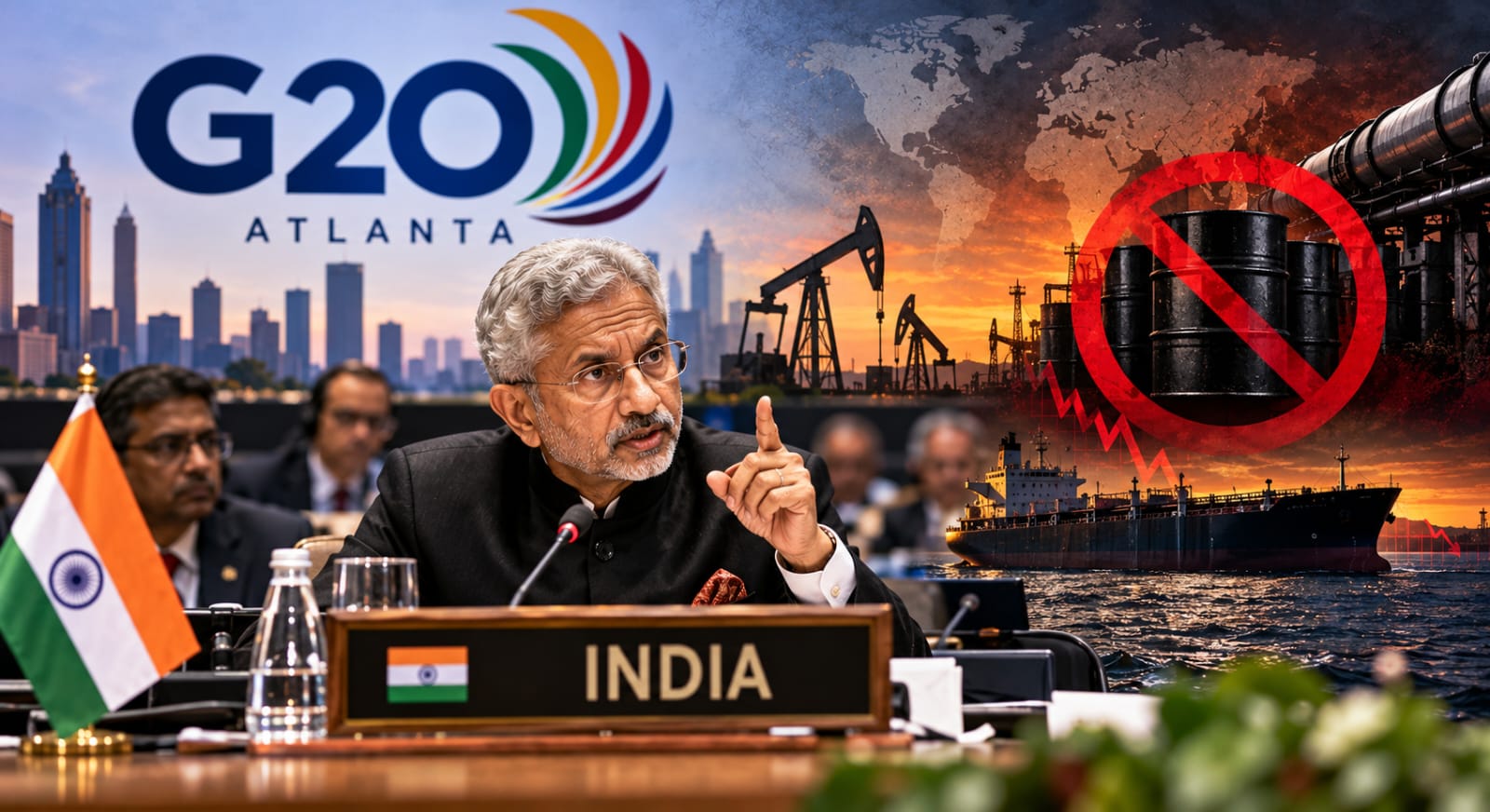

Atlanta — India's External Affairs Minister S. Jaishankar strongly criticised disruptions to global oil supplies through sanctions and maritime chokepoints during the G20 Foreign Ministers' Meeting in Atlanta on Friday, October 30, 2026, calling deliberate attacks on energy trade and infrastructure a "calculated strategy to hold prices hostage."
Speaking at the meeting convened by US Secretary of State Marco Rubio, Jaishankar emphasised that continuous distortions of energy markets through obstacles, sanctions and chokepoints were happening with increasing frequency, greater complexity and wider impact. He said the world was staring at an energy crisis that was not one of production, but of "unpredictability and disruption, unaffordable costs, and challenges of access."
Jaishankar told his counterparts that "the G20 must display both understanding and leadership to keep energy markets open and predictable." He also stated that there appeared to be little regard for the predicament of low-income countries in the current handling of energy market disruptions, a point he said he underscored during the session.
Proposals Put Forward by India

Beyond criticising market disruptions, Jaishankar laid out a series of constructive proposals. He said the G20 should widen access to finance and advance the development of energy storage, small modular reactors, green hydrogen and biofuels, positioning these technologies as part of the solution to the volatility he described.
He also reiterated that India's National Mission on Critical Minerals spans the entire value chain, from exploration to recycling, and announced that India has proposed a G20 Critical Minerals Circularity Initiative, aimed at promoting recycling and reuse of critical minerals essential to clean energy technologies and advanced manufacturing.
The Press Trust of India noted that Jaishankar's remarks came amid American sanctions on the sale of Iranian oil, disruptions to energy supplies from West Asia, and the recent decision by the United States to lift sanctions on the sale of Russian diesel. Available reporting on his speech does not indicate that Jaishankar named the United States or any other specific country in his remarks, instead framing his criticism in general terms around sanctions, chokepoints and deliberate attacks on energy trade and infrastructure.
The wider context includes the ongoing US-Israeli war against Iran, which began in February 2026 and has contributed to disruptions in energy flows from West Asia, as well as heightened global energy price volatility reflected in recent coordinated emergency oil reserve releases by G7 nations.
India, which imports the large majority of its crude oil needs, has been among the countries most exposed to such disruptions, and Prime Minister Narendra Modi said in March 2026 that India's government was closely monitoring supply-chain disruptions caused by the West Asia conflict and that India should not remain solely dependent on foreign sources of energy.
India-US Context
Jaishankar's remarks were delivered against a backdrop of intensive India-US diplomatic engagement. He held a bilateral meeting with Secretary Rubio on the sidelines of the Atlanta G20 meeting, following Rubio's earlier official visit to India, which included talks in Mumbai on October 20, 2026, covering trade, energy, technology and defence cooperation. Rubio said at the time that the two sides were "very, very close" to concluding a bilateral trade agreement.
Commerce Minister Piyush Goyal had said on October 15 that the first tranche of the bilateral trade agreement had been finalised and was undergoing legal drafting. India has previously, including during the 2025 tariff dispute with the United States, consistently defended its energy sourcing decisions as grounded in strategic autonomy and the need to ensure affordable energy for its 1.4 billion citizens.
The Wider G20 Meeting
The remarks were made at the same Atlanta ministerial that ended without consensus on key issues, with Rubio releasing a chairman's statement rather than a joint communiqué amid divisions over Russia's war in Ukraine, the US-Israeli war against Iran, US tariffs and China's actions in the South China Sea. At the same meeting, Jaishankar separately called for diplomacy over military solutions and warned that tactical calculations should not lead countries to overlook the dangers of terrorism.
Energy-related sanctions of the kind referenced in the debate generally fall into two legal categories. Multilateral sanctions are imposed through the UN Security Council under Chapter VII of the UN Charter and are binding on all member states. Unilateral sanctions, by contrast, are imposed by individual countries or blocs under domestic law, such as the International Emergency Economic Powers Act in the United States, and do not carry binding force under international law for other states, though they can have extraterritorial economic effects through secondary sanctions provisions that penalise third-country entities for dealings with sanctioned parties.
India has historically maintained that it recognises only UN-mandated sanctions as legally binding, a position that underpins its stated reasoning for continuing energy purchases from sanctioned suppliers.
Maritime chokepoints, narrow passages such as the Strait of Hormuz, through which a substantial share of global oil trade passes, are governed by the freedom of navigation and transit passage provisions of the UN Convention on the Law of the Sea (UNCLOS), which guarantee the right of ships and aircraft of all states to pass through such straits. Jaishankar's reference at the G20 to freedom of navigation and attacks affecting civilian shipping aligns with this legal framework, which obliges states bordering straits used for international navigation not to impede transit passage.
The G20 itself is an informal intergovernmental forum without binding legal authority, meaning that its statements, including any commitments on energy market stability or critical minerals cooperation, are political declarations rather than enforceable obligations.