Riyadh / Singapore | Saudi Arabia's state oil producer Saudi Aramco announced on Monday its largest reduction to official selling prices for Asian buyers in at least 26 years, cutting the price of its flagship Arab Light crude by $11 per barrel for August deliveries. The reduction brings Arab Light to a price of $1.50 per barrel below the average of Oman and Dubai benchmark quotes, the first time Aramco has sold the grade at a discount to the regional benchmark since its last two price wars in 2020 and 2015.
The cut, which surprised analysts who had forecast a reduction of around $8 per barrel in a Bloomberg survey, reflects a fundamental shift in global oil market dynamics triggered by the US-Iran peace agreement signed in June, the reopening of the Strait of Hormuz, the resumption of Gulf crude exports, and a structural surge in supply from OPEC+ members that is now overwhelming Asian refiners' appetite for oil.
Aramco also cut the official selling prices of its four other crude grades, Arab Extra Light, Arab Medium, Arab Heavy, and Arab Super Light, by $11 per barrel each for August, indicating that the price adjustment was not a targeted response to conditions affecting a single grade but a broad strategic recalibration of Saudi Arabia's position in its most important market.
The Cause: How the Iran War and Its End Transformed Oil Markets
To understand why Saudi Arabia has made its biggest price cut in a generation, the sequence of events since February 2026 must be understood.
On February 28, 2026, the United States and Israel launched military strikes against Iran, targeting nuclear facilities and military infrastructure. The outbreak of hostilities prompted Iran to significantly restrict traffic through the Strait of Hormuz, the narrow waterway between the Persian Gulf and the Gulf of Oman through which approximately 20 percent of the world's daily oil supply normally flows. The effective blockade of Hormuz sent Brent crude prices surging. Saudi crude prices hit all-time highs in May, and the global energy market was in a state of severe disruption, with tanker operators forced to divert shipments through longer, more expensive routes.
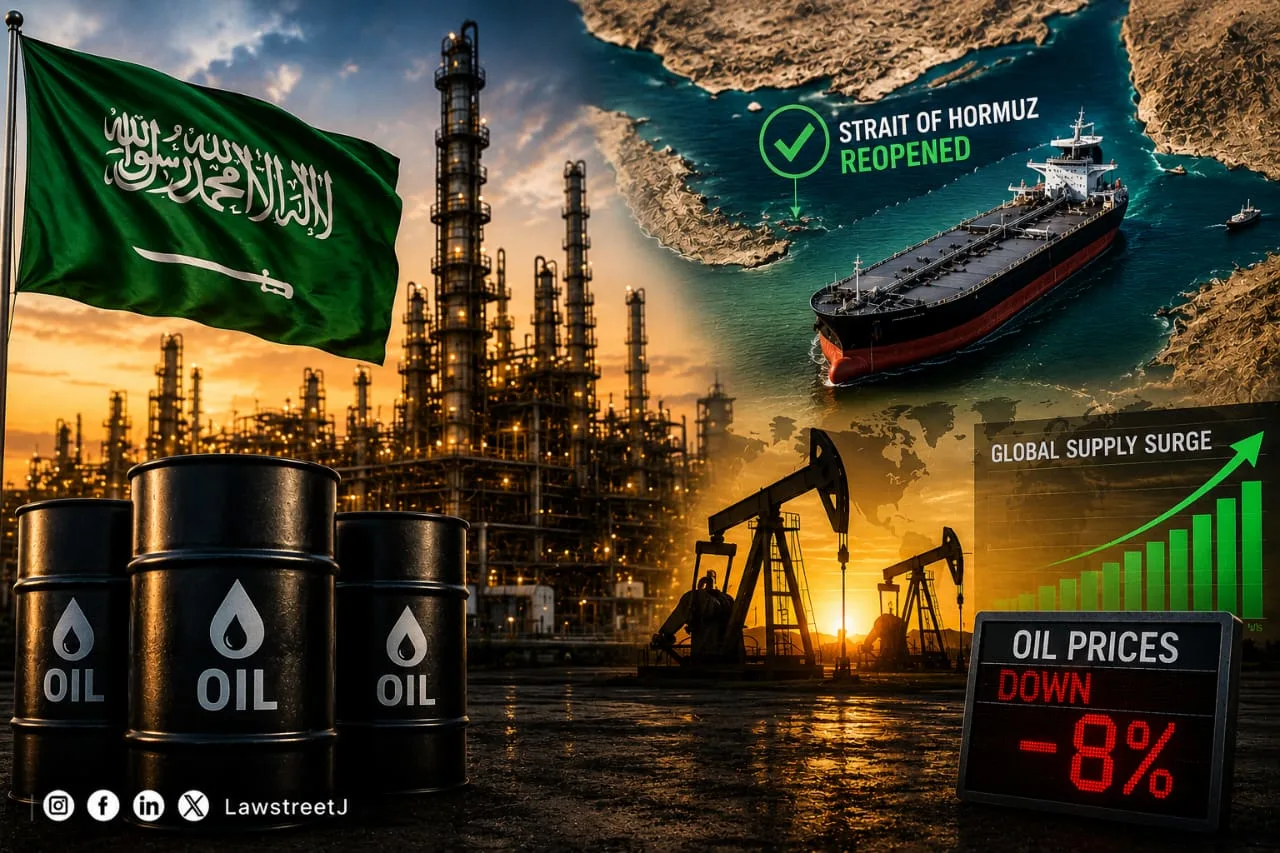
The situation began to change in June. The United States and Iran signed a preliminary memorandum of understanding on June 18, ending active hostilities and committing both sides to a 60-day negotiating window. One of the first practical consequences of the deal was the lifting of the US naval blockade of key Iranian ports in the Persian Gulf and the resumption of shipping through the Strait of Hormuz. Major shipowners began moving vessels through the strait from June 18 onwards, the first time significant commercial traffic had transited the waterway freely in months.
The effect on oil prices was immediate and dramatic. Brent crude fell by almost 8 percent in the days following the deal announcement. By the time Aramco published its August price list on Monday, Brent was trading at approximately $72 per barrel, almost exactly where it had been on February 28, before the war began. In a matter of weeks, the conflict premium that had lifted global oil prices had unwound almost completely.
A Supply Wave Building From Multiple Directions
The Hormuz reopening did not occur in a vacuum. It arrived simultaneously with a broader build-up in global oil supply from several directions at once.
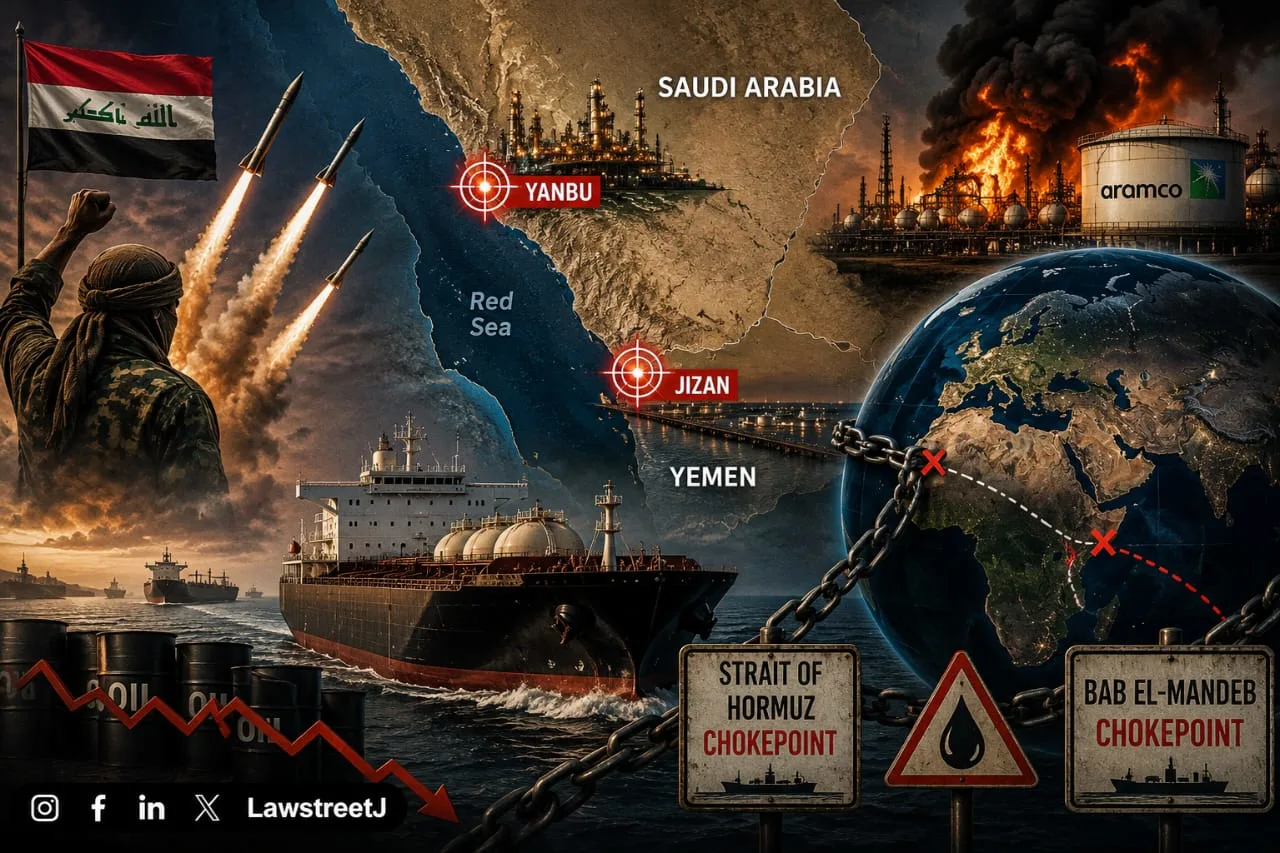
Saudi Aramco had during the conflict period rerouted the majority of its crude exports away from its primary Persian Gulf terminal at Ras Tanura, which had been affected by the disruption to Hormuz traffic, to its Red Sea facility at Yanbu. With the reopening of Hormuz, Aramco resumed exports from Ras Tanura and had, by the time the August price list was published, increased its Persian Gulf shipments to approximately 90 percent of pre-war levels.
Iraq, Kuwait, and Abu Dhabi's national oil company ADNOC similarly resumed full exports from their Gulf terminals. These Gulf producers had been given higher production quotas during the war period by the OPEC+ group, a largely symbolic move at the time, given that Hormuz closures had severely limited their ability to export, but now that shipping had been restored, those higher quotas translated directly into additional barrels reaching the market. OPEC+ also agreed to another modest output increase for August at its most recent meeting, signalling that the group was prepared to allow production to rise rather than cut supplies to defend prices.
Adding further supply pressure, the US sanctions waiver on Iranian crude sales granted under the preliminary peace agreement has allowed Iran's National Oil Company to resume direct crude exports to Asian buyers beyond the independent Chinese refineries that had continued to take Iranian oil throughout the conflict. Iranian crude offers an additional competitive barrel on the Asian market that was effectively absent during the preceding months of maximum sanctions pressure.
The Asian Demand Problem: China and the Buyer's Market
The supply surge is meeting an Asian demand environment that is, at best, cautious. China, by far the largest single importer of Middle Eastern crude, has been characterised by multiple trading sources and analysts as demonstrating weak buying interest. Chinese refinery throughput has not returned to the pre-war highs that many had anticipated, partly because domestic fuel consumption has been softer than expected and partly because Chinese independent refiners, known as teapots, had built up substantial inventories of discounted Iranian crude during the war period and are not yet ready to restock at anything approaching market rates.
The combination of surging supply and weak demand has produced what Vortexa analyst Emma Li described as a market that has "shifted in buyers' favour." Li noted that the simultaneous impact of the sanctions waiver on Iranian crude and weak Chinese demand had intensified competition among sellers to a degree that made the Saudi price cut both inevitable and insufficient to resolve Aramco's competitive position alone.
The practical consequence of the cut was noted immediately by multiple traders who told Reuters that despite the $11 reduction, Arab Light remains more expensive to lift than several competing Gulf grades. Other Gulf exporters, ADNOC, Iraq's SOMO, and Kuwait Petroleum Corp, have offered their crude at wider discounts than Aramco's new $1.50 below benchmark level, meaning that refiners in Asia can access competing barrels at lower net costs. One trader described Aramco as trying to "prop up prices by refusing to go into a price war," adding that the August OSP was still higher than the Dubai benchmark and that this could result in a loss of market share for Saudi crude in Asia.
What This Means for India: The World's Third-Largest Oil Importer
India is the world's third-largest oil importer and one of Saudi Arabia's largest customers in Asia. India imports approximately 18 percent of its total crude oil from Saudi Arabia, with Saudi Aramco holding a direct equity stake in several Indian refinery projects.
The $11 per barrel cut has direct implications for India's import costs. Every one-dollar reduction in Arab Light's official selling price reduces the landed cost of Saudi crude for Indian refiners by a corresponding amount, assuming consistent volumes. An $11 cut across an average import volume of around 800,000 to 900,000 barrels per day from Saudi Arabia would produce significant savings in India's monthly energy import bill at a time when India is simultaneously managing pressure from the United States to reduce its purchases of discounted Russian crude.
Indian refiners are also in a position to benefit from the broader competitive dynamic, with Iraqi, Kuwaiti, and Abu Dhabi crude all being offered at substantial discounts simultaneously, Indian state refiners like Indian Oil Corporation, Bharat Petroleum, and Hindustan Petroleum have unusual pricing leverage and the ability to diversify sourcing at historically favourable terms.
However, the reopening of Hormuz and the resumption of Iranian exports under the US sanctions waiver also means that Iranian crude, which Indian refiners had sharply reduced their purchases of under sanctions pressure, may re-enter the conversation, subject to the terms and conditions of any final US-Iran deal that emerges from the Bürgenstock negotiations.
The Broader Market Outlook: Glut Fears and OPEC+ Strategy
The speed and scale of the price collapse since the signing of the US-Iran memorandum has revived concerns in the market that were well-documented before the war began, that global oil supply was structurally outpacing demand and that a prolonged period of lower prices was becoming the baseline rather than the exception.
Before the war, multiple major forecasters including the International Energy Agency and the US Energy Information Administration had projected that global oil markets would be in surplus for much of 2026 and 2027, driven by rising non-OPEC output from the United States, Brazil, Guyana, and Canada. The war temporarily masked that underlying surplus by removing a large volume of Gulf oil from the market. The peace deal has now removed the mask.
The OPEC+ group, which agreed to symbolic quota increases during the war and then a further modest increase for August, faces a fundamental strategic question in the months ahead, whether to cut production aggressively to defend a price floor, or to allow volumes to rise and compete for market share at lower prices. Bloomberg reporting indicates that the group, led by Saudi Arabia and Russia, has so far chosen the latter, accepting lower prices rather than constraining output in a market where the discipline of individual members has historically been difficult to enforce.
Brent crude at $72 per barrel, roughly where it stood before the Iran war began, is a price level that covers operating costs for the vast majority of global producers but leaves limited headroom for fiscal breakeven targets in high-cost Gulf states, several of which require oil prices above $80 or even $90 per barrel to balance their national budgets. Saudi Arabia's Vision 2030 economic diversification programme, while accelerating, has not yet reduced the kingdom's dependence on oil revenue to the point where $72 Brent is a comfortable equilibrium.
Whether the oil market stabilises at current levels, falls further under the weight of the supply wave now building across the Gulf, or recovers as the 60-day US-Iran negotiating window creates new uncertainties, will be among the most consequential economic questions of the second half of 2026.