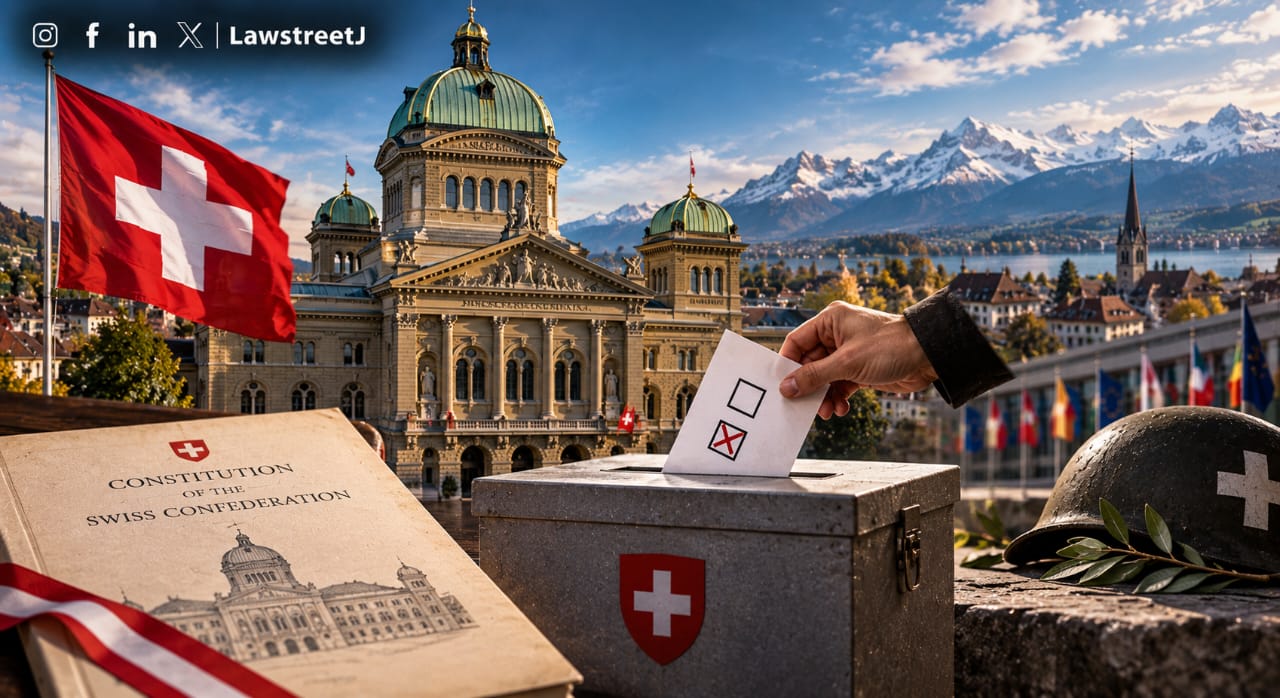
Bern - Swiss voters have decisively rejected a proposal to write a strict definition of neutrality into the Federal Constitution, a measure that would have barred cooperation with NATO and limited the country's ability to impose sanctions. Final results from the Federal Statistical Office showed that about 70 percent of voters and all cantons voted against the initiative in Sunday's national referendum.
The proposal, which would have blocked Switzerland from imposing economic sanctions or cooperating with NATO, was rejected on Sunday, September 27. The initiative, titled "Safeguard Swiss Neutrality," was defeated by 70.2 percent to 29.8 percent, and not a single canton voted in favour. Preliminary figures put voter turnout at 46.36 percent.
The outcome tracked pre-vote polling. A survey by gfs.bern for the Swiss Broadcasting Corporation, published on September 16, found 63 percent of respondents opposed, while a separate Tamedia poll put opposition at 68 percent against 31 percent in favour. Earlier on Sunday, projections by broadcaster SRF had indicated that more than two-thirds of voters opposed the measure.
What the Initiative Proposed
The initiative asked voters to add a new Article 54a to the Federal Constitution. The text stated that Switzerland's neutrality shall be perpetual and armed, that the country shall not join or cooperate with any military or defence alliance unless it is under military attack or such an attack is being prepared, and that it shall not take part in armed conflicts between third countries or impose sanctions against warring parties. Exceptions were made for sanctions decided by the United Nations and for measures to prevent the circumvention of other states' sanctions.
Under the proposal, sanctions would have been permitted only if approved by the United Nations, which would have limited Switzerland's ability to adopt measures against Russia, a permanent member of the UN Security Council with veto power.
A popular initiative allows citizens to propose constitutional changes, authorities cannot prevent a vote once enough signatures are collected, though they may present a counter-proposal. The Neutrality Initiative committee submitted the initiative to the Federal Chancellery on April 11, 2024, with 129,806 valid signatures. It was launched in November 2022 by the association Pro Switzerland (Pro Schweiz), with backing from the Swiss People's Party (SVP) and former federal councillor Christoph Blocher.
The Federal Council published its message on the initiative on November 27, 2024, and Parliament passed its federal decree on March 20, 2026. There was no counter-proposal. On June 26, 2024, the Federal Council decided to recommend that the people and the cantons reject the initiative. The National Council voted 128 to 60 against the text.
Because the initiative sought to amend the constitution, it required a double majority. Constitutional amendments need both a majority of the popular vote and a majority of the cantons, with six half-cantons each carrying half a cantonal vote. Having failed to win the required support of a majority of cantons, the initiative was effectively rejected.
The Existing Legal Framework
Neutrality already has a footing in Swiss constitutional law. It has been anchored in the Federal Constitution since 1848, but the current text says only that the Federal Council and parliament are responsible for safeguarding it, without defining how it should be applied in practice. Swiss neutrality has been internationally recognised since the end of the Napoleonic Wars in 1815, though the government has not spelled out how it implements it.
The Federal Council has described the international-law dimension in its public guidance. The law of neutrality is part of international law and governs how a neutral state must conduct itself toward belligerent states, and within those rules there is a degree of flexibility in how neutrality is applied. On military alliances specifically, the Federal Council stated that joining any such alliance is already prohibited under the law of neutrality.
The government argued that the initiative would have narrowed that flexibility. The Federal Council said anchoring neutrality and its parameters in the constitution would restrict its room for manoeuvre, and that it considers support for internationally broad-based sanctions and cooperation with defence alliances to be in Switzerland's interests.
Practical Changes Since 2022
Switzerland's practice has shifted since Russia's full-scale invasion of Ukraine. Switzerland applies EU sanctions and has joined the European Sky Shield Initiative, a joint air-defence programme. In December 2025, parliament scrapped the ban on re-exporting Swiss-made arms and allowed the government to approve exports to countries at war if neutrality and national security are not endangered. The initiative would have reversed all three measures.
Supporters argued that joining European Union sanctions against Russia and expanding security cooperation with NATO had weakened the country's traditional neutral role. Opponents included the Swiss government and most parties apart from the SVP. They argued that the country's current, flexible approach to neutrality had served it well.
Foreign Minister Ignazio Cassis addressed the result at a press conference. He said the outcome was not a vote against neutrality, and that Switzerland was neutral yesterday, is neutral today, and will remain neutral. Cassis said the rejection allows Switzerland to keep deciding on economic sanctions case by case and to cooperate with partners when doing so strengthens its security, which he noted also depends on the security of its neighbours and the European continent.
The SVP accepted the outcome. The party said it currently had no plans for further action. SVP lawmaker Lukas Reimann said he was not pleased with the result but found encouraging that all sides had expressed commitment to neutrality during the campaign. He said the party would need to become active again if the government or opponents of the initiative were to stray from neutrality, for example by adopting tougher sanctions.
Political scientist Fabio Wasserfallen of the University of Bern commented before the vote on voter attitudes. He said Swiss voters like neutrality but approve of how the government is implementing it at present, and are generally in favour of the sanctions on Russia over the war in Ukraine.
The campaign drew attention beyond Switzerland's borders. The initiative was championed by 85-year-old billionaire Christoph Blocher, who, according to the Swiss newspaper Berner Zeitung, spent 3.8 million Swiss francs on it, reportedly the largest amount contributed by a single individual to a Swiss referendum campaign. Moscow, which has accused Bern of abandoning neutrality by joining EU sanctions, praised the initiative.
Legal Consequences of the Vote
The rejection leaves the Federal Constitution unchanged. No new Article 54a enters the text, and the existing arrangement, in which the Federal Council and parliament determine how neutrality is applied, remains in place. The result preserves the government's ability to impose sanctions and cooperate with NATO rather than locking those choices into a narrower constitutional definition of neutrality.
The referendum was one of several national votes held in 2026. Swiss voters went to the polls on March 8, June 14 and September 27, with another vote planned for November 29. A separate food initiative on the September 27 ballot was also rejected, with 27 percent in favour and 73 percent against.
As of Monday, September 28, 2026, the following facts are on record, the Neutrality Initiative was rejected by about 70 percent of voters and by all cantons, the required double majority was not met, the Federal Council and a majority of parliament had recommended rejection and the Federal Constitution remains unchanged. The SVP has stated it has no immediate plans for further action, while reserving the option to become active again should the government depart from neutrality. Final certified results and any formal publication by the Federal Chancellery are expected in the ordinary course.