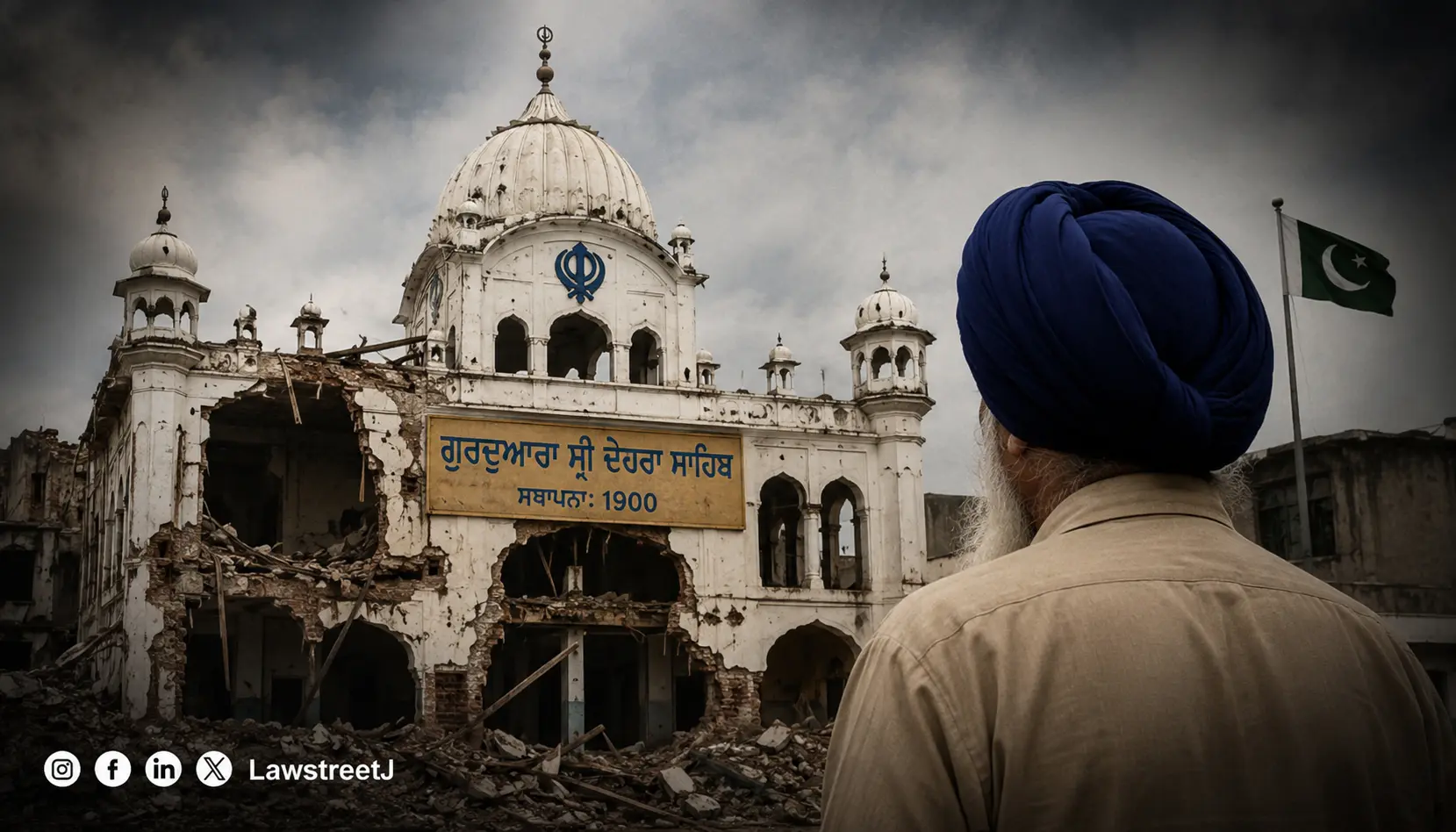
New Delhi / Muzaffarabad / Washington D.C. : Two events on the same day, July 29, 2026, placed Pakistan-occupied Kashmir at the centre of global attention in ways that were connected by geography but revealed entirely different things about the territory's political reality.

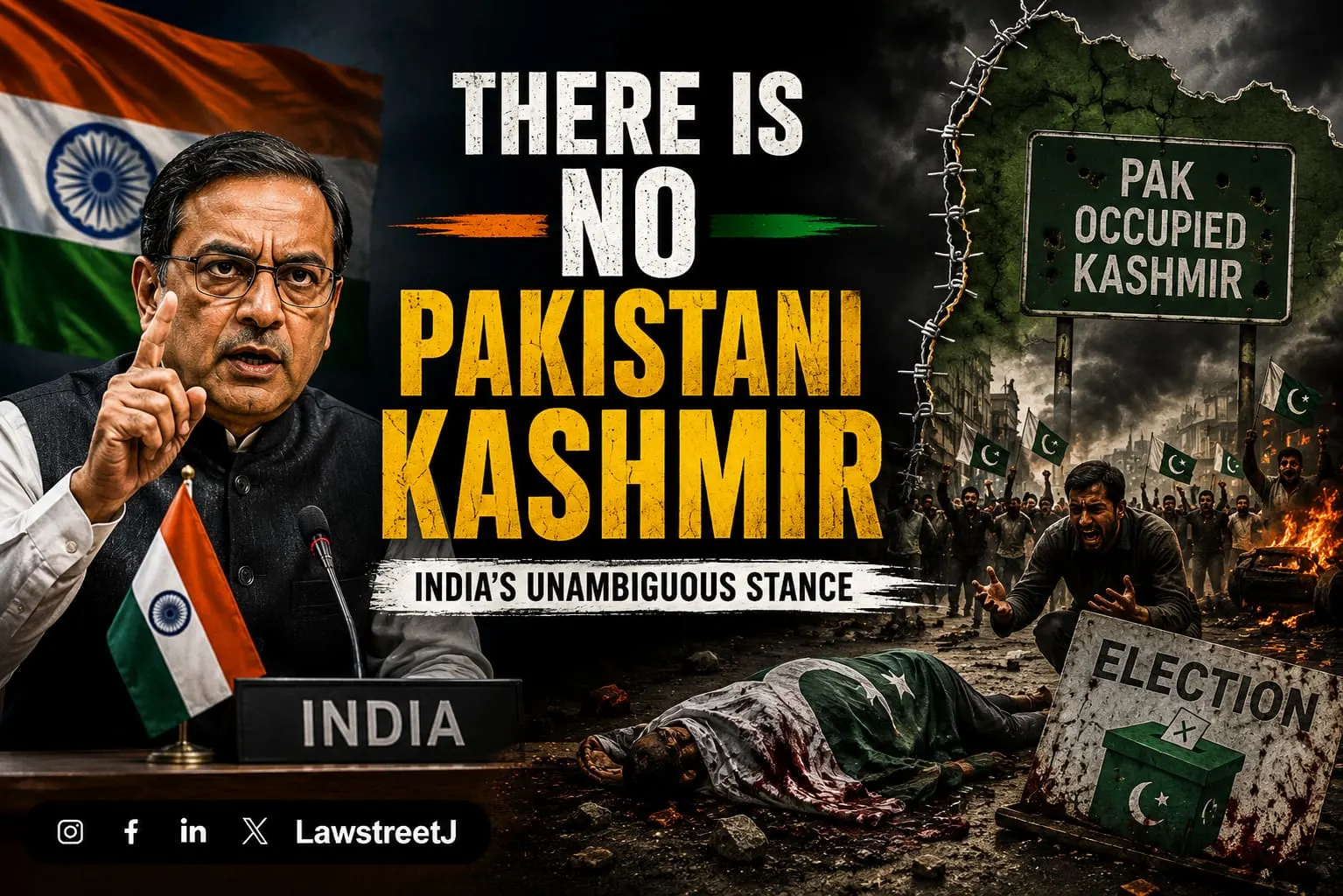
In Washington, the Indian Embassy posted on X: "Misleading and incorrect headline by @nytimes. There is no Pakistani Kashmir, only Pakistan-occupied Kashmir. The Union Territories of Jammu and Kashmir and Ladakh, have been, are and will always remain an integral and inalienable part of India. Pakistan has illegally occupied parts of these territories and is now using violence against the occupied people."
The New York Times article that triggered the rebuke was reporting on exactly that violence, the deadliest civilian unrest in Pakistan-occupied Kashmir in years, which had killed at least 30 people in two days as security forces cracked down on tens of thousands of protesters boycotting a regional election the Joint Awami Action Committee had called fraudulent.
The Indian Embassy's correction of the NYT's terminology and the NYT's reporting on the crisis it described are, in effect, two windows into the same territory, one diplomatic, one journalistic and together they provide the most complete picture of what is happening in Pakistan-occupied Kashmir in the summer of 2026.
Part One: The NYT Headline and India's Response
Taking exception to the headline used in a recent report by The New York Times covering recent unrest and local elections in Pakistan-administered Kashmir, the Indian Embassy in the United States described the terminology as "misleading and incorrect."

The terminology dispute over how to describe the territory Pakistan administers west and north of the Line of Control is not merely a semantic question, it is a loaded geopolitical statement. India's official position, maintained consistently across every government since 1947, is that the entire erstwhile princely state of Jammu and Kashmir, including the portions currently under Pakistani administration, is an integral and inalienable part of India illegally occupied by Pakistan. Pakistan's position is that the region is disputed and that its administered portion represents the genuine expression of Kashmiri self-determination.
Major international media organisations navigate this dispute differently. The United Nations, the United States government, and most Western media organisations use "Pakistan-administered Kashmir" or "Pakistan-administered Jammu and Kashmir", terminology that acknowledges Pakistani administration without endorsing its sovereignty claim. The New York Times in its July 28 report used "Pakistani Kashmir", a formulation that implies a degree of ownership rather than administration, and that India regards as legitimising Pakistan's unlawful possession.
Reaffirming New Delhi's long-standing position, the embassy said the Union Territories of Jammu and Kashmir and Ladakh "have been, are, and will always remain an integral and inalienable part of India." It also accused Pakistan of illegally occupying parts of these territories and using violence against people living there.
This is not the first time a major Western news organisation has faced Indian diplomatic pushback on Kashmir terminology. After the Pahalgam attack in April 2025, the US House Foreign Affairs Committee separately rebuked the New York Times for describing the attackers as "militants" rather than "terrorists", a different vocabulary dispute, but reflecting the same pattern of India and its allies objecting to what they regard as the NYT's framing of the conflict.
The Embassy's specific addition, "Pakistan has illegally occupied parts of these territories and is now using violence against the occupied people" is notable because it directly references the July 27-28 crackdown as evidence for India's characterisation, turning the NYT's own reporting into the factual basis for the diplomatic rebuke.
Part Two: What Is Actually Happening in POK, The Full Crisis
The violence that the New York Times was reporting on and that the Indian Embassy indirectly referenced is the most serious internal unrest in Pakistan-occupied Kashmir in decades.
The JAAC and Its 38-Point Charter
The Joint Awami Action Committee is a civil society movement that emerged in 2022 initially around economic grievances, high electricity tariffs, food prices, and the financial exploitation of POK's natural resources by Pakistan's central government. Its 38-point charter of demands has since expanded to include electoral reforms, political accountability, an end to elite privileges, and most immediately, the abolition of 12 assembly seats reserved for Kashmiri refugees living in Pakistan proper, seats that JAAC argues are used by Pakistan's major political parties to control the composition of POK's legislature through voters who do not live in or pay taxes to the territory.
The JAAC, which previously focused on economic and governance reforms, has shifted its attention to demanding the abolition of 12 Azad Kashmir assembly seats reserved for refugees. It urged people to boycott the elections, saying the seats are used by Pakistan's major political parties to influence the composition of the local parliament in favour of candidates who predominantly reside outside the region.
The Pakistani central government's response to JAAC's demands has been that abolishing the refugee seats would require constitutional changes, a position the movement has rejected as a pretext for inaction. When the government instead proceeded with elections under the existing framework, JAAC called for a full boycott and organised a "Muzaffarabad Chalo" march, a march toward the regional capital for polling day itself.
The June Escalation: Rawalakot and 11-15 Dead
On June 8, 2026, clashes erupted between protesters and security forces in Rawalakot and surrounding areas. According to regional authorities and media, between eleven and fifteen people were killed and more than seventy were injured during the unrest, including protesters and security personnel. Official figures during the first week of protests put the casualties at seven killed in Kotli and one killed in Mirpur.
JAAC leader Shaukat Nawaz Mir described the events in Rawalakot as a "massacre" and vowed to continue the protest movement despite the crackdown. Following the June violence, the Pakistani government banned JAAC under anti-terrorism laws, a designation the movement rejected as politically motivated.
The July 27 Elections: Fraud, Boycott, and Bloodshed
Pakistan's primary governing party, the PML-N, won nine out of the 13 seats that were up for election in the districts of Mirpur, Kotli, and Bhimber on Monday. The election was originally scheduled to be held in one round on July 27 but was split into three separate votes by districts, with officials citing security concerns. The second and third rounds are scheduled for August 2 and August 10.
Authorities have implemented extensive security measures across the Mirpur Division. Pakistan has deployed the army alongside civil security agencies, while Punjab Police has reportedly sent around 14,000 personnel to assist with election security. Around 30 percent of the deployed personnel are armed, while the remaining officers have been equipped with anti-riot gear.
Internet services, banking access, and road communications have been disrupted since the protests intensified. The information blackout has made independent verification of casualty figures extremely difficult. The JAAC said Pakistani security forces opened fire on tens of thousands of peaceful protesters, killing 25 people on Monday and five more on Tuesday. JAAC spokesman Sardar Aman Khan said security forces opened fire on unarmed demonstrators in Mirpur on Tuesday following deadly clashes the previous day.
Authorities said a member of the security personnel was killed and five more were injured in clashes on Monday. An official, who asked to speak on condition of anonymity, said he was aware of at least three fatalities among protesters in Mirpur this week. Pakistani officials have justified the crackdown by alleging that armed and India-backed militants joined the Kashmiri protesters. India has rejected similar accusations.
Widespread unrest has gripped Pakistan-occupied Jammu and Kashmir, with violent protests and mass demonstrations erupting across key districts. Demonstrators from Rawalakot and Mirpur reached Dadyal in Kotli despite attempts by security forces to block their path with containers. At Lal Chowk in Muzaffarabad, tensions peaked when police opened fire on protesters, resulting in deaths and several injuries. In Bagh, clashes led to the capture of several Punjab Police personnel by locals.
Witnesses said turnout in Mirpur district appeared low in the summer heat. Some candidates complained that internet restrictions imposed during the protests and ensuing clashes had hampered their campaigns.
What Pakistan Says vs. What the JAAC Says
The accounts from Pakistani authorities and from JAAC are irreconcilable on almost every factual question, casualty numbers, the nature of the protests, and who bears responsibility for the violence.
Pakistan's government has characterised the situation as a law enforcement operation against a banned organisation whose members opened fire on security forces, and has alleged Indian intelligence involvement in inciting the unrest. Its official casualty count is significantly lower than JAAC's, one security personnel killed, five injured in Monday's clashes.
JAAC describes the crackdown as a massacre of peaceful demonstrators, a civil rights movement that organised within the law until the government banned it and then responded to peaceful marches with live fire. Its cumulative death toll claim of over 30 is the highest figure circulating and cannot be independently verified given the communications blackout.
Reuters, which has reporters in the region, reported on July 29 that it could not independently verify the figure of over 30 dead given by the JAAC about the clashes around Rawalakot, but that an official who spoke on condition of anonymity confirmed at least three fatalities among protesters in Mirpur. Al Jazeera confirmed that dozens of people had been killed in the run-up to voting. The Wikipedia documentation of the 2026 Azad Kashmir protests, compiled from multiple sources, references Reuters citing nine killed on July 14 alone in separate pre-election clashes.
India's Position and the Geopolitical Significance
India has consistently maintained that the entire territory of Jammu and Kashmir, including Pakistan-administered portions, is an integral part of India under Indian sovereignty. The events of July 2026, a credibly documented lethal crackdown on a civil rights movement demanding electoral fairness, provide India with the most significant factual basis in years for its characterisation of Pakistan as a country that "uses violence against the occupied people."
The Indian Embassy's July 29 response to the NYT does two things simultaneously. It asserts India's territorial position on Kashmir in the standard diplomatic language of every previous Indian statement on the subject. And it specifically frames the July 27-28 crackdown as evidence, "Pakistan is now using violence against the occupied people", in a way that is directly responsive to the NYT's reporting rather than a generic assertion.
New Delhi has not issued any formal diplomatic protest to Islamabad over the POK crackdown, nor has it made any official demand for international investigation. India's posture on POK is to document, assert sovereignty, and allow the facts to accumulate, rather than to intervene or escalate. The Embassy's X post on July 29, engaging directly with a New York Times report about the crisis, is consistent with that posture.