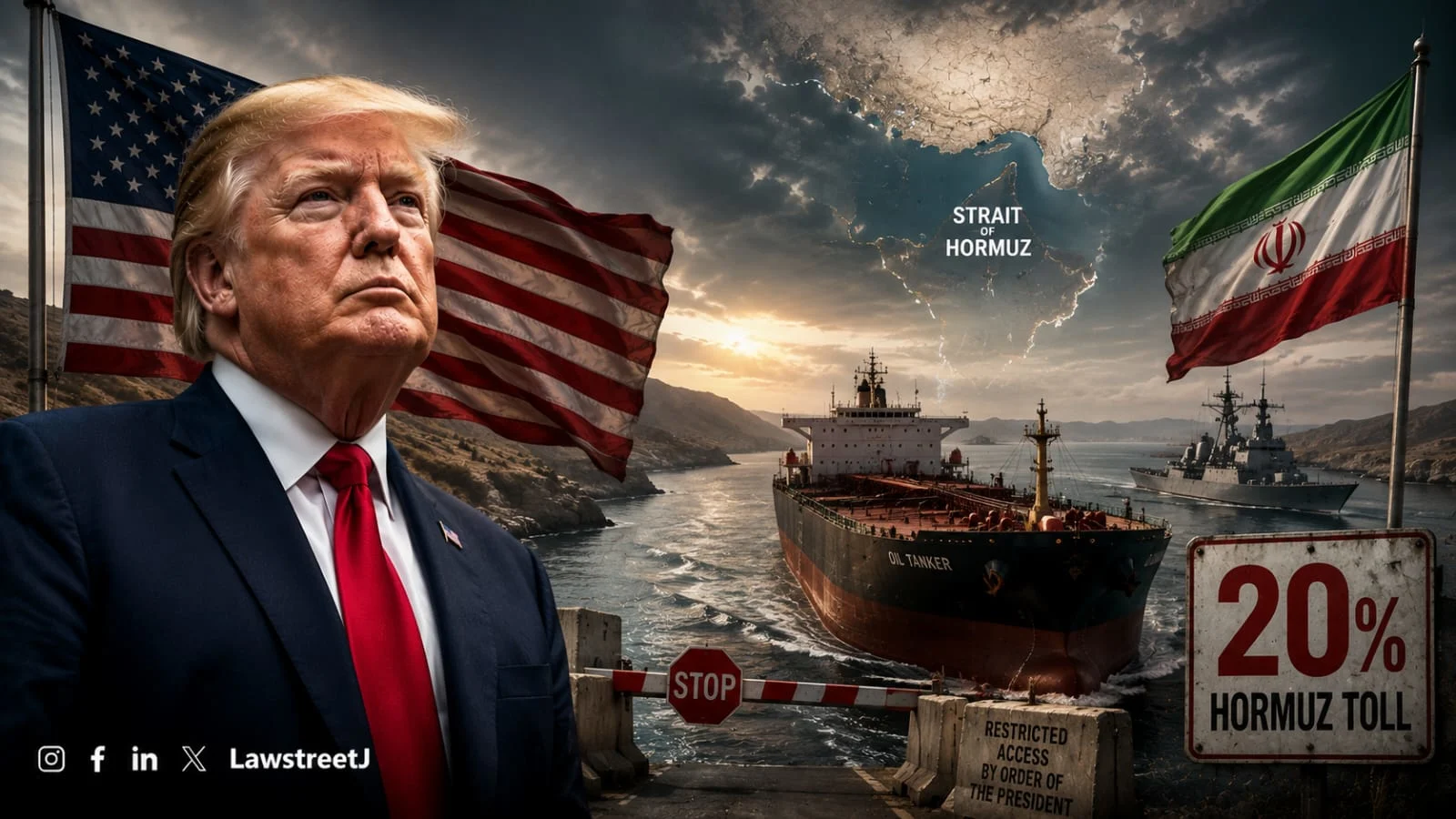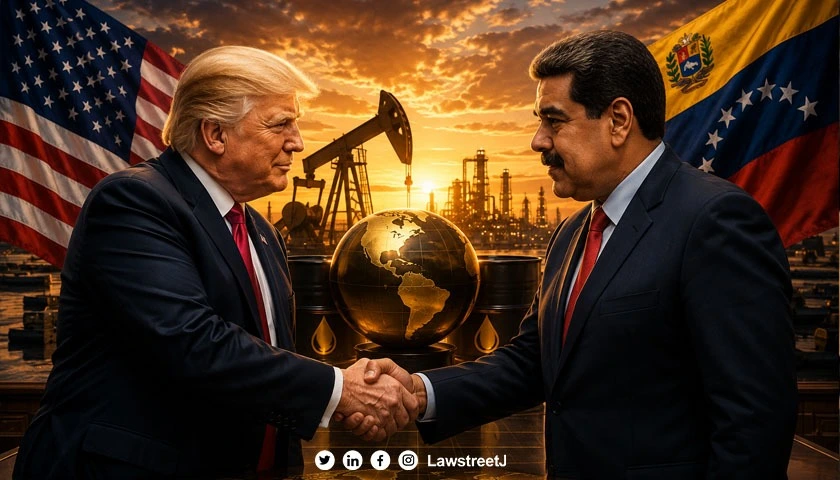

WASHINGTON D.C. - President Donald Trump announced late on Friday what he described as the most significant energy agreement in history, declaring that the United States had secured majority control of more than 65 billion barrels of Venezuela's proven petroleum reserves through a public-private partnership negotiated by the State Department and the Pentagon. The announcement, made through a Truth Social post, came as the US-Iran war continues to throttle oil shipments through the Strait of Hormuz, gas prices remain elevated, and midterm election pressure mounts on the administration.
Trump wrote on Truth Social: "BREAKING NEWS: The United States of America has just entered into an Agreement with the Country of Venezuela on, THE BIGGEST OIL DEAL IN WORLD HISTORY! At my direction, Secretary of State Marco Rubio, and Secretary of War Pete Hegseth, working closely with Highly Respected Interim President of Venezuela, Delcy Rodriguez, and, through a partnership with private business, have secured majority US control of more than 65 BILLION BARRELS of proven Oil Reserves in Venezuela, at no cost to the American Taxpayer."
He added that the deal "MORE THAN DOUBLES American Oil Reserves" and would "substantially lower gas prices for all Americans long into the future."
The Venezuelan government has not officially confirmed the full agreement, but interim President Delcy Rodríguez issued a statement in English describing the deal's terms and welcoming it.
What the Deal Actually Is and What It Is Not
The structure of the agreement is a critical detail that Trump's Truth Social post did not spell out but which US officials and Rodríguez's statement filled in.
The deal gives the United States a 55 per cent effective share of output from a new private joint venture, including an ownership stake and rights to buy oil at cost. A US official described the arrangement to multiple news organisations: "It's not a purchase. They're giving us equity. It's a type of corporate transaction where the US has equity in the companies."
Venezuela's interim President Delcy Rodríguez granted the joint venture a 100-year concession covering oil fields with proven reserves. The new joint venture, once operational, would rank as the second largest corporate holder of proven reserves in the world after Saudi Aramco, a claim that reflects the scale of Venezuela's resource endowment, which is the largest in the world by officially measured reserves.
In her official statement, Rodríguez said: "The agreement will allow for a significant increase in oil production with the participation of private operators. Venezuela is thus ushering in a new era of recovery, growth, production, security, and prosperity for our people." She said the deal would develop 17 strategic oil fields with a proven potential of 65 billion barrels, attract more than $100 billion in private investment, and generate more than $209 billion in tax revenue for Venezuela.
Secretary of State Marco Rubio described the agreement as a win for both countries, saying on X that it would secure stable, low-cost oil for the US and help lower petrol prices. He said it could bring nearly $100 billion in private investment to Venezuela.
The specific companies involved in the private-sector side of the joint venture, the names of the specific fields covered by the 17-field concession, and the precise governance structure of the new entity have not been disclosed publicly as of the time of publication.
Venezuela's Oil Reality: The World's Largest Reserves, Barely Tapped
Venezuela holds the world's largest proven oil reserves, an estimated 303 billion barrels of crude oil, representing approximately 17 per cent of the world's total supply according to the US Energy Information Administration.
Unlike many oil-bearing regions where geologists must explore for untapped pockets, Venezuela's reserves are largely mapped and known. The problem has not been discovery but extraction. The country currently produces approximately 1.25 million barrels per day, a fraction of what its reserve base theoretically supports, after years of catastrophic underinvestment, mismanagement of the state oil company PDVSA, and the compounding effect of US and international sanctions.
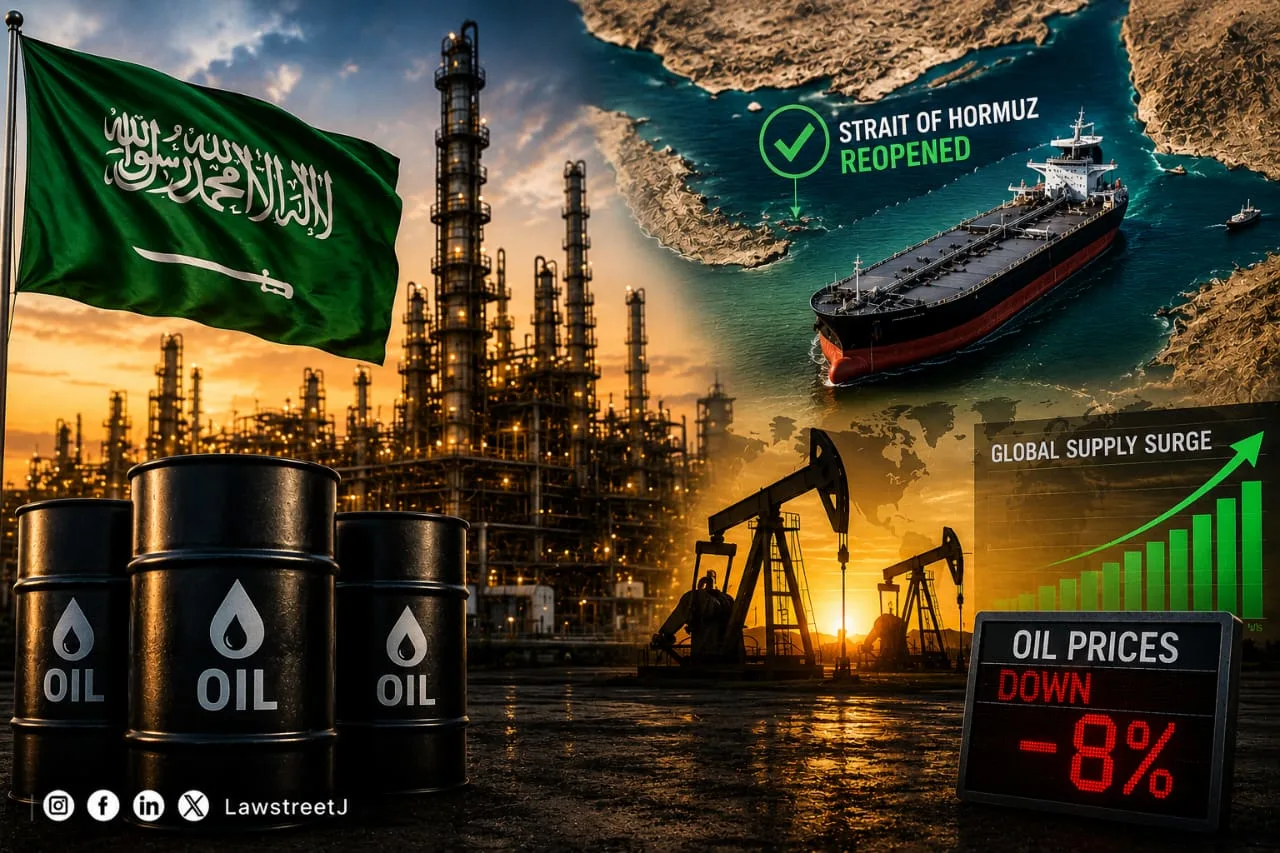
The deal covers 65 billion barrels of proved reserves across 17 fields, roughly 21 per cent of Venezuela's total proven endowment. For US energy strategy, it represents access to an enormous and geographically proximate resource base in the Western Hemisphere, at a moment when the Strait of Hormuz, through which an estimated 20 per cent of global oil supply previously flowed has been reduced to a trickle by the ongoing US-Iran conflict. Only a handful of ships have recently crossed through the Strait each day, down from levels of around 100 seen a year ago, according to the International Monetary Fund's PortWatch data.
The Political Context: Maduro Gone, Rodríguez in Charge
The deal is possible because the political landscape in Venezuela has changed dramatically since the start of Trump's second term. The announcement comes nearly nine months after the US military, at Trump's direction, carried out an operation to capture Venezuela's then-President Nicolás Maduro and bring him to the United States to face federal narcoterrorism and drug trafficking charges. Maduro has since been held in the US in custody.
Following Maduro's removal and subsequent detention in the United States, Delcy Rodríguez, previously his Vice President, assumed the position of interim president of Venezuela, forming the government with which the Trump administration negotiated Friday's oil agreement.
The combination of Maduro's removal, the lifting of certain Venezuela-specific sanctions that followed, and the administration's cultivation of a working relationship with Rodríguez's government created the political preconditions without which a 100-year oil concession covering 65 billion barrels could not have been negotiated.
Trump faces increasing pressure as midterm elections loom and gas prices have spiked because of the US-Iran war. The Venezuela oil deal is simultaneously an energy security play, a long-term reserve diversification strategy, and an immediately deployable political argument about Trump's ability to lower energy costs through unconventional diplomatic moves.
Questions the Deal Leaves Unanswered
The agreement as announced on Friday leaves several significant questions open.
The legal basis for a 100-year concession granted by Rodríguez's interim government, as opposed to an elected Venezuelan government, has not been addressed in the official statements from either side. The structure of "equity" in a private company that will hold Venezuelan oil concessions, and the mechanisms through which the US government will exercise its 55 per cent effective share of output, have not been explained. The specific US companies participating in the private-sector component of the joint venture have not been named.
Critics have characterised the arrangement as predatory, given Venezuela's politically constrained situation. Economists and energy analysts are examining whether the $100 billion in projected private investment is realistic given Venezuela's degraded oil infrastructure, the state of PDVSA, and the timelines involved in developing 17 fields.
Whether Congress has been formally consulted on an agreement of this scale, given its implications for US foreign policy, energy law, and international commerce is also not yet clear from the public record.
What is confirmed is that the Trump administration, Rodríguez's government, and unnamed private partners have reached an agreement that both sides have formally acknowledged and described in public statements. The full text of the agreement has not been released.