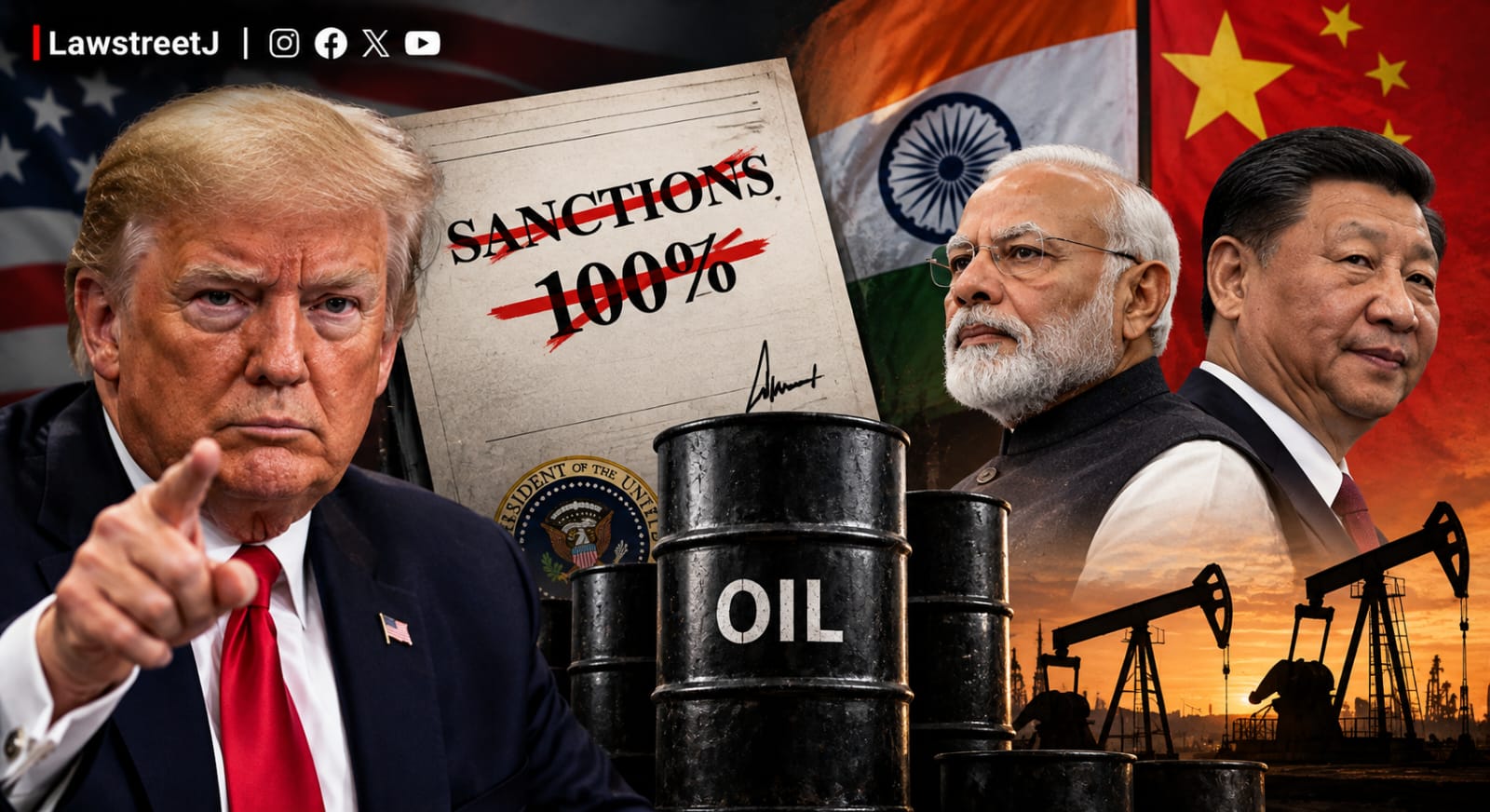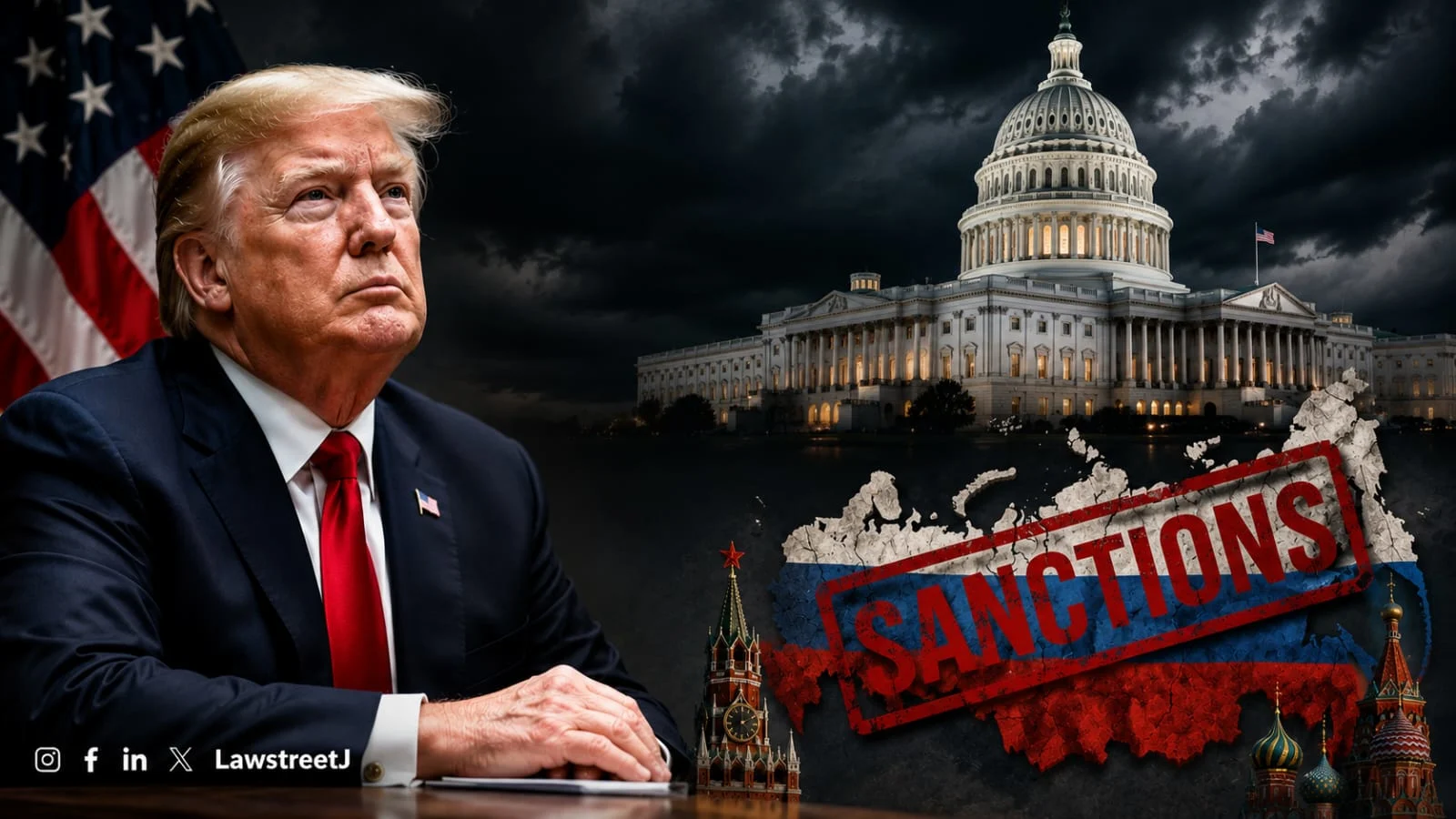
Washington D.C. | Four United States senators, two Republicans and two Democrats, announced on July 10, 2026 that they have reached agreement with the Trump administration to advance long-delayed bipartisan legislation targeting countries that continue to purchase Russian oil and natural gas. The breakthrough, announced as Senator Lindsey Graham visited Kyiv for talks with Ukrainian President Volodymyr Zelenskyy, could give President Donald Trump a powerful new statutory tool to pressure Vladimir Putin and, critically, to impose sweeping economic penalties on third-party countries including India and China that continue funding Russia's war machine through energy purchases.
"We've reached an agreement with the White House on a version of the Russian sanctions bill that they will support," Graham said, announcing the deal alongside Senators Roger Wicker, Richard Blumenthal, and Jeanne Shaheen. "This bill has 85 co-sponsors."
The announcement does not guarantee swift passage, the detailed text of the revised bill has not yet been made public, and the White House did not immediately comment. But the combination of 85 Senate co-sponsors, bipartisan Senate leadership backing, and explicit Trump administration support has moved the legislation closer to becoming law than at any previous point in its history.
What the Bill Is: The Sanctioning Russia Act of 2025 and Its Evolution
The legislation that advanced on July 10 is the product of a legislative effort that began in April 2025. Senator Lindsey Graham of South Carolina and Senator Richard Blumenthal of Connecticut introduced the Sanctioning Russia Act on April 1, 2025, as Senate Bill 1241 in the 119th Congress. A companion bill in the House of Representatives, H.R. 2548, was introduced by Representative Brian Fitzpatrick of Pennsylvania.
The legislation was designed from the outset to give the President of the United States the authority, not the obligation, but the authority to impose sweeping tariffs and sanctions on Russia itself and on third-party countries that continue to purchase Russian energy exports. The bill's framers were explicit about which countries they had in mind. Graham stated in June 2025: "I've got 84 co-sponsors for a Russian sanctions bill that is an economic bunker buster against China, India, and Russia for Russia's brutal invasion of Ukraine."
The original version of the bill introduced in 2025 included a proposed 500 percent tariff on imports from nations purchasing Russian-origin petroleum, natural gas, petroleum products, or uranium. It also included a similar tariff on remaining Russian imports into the United States itself, along with expanded restrictions on Russian sovereign debt and financial transactions involving sanctioned entities.
The July 10 announcement involves a revised version of the bill that was negotiated with the White House. Graham confirmed that changes were made to ensure the administration would support the legislation, though the specific modifications to the tariff provisions and enforcement mechanisms have not been publicly disclosed. Whether the updated bill retains the 500 percent tariff authority in full, in modified form, or has substituted a different tariff ceiling is not yet known. Graham described the revised bill as one that "they will support", language indicating the White House had specific objections to earlier versions that have now been addressed.
The Legislative Journey: Why It Took Fifteen Months
The Sanctioning Russia Act's path from introduction to the July 10 breakthrough is a study in the friction between the Senate's stated will and a White House whose approach to Russia policy has been more variable than that of the bipartisan majority in Congress.
The bill attracted extraordinary co-sponsor support almost immediately. Within months of introduction, 84 senators, crossing the two-thirds threshold required to override a presidential veto, had formally co-sponsored the legislation, a level of Senate support that is exceptionally rare on any measure touching on foreign policy. The House companion bill attracted 151 bipartisan co-sponsors.
Despite this support, the bill stalled repeatedly. The Trump administration's shifting posture toward Putin, oscillating between frustration and engagement as Washington pursued multiple rounds of unsuccessful peace negotiations with Moscow, created uncertainty about whether the White House would accept or resist the bill's core mechanism of presidential tariff authority over third-party energy buyers. A previous attempt to advance the bill in December 2025 stalled after Democrats raised concerns about granting broad tariff authority to the president while a related Supreme Court case on executive tariff powers was pending.
The turning point came in January 2026, when Trump officially supported the legislation after a one-on-one meeting with Graham. "After a very productive meeting today with President Trump on a variety of issues, he greenlit the bipartisan Russia sanctions bill that I have been working on for months with Senator Blumenthal and many others," Graham said at the time. However, legislative momentum stalled again as the administration continued to pursue direct negotiations with Moscow.
The final breakthrough came on July 10, following a NATO summit in Ankara and Trump's publicly expressed frustration over Moscow's continued refusal to negotiate seriously. Graham's visit to Kyiv on the same day he announced the Senate agreement and his public statement that the bill "will be well-timed as Ukraine is making concessions for peace and Putin is all talk, continuing to kill the innocent", framed the legislation explicitly as a negotiating instrument designed to force Moscow to the table rather than simply a punitive measure.
Graham said a vote could take place as early as next week.
What It Would Mean for India: The Russian Oil Problem
India's exposure to the legislation is direct, documented, and substantial. Russia has been India's largest crude oil supplier since 2022, when European buyers sharply reduced Russian purchases following the full-scale invasion of Ukraine and India absorbed the resulting supply at a significant discount to benchmark prices. India's energy ministry and foreign policy establishment have consistently defended those purchases as a legitimate exercise of the country's strategic autonomy and as a measure that helped stabilise global energy markets by preventing a sudden removal of Russian supply.
That position has become harder to maintain under sustained American pressure. The Trump administration pressured India earlier this year to reduce Russian oil purchases as part of the broader tariff negotiations, and India committed to some degree of reduction as part of the February 2026 trade framework that cut US tariffs on Indian goods from 50 percent to 18 percent. However, Indian refiners have not fully exited Russian crude, and the question of what India's actual purchase levels will be over the next 12 months remains unresolved.
Vladyslav Vlasiuk, Zelenskyy's commissioner for sanctions policy, provided the most specific figure available on India's exposure during a July 10 interview with RFE/RL: "Russia has earned roughly $58 billion from oil and petroleum product exports to China and India in the first half of this year alone." That figure, representing revenues accruing to Moscow from just two countries in six months, is the foundational argument the bill's proponents are making to justify secondary tariff authority. Every barrel of Russian oil purchased by India or China, the argument goes, is money that goes directly to financing Russia's military operations in Ukraine.
Catherine Wolfram, a former US Treasury official who worked on sanctions under the Biden administration, offered a sobering assessment of the bill's practical effectiveness in an Al Jazeera interview. "I worry that Russia and India will call the US government's bluff and continue to import Russian oil, if perhaps at a slight discount, as the cost to the US of carrying through on the threat, especially in the middle of trade negotiations with China is nontrivial." Wolfram described the use of tariffs as secondary sanctions as "an untested tool," noting that the United States has never previously used import tariffs as the primary mechanism for enforcing third-party sanctions on energy purchases.
For India, the bill's advancement presents a specific and time-sensitive policy question. A 500 percent tariff on Indian exports to the United States, imposed under the authority the bill would grant the president would be economically devastating for a trade relationship that the February 2026 framework was supposed to stabilise. India's exports to the United States in major categories including pharmaceuticals, textiles, and information technology would face an effective export ban under such a tariff regime. The leverage the bill creates is therefore not symmetrical, it affects India's access to the American market across all sectors, not merely the energy sector.
The China Dimension: The Larger Target
China's exposure to the legislation is even larger than India's, both in terms of the volume of Russian energy it purchases and in terms of the severity of the secondary tariff threat. China has been Russia's largest energy customer since the 2022 invasion and has absorbed a substantial share of the supply that previously went to European buyers. Chinese refiners, often operating through intermediary trading companies, have processed Russian crude at a significant discount that has made it commercially rational to maintain those purchases even at the risk of US pressure.
The bill gives the President authority to impose tariffs on Chinese imports, already elevated following the US-China trade tensions of Trump's second term, at an additional 500 percent rate specifically for energy purchases from Russia. Whether Trump would actually invoke that authority against China, given the complexity of the US-China trade relationship and the concurrent negotiations over semiconductor exports, Taiwan, and other bilateral issues, is a separate political question from the bill's passage.
Graham has been explicit that the bill's tariff authority is designed to function as leverage rather than as an automatic punishment. "This bill would give President Trump tremendous leverage against countries like China, India and Brazil to incentivise them to stop buying the cheap Russian oil that provides the financing for Putin's bloodbath against Ukraine," he said. The word "leverage" is doing significant work in that sentence, it implies the bill's primary purpose is coercive deterrence rather than actual tariff imposition.
What Happens Next: Timeline and Obstacles
Graham indicated on July 10 that the updated bill would be unveiled "very soon" and that a vote could take place as early as the following week. The 85 Senate co-sponsors represent well above the 60 votes needed to overcome a filibuster and, if the White House agreement holds, there is no procedural obstacle to floor consideration.
However, the agreement between four senators and the White House is not the same as an agreement between 100 senators and the White House, and the revised bill's text will face scrutiny when it is released. The December 2025 stalling demonstrated that even a bill with overwhelming co-sponsor support can be delayed by specific procedural and constitutional concerns in that case, Democratic concerns about granting broad tariff authority while a Supreme Court case on executive tariff powers remained pending. That Supreme Court case has since been resolved, removing one of the key obstacles.
The House companion bill with 151 co-sponsors provides a parallel legislative track, though the House and Senate versions may need to be reconciled in conference if they differ on specific tariff authorities or sanctions mechanisms.
For India, the 45 days to weeks between now and a potential Senate vote represent a critical window. The question of whether New Delhi can further reduce or restructure its Russian oil purchases in a way that satisfies the bill's authors or negotiate a specific carve-out from the tariff authority will likely be among the most consequential bilateral issues in the India-US relationship in the remainder of 2026.


.jpeg)