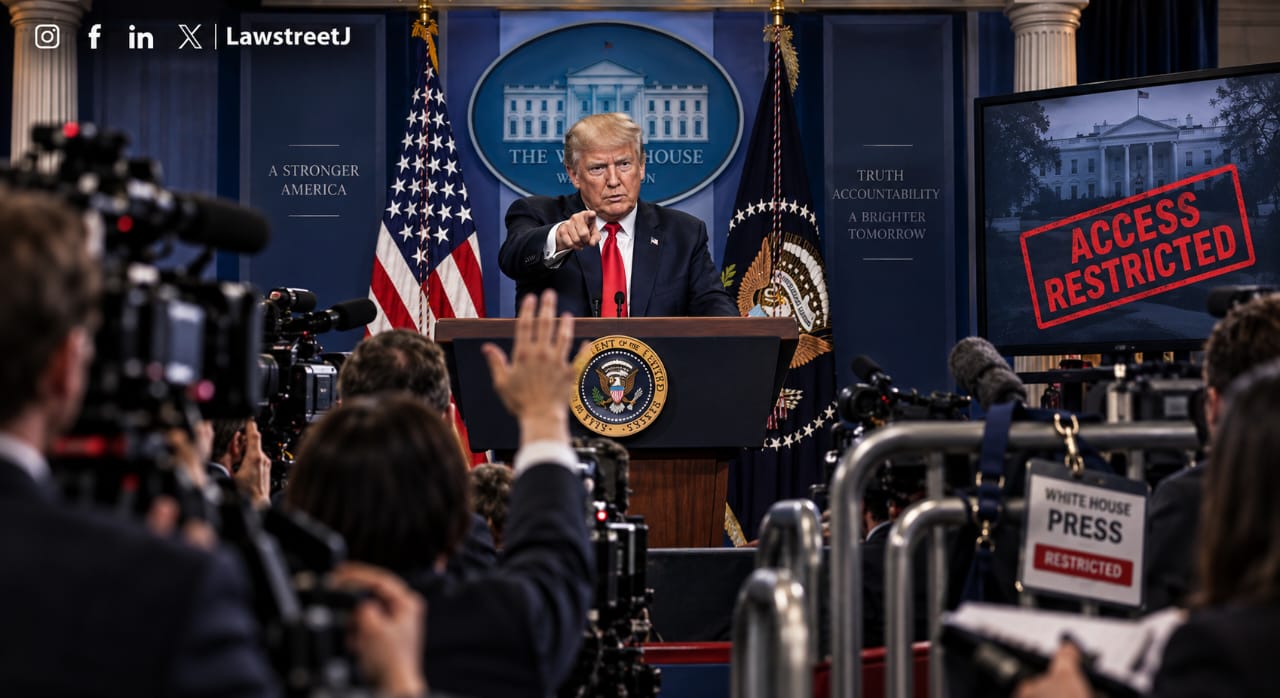
WASHINGTON — President Donald Trump announced on Friday, September 18, 2026, that he was banning CNN, MS NOW and Politico from the White House, accusing the three outlets of persistently reporting "fiction and lies" about his administration. The announcement came via a post on Trump's Truth Social account, where he declared the ban "effective immediately" and warned that additional news organisations could face similar action in the days ahead.
"I am proud to announce that, effective immediately, I am banning Fake News CNN, MSNOW... and Politico... from the White House as a result of their constant 'reporting' FAKE NEWS!" Trump wrote. He continued, "Media Outlets shouldn't be able to constantly write or report FICTION and LIES when they're covering the President of the United States, the Trump Administration, or the United States of America," before adding a closing line that left the scope of any further action deliberately vague, "Other Fake News Media Outlets to follow."
No Clear Evidence the Ban Was Actually Implemented
Despite the forceful language of the announcement, multiple outlets reported that there was little indication the White House had taken any concrete steps to actually enforce it. CNN reported that its White House team remained in their workspace into Friday evening, and that a CNN crew continued functioning as part of the official pool of reporters travelling with Vice President JD Vance that same day. According to a source familiar with the matter, even some White House staffers, including members of the press office itself, appeared caught off guard by the announcement and were left scrambling to understand how, or whether, it would actually be enforced.
This gap between Trump's stated intent and any visible operational follow-through is a detail worth noting on its own, since it suggests the post may have functioned as much as a political signal as an actual policy directive, at least in its first hours.
The three news organisations named in Trump's post pushed back forcefully and near-immediately. CNN issued a statement defending its coverage and directly challenging the legality of any such ban. "We have a right under the U.S. Constitution to do that reporting without hindrance or interference from the government," the network said. "Should the ban which President Trump threatened go ahead, it would be an illegal assault on that fundamental and constitutionally-protected right."
Politico responded in similarly defiant terms, stating on social media platform X that it "will continue to fairly report on this White House and future ones," and that it would "vigorously defend our First Amendment rights against any attempt to restrict them." The outlet's communications team also separately disputed a related claim Trump had made accusing Politico of receiving government subsidies, calling the allegation "false" and saying it had "been thoroughly debunked." MS NOW, meanwhile, did not immediately respond to requests for comment from any of the outlets covering the story.
The White House Correspondents' Association also weighed in, issuing a statement expressing solidarity with the three targeted news organisations, while press freedom advocacy group Reporters Without Borders characterised the move in blunt terms, stating that Trump was "once again spewing lies about 'fake news' to try to control who covers him and where."
Part of a Longer Pattern of Press Restrictions
Friday's announcement is not an isolated incident but the latest chapter in Trump's long-running friction with the White House press corps, a tension that dates back to his first term in office. During that earlier administration, Trump moved to revoke the press credentials of CNN's then-chief White House correspondent, Jim Acosta. CNN sued over that decision, and the network's credentials for Acosta were ultimately restored.
More recently, Trump had already sought to restrict Associated Press journalists from accessing the Oval Office and Air Force One, an earlier flashpoint that set the stage for the broader access disputes now playing out with CNN, MS NOW and Politico. Legal experts and First Amendment advocacy groups have consistently argued that attempts to selectively deny White House access based on the content of a news organisation's coverage raise serious constitutional concerns, and that any formal implementation of Friday's threatened ban would likely face legal challenges on First Amendment grounds.
The timing of the announcement is also notable given the broader political climate surrounding the Trump administration this month. The ban was announced as Trump's approval ratings have reportedly softened, with Democrats holding a polling edge in a number of competitive midterm races that could put Republican control of Congress at risk. Trump has also shown particular sensitivity toward coverage of the ongoing Iran war in recent weeks, having written on Truth Social earlier in September that reporting on ammunition shortages tied to the conflict was "actually treasonous," language that signals a broader pattern of escalating hostility toward critical war coverage specifically, not just domestic political reporting.
Taken together, Friday's announcement extends what has already been one of the more openly adversarial relationships between a sitting US president and the White House press corps in recent memory, though, as of Friday evening, the practical mechanics of how, or whether, the stated ban would actually be enforced against CNN, MS NOW and Politico remained unresolved.


.jpeg)