House of Commons Rejects Privileges Committee Referral by 335 to 223 Votes; Questions Over Security Vetting, Ministerial Conduct, and Ongoing Criminal Investigation Remain Unanswered
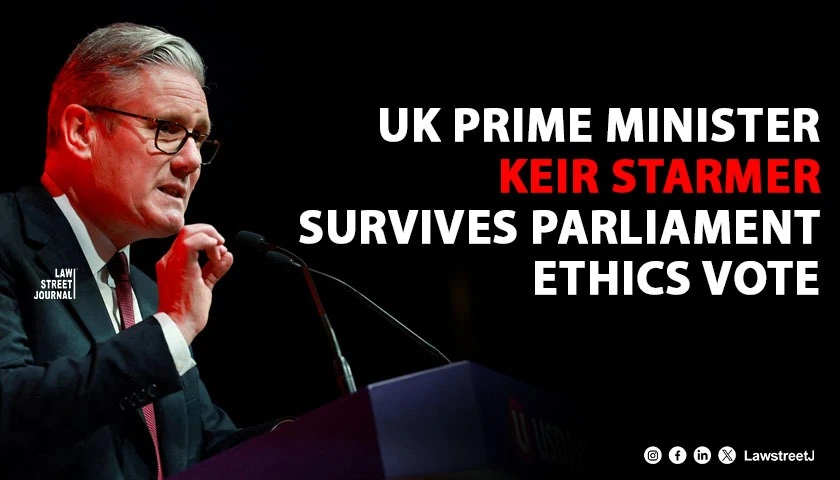
United Kingdom Prime Minister Keir Starmer narrowly avoided a significant parliamentary setback on Tuesday, April 28, 2026, when Members of Parliament voted against referring him to the House of Commons Privileges Committee for a formal ethics investigation. The vote, which stood at 335 against and 223 in favour of referring Starmer to the committee, a majority of 112, came after weeks of mounting pressure over the appointment of Lord Peter Mandelson as the UK's ambassador to Washington, and the manner in which that appointment was handled within government.
The motion had been brought forward by the opposition Conservative Party, which alleged that the Prime Minister had misled Parliament by stating that proper procedures had been followed during Mandelson's appointment process. The vote, while resulting in Starmer's favour, has done little to quiet the storm surrounding one of the most consequential diplomatic and political controversies in recent British history.
The Core Allegation: Did the Prime Minister Mislead Parliament?
At the heart of this controversy lies a specific claim made by Prime Minister Starmer in the House of Commons. The Conservative Party demanded that Parliament's Privileges Committee investigate Starmer's claim that "due process" was followed in Mandelson's appointment. The Privileges Committee carries substantial authority, it has the power to suspend lawmakers, including the prime minister, for breaches of parliamentary rules, and a finding of deliberately misleading Parliament is usually a resigning offense.
This is not a mere procedural matter. The precedent of the committee's powers is well established. Its investigation into lockdown-breaking gatherings in government offices during the COVID-19 pandemic helped end the political career of former Prime Minister Boris Johnson, who quit as a lawmaker in 2023 after the committee found that he had repeatedly misled Parliament over the "Partygate" scandal.
Evidence presented before the House of Commons Foreign Affairs Select Committee on the same day as the vote significantly complicated the government's position. Former top civil servant in the Foreign Office Philip Barton, who served until January 2025, stated that it was not normal for an ambassadorial appointment to be announced before completing security vetting, as had been advised by the then Cabinet Secretary Simon Case. When directly asked whether "due process" had been followed, a former senior official said he could not confirm that "due process" was followed when Mandelson was given the key diplomatic job despite failing security checks.
Barton's testimony further confirmed that there was pressure to get everything done as quickly as possible, though he denied there was pressure for a specific outcome on the substance of approving Mandelson's security clearance. He also told MPs that he had initially been concerned about Mandelson's known links to convicted sex offender Jeffrey Epstein, describing it as a matter that could become a problem.
The Appointment, the Vetting Failure, and the Dismissal of Officials
Lord Mandelson, the veteran Labour politician, was nominated by Prime Minister Starmer in December 2024 as Britain's ambassador to the United States. He was nominated as HM Ambassador to the United States by Starmer in December 2024, primarily to provide a "political heavyweight" presence capable of navigating a second Donald Trump administration and to manage potential trade tariffs and economic friction. However, the appointment process was marred from the outset by serious procedural concerns. Senior officials say they felt pressure from Starmer's office to confirm the appointment quickly at the start of President Donald Trump's second term. Philip Barton told the Foreign Affairs Committee that he had been presented with the decision and told to proceed without adequate time for the standard vetting process to be completed.
Central to the controversy is the fact that UK Security Vetting recommended Mandelson not be given security clearance, only to be overruled by the Foreign Office. Despite this, the appointment went ahead. Prime Minister Starmer has stated publicly that he was not told that Mandelson had failed security vetting, and that no minister was told. He has further stated he learned of the vetting denial only on April 14, 2026.
The Prime Minister subsequently dismissed Foreign Office official Sir Olly Robbins. Starmer fired top Foreign Office official Olly Robbins earlier this month after the revelation that Mandelson was approved for the job against the recommendation of the government's security vetting agency. Robbins, for his part, has stated that he was bound by confidentiality rules and has said the security concerns did not relate to Epstein, though he has not disclosed their precise nature.
Also giving testimony to the Foreign Affairs Committee on Tuesday was Morgan McSweeney, the Prime Minister's former Chief of Staff. McSweeney told lawmakers it had been "a serious error of judgment" to back Mandelson, and said "the prime minister relied on my advice, and I got it wrong." He apologised to Epstein's victims. McSweeney, who had already resigned from his role in February taking responsibility for the recommendation, denied that any pressure had been placed on the Foreign Office to approve the security clearance at any cost. He said that at the time of the appointment, he had the impression that Mandelson's relationship with Epstein was a passing acquaintance.
The Criminal Investigation, Documents, and Legal Proceedings Against Mandelson
Beyond the parliamentary dimension, the Mandelson affair has a significant and ongoing criminal component. On 23 February 2026, Mandelson was arrested on suspicion of misconduct in public office, and then released on bail pending further investigation. He was filmed being led from his London home to a car by plainclothes officers. He does not face allegations of sexual misconduct. The criminal investigation was launched following the release of more than three million pages of Epstein-related documents by the United States Department of Justice in January 2026. Police are investigating Mandelson over claims he passed sensitive government information to Epstein a decade and a half ago. Among the alleged disclosures, messages suggest that Mandelson passed on potentially market-moving government information to Epstein in 2009, when Mandelson was a senior minister in the British government, including an internal government report discussing ways the UK could raise money after the 2008 global financial crisis.
Financial records from the US House of Representatives Oversight Committee show that Epstein paid for two commercial flights for Mandelson in April 2003, totalling more than $7,400. Additionally, the Epstein files appear to show financial transfers totalling $75,000 from the late sex offender to accounts linked to Mandelson or his partner. Mandelson has reportedly stated that he did not recall receiving the money and would need to look into whether the documents are authentic. He has not been charged with any offence and has denied wrongdoing.
In terms of the parliamentary document disclosure process, the Intelligence and Security Committee confirmed on Tuesday that it had finished reviewing the government's proposed redactions to documents relating to Lord Mandelson's appointment ahead of publication. MPs had earlier ordered the government to publish a significant body of documents connected to the appointment in February, but only a handful had been released by April. The government has asked to redact some documents for national security reasons, or because they relate to the police investigation into allegations against Lord Mandelson of misconduct in public office, which the peer denies.
Mandelson had previously resigned from both the Labour Party and the House of Lords following the disclosure of his ties to Epstein. After being dismissed as ambassador, Mandelson asked for a £547,000 payoff representing the remainder of his four-year salary. The government ultimately paid him £75,000. He retains his title of Lord, as that designation can only be removed through an act of Parliament.
Tuesday's vote in the House of Commons has provided Prime Minister Starmer with a temporary reprieve from one of the most serious parliamentary accountability mechanisms available to MPs. However, the underlying questions about the security vetting process, the conduct of officials, the accuracy of ministerial statements to Parliament, and the ongoing Metropolitan Police criminal investigation into Lord Mandelson remain unresolved. With local and regional elections scheduled for May 7, 2026, and further government document releases expected through Parliament's Intelligence and Security Committee, the political and legal consequences of the Mandelson affair continue to unfold.

![What is Keir Starmers stance on Kashmir issue ? [Watch Video]](/secure/uploads/2024/07/lj_7459_WhatsApp_Image_2024-07-09_at_11.13.54_AM.webp)