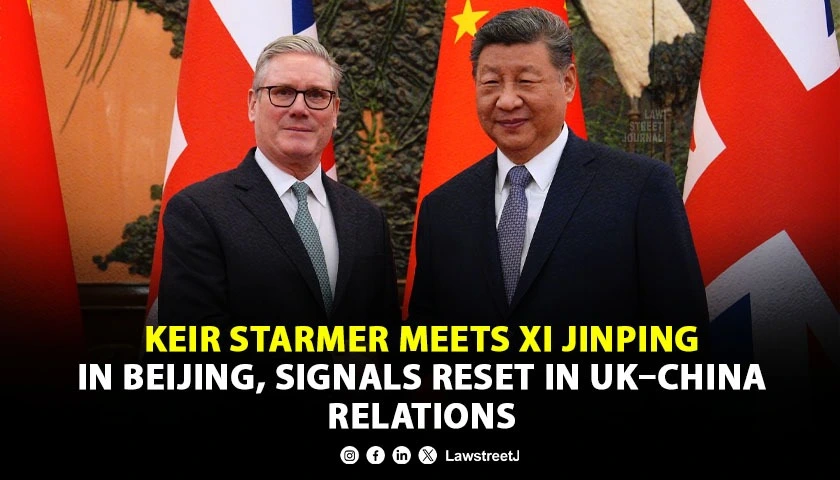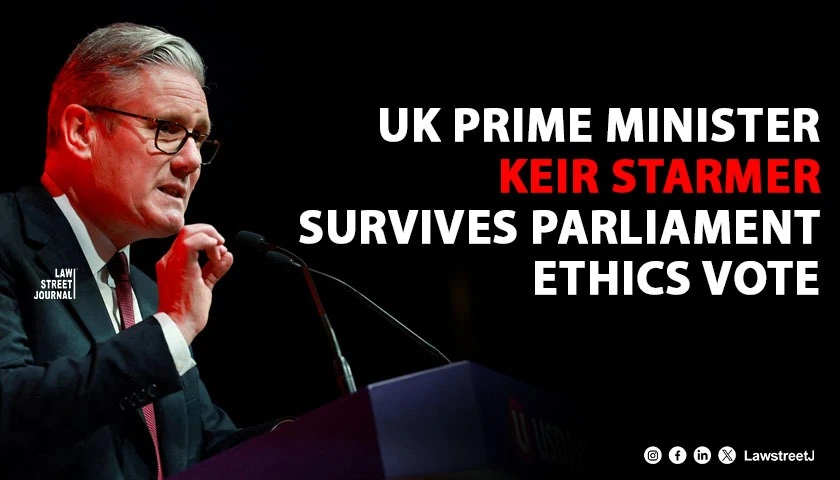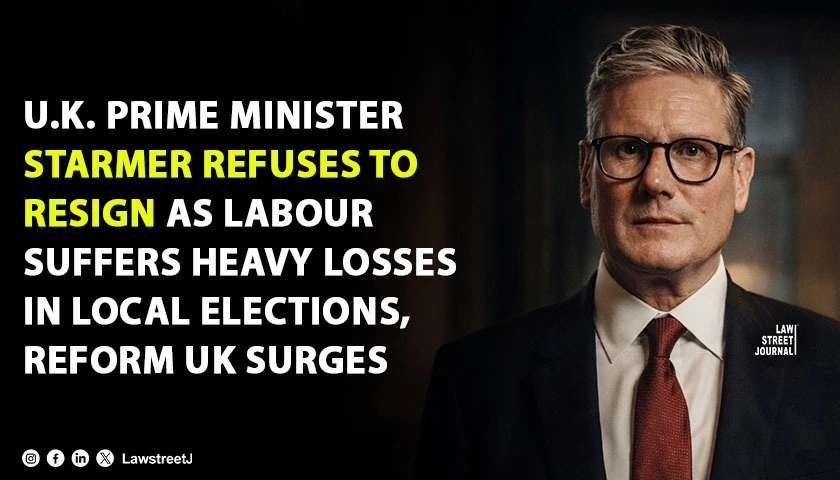
British Prime Minister Keir Starmer has stated he will not step down from office, even as his Labour Party absorbed significant losses in the United Kingdom's local and regional elections held on Thursday, May 7. The elections, described as the most consequential mid-term test of public opinion ahead of the next general election due in 2029, saw Labour shed hundreds of council seats across England while Nigel Farage's Reform UK recorded striking gains in areas that had long been considered Labour strongholds.
Elections for about 5,000 seats on 136 local councils in England, as well as in the devolved parliaments in Scotland and Wales, represented the United Kingdom's most significant test of public opinion before the next general election. The scale of Labour's losses and Reform's advance has renewed questions inside Westminster about the future direction of the governing party.
The Results: Labour Loses Ground Across England
Early results saw Labour lose hundreds of councillors and eight local authorities across England, while Reform, the Greens, and the Liberal Democrats all made gains. Almost 25,000 candidates were fighting to be elected to more than 5,000 seats on 136 councils across England, where six local mayoral contests also took place.
With 40 of the 136 councils declaring their full results in the early hours of Friday, Reform's gains reached 270 seats while Labour had lost more than 200. Farage's party also took control of its first council in this set of contests, winning Newcastle-under-Lyme from the Conservatives. Reform UK won all 12 seats on offer in Hartlepool, pushing the formerly Labour-held council into no overall control. Labour lost control of eight other authorities including Wandsworth, Westminster, and Tameside, which includes Deputy Prime Minister Angela Rayner's Greater Manchester constituency.
In Wigan, a former mining community that Labour has controlled for more than 50 years, it lost every one of the 20 seats it was defending to Reform. In Salford, the party held on to only three of the 16 seats it was defending. In Wales, Labour is expected to lose the national vote for the first time in more than a century, while the SNP appears likely to remain the largest party in Scotland after 19 years in power.
The Conservatives suffered further losses but managed some bright points, regaining Westminster from Labour and holding Harlow in Essex and Broxbourne in Hertfordshire. The Liberal Democrats appeared on course for an eighth consecutive year of council gains, taking control of Stockport and Portsmouth.
Starmer's Position and Internal Party Pressure
Despite the scale of the losses, Starmer addressed reporters and made clear he would remain in office. Starmer insists he will lead Labour into the next election. The party has never successfully removed an incumbent prime minister in its 125-year history. Labour sources pointed to poor local election results under previous prime ministers, including Tony Blair, who lost 1,100 councillors in 1999 but went on to win re-election in a landslide in 2001. Deputy Prime Minister David Lammy urged his party not to play "pass the parcel" with the leadership in response to the election results.
However, the internal pressure on Starmer is real and documented. Labour Party MPs have indicated that if the party performs poorly in Scotland, loses power in Wales, and fails to hold many of the roughly 2,500 council seats it was defending in England, Starmer would face renewed pressure to quit or set out a timetable for his departure. Pollsters forecast that Labour could lose the most council seats in local elections since Conservative former Prime Minister John Major lost more than 2,000 in 1995. =
The Times of London reported that Energy Secretary Ed Miliband had urged Starmer to set out a timetable for his departure, though Miliband denied this report. The prime minister is helped by the fact that the two frontrunners to succeed him, Greater Manchester Mayor Andy Burnham and former Deputy Prime Minister Angela Rayner, are not yet in positions to mount leadership bids, and other potential rivals appear unwilling to move against him for now.
Reform UK's Rise and What the Results Signal
Nigel Farage heralded a "historic change in British politics," telling reporters "there is no more left-right" as his party was "scoring stunning percentages in traditional old Labour areas." Polling analyst John Curtice said the results confirmed "the fracturing of British politics," telling the BBC that Reform was clearly ahead but still "probably not quite at 30% of the vote" while other parties were "just a little bit below 20%." He suggested the results may not be as bad for Labour as some had predicted, saying the party could lose fewer than 1,500 seats. =
With the next general election not due until 2029, Labour retains time to respond. But Thursday's results make plain that the political map of Britain is shifting rapidly, and the governing party's position in its own traditional heartlands can no longer be assumed.

![What is Keir Starmers stance on Kashmir issue ? [Watch Video]](/secure/uploads/2024/07/lj_7459_WhatsApp_Image_2024-07-09_at_11.13.54_AM.webp)