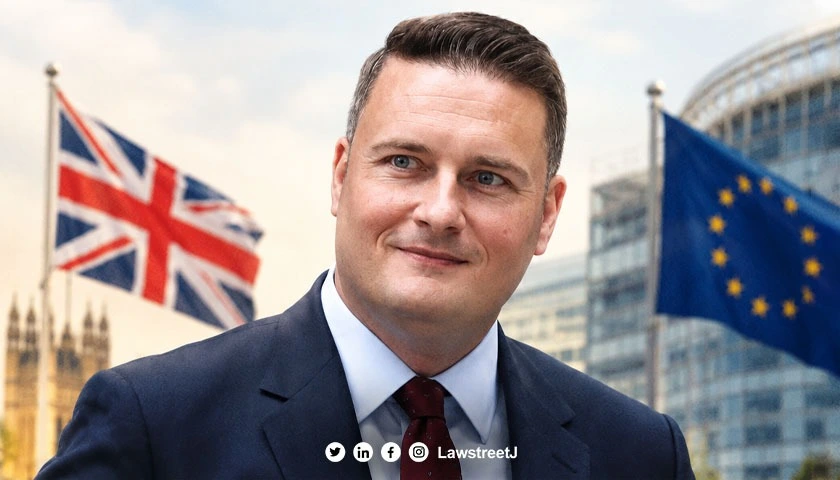
Brussels — UK Defence Secretary Wes Streeting warned the European Union on Monday against keeping Britain out of its "Made in Europe" industrial drive, saying the effort must not "spread into self-defeating protectionism." He spoke alongside EU foreign policy chief Kaja Kallas ahead of talks in Brussels, just over two weeks before a key EU-UK summit on November 20.
What Streeting Said
"We need to be careful" that the Made in Europe push does not turn into "self-defeating protectionism," Streeting told reporters. He argued that Europe needed to significantly expand its defence industrial capacity, but warned that a protectionist approach could ultimately undermine that goal. He also cautioned against getting ahead of the debate on Britain's potential return to the EU, while acknowledging that leaving the bloc had hit the UK economy: "There's no doubt leaving the EU hit our economy and we're not as strong as we might have been."
Kallas, for her part, said Brussels remained "traumatised" by Brexit, according to Euronews. Streeting also scheduled a meeting with EU defence commissioner Andrius Kubilius, and was due to meet German Defence Minister Boris Pistorius in Berlin later on Monday.
What "Made in Europe" Is
The EU's "Made in Europe" push aims to boost domestic sectors such as cars and defence by requiring companies to buy European goods if they want public money. The measures are part of the European Commission's Industrial Accelerator Act, which is broadly read as a response to China's more assertive trade policies and state-subsidised competition.
An earlier draft, as reported in February 2026, would have set EU-origin thresholds of 70 percent for electric vehicles, 25 percent for aluminium and 30 percent for plastics used in windows and doors, the final form of the rules has not been confirmed in the reporting reviewed for this article. The proposal was delayed several times because of divisions among member states and within the Commission. France has long championed a Made in Europe strategy, while Nordic and Baltic states warned that a strict regime could deter investment and limit access to technologies from outside the EU.
Why London Is Worried
Britain currently sits outside the initiative because it is no longer part of the EU's single market. The UK fears the scheme will shut British firms out of EU public procurement and state aid, escalating post-Brexit trade tensions. As the EU's push to reduce dependence on non-EU companies widens to include artificial intelligence development and cloud computing, London also fears that new digital rules being prepared will exclude British companies.
UK officials argue the two economies are too closely intertwined for a strict EU-only preference. UK Chancellor Rachel Reeves said earlier this year that Britain trades almost as much with the EU as with the whole of the rest of the world combined. The EU remains the largest export market for British cars, and several European manufacturers build vehicles in the UK. UK minister for European relations Hamish Falconer told Euronews last month that shutting Britain out would fracture a shared industrial base and leave Europe weaker, and when asked whether the UK would make concessions to gain access, he said discussing concessions was "quite the right place to start."
German Chancellor Friedrich Merz has cautioned against protectionist measures and acknowledged the importance of including Britain in certain European industrial arrangements.
Prime Minister Andy Burnham, who has said the summit would be a chance to begin a "serious dialogue" about long-term relations between the UK and the bloc a decade after the Brexit vote, will meet EU leaders in Brussels on November 20. London and Brussels hope to clinch deals on food and drink trade, youth mobility, and avoiding EU carbon emissions taxes.
The EU hopes to make progress in particular on cutting the fees EU students pay to attend British universities. The bloc's ambassadors were due to discuss a draft of a joint EU-UK summit statement on Wednesday, November 4.
The UK also wants to participate in the EU's €90 billion loan to Ukraine, two-thirds of which is earmarked for military assistance. Brussels has consistently said the UK cannot cherry-pick privileged access to the single market without accepting the EU's "four freedoms," including free movement of people.
Legal and Institutional Framework
Since leaving the EU, Britain's trade relationship with the bloc is governed by the EU-UK Trade and Cooperation Agreement, which provides for tariff-free trade in goods that meet rules-of-origin requirements but does not give the UK membership of the single market or customs union.
Both the EU and the UK are parties to the World Trade Organization's Government Procurement Agreement, which opens specified public contracts to suppliers from other signatories, though signatories may seek to protect strategic sectors, and the EU's proposed preference rules would test how far such exemptions can extend. As a non-member, the UK has no vote in the Council of the EU or the European Parliament on the Industrial Accelerator Act, so access would depend on a negotiated arrangement with the Commission rather than any right derived from the Treaties. The summit's outcomes would, in turn, need to be formalised through agreements that each side ratifies under its own procedures, and a joint summit statement is a political declaration rather than a legally binding text.