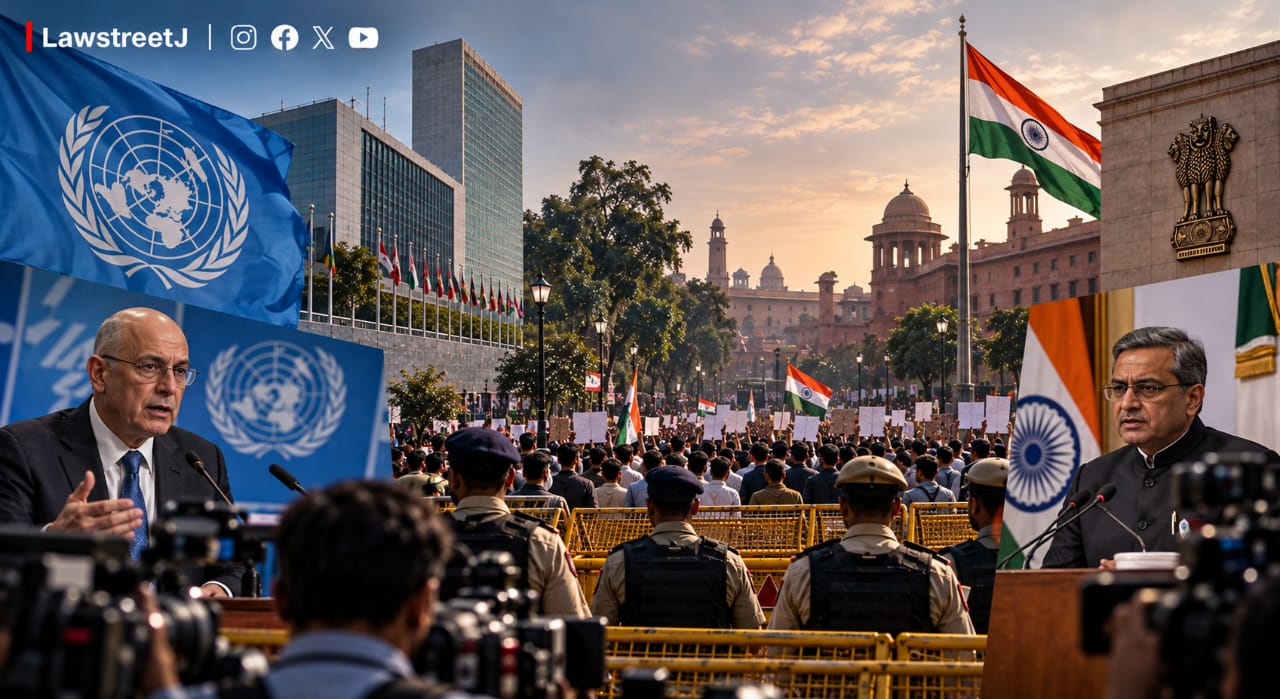

Geneva / New Delhi — The United Nations Human Rights Office has expressed concern over reports of mass detentions in India of protesters, civil society members, lawyers and journalists before and during large-scale demonstrations in Delhi on October 10, 2026, prompting a sharp rebuttal from India's permanent mission to the UN in Geneva, which described the remarks as misplaced and an unwarranted interference in the country's internal affairs.
The statement was issued by the Office of the United Nations High Commissioner for Human Rights, commonly known by its acronym OHCHR, on October 10, 2026, attributed to spokesperson Thameen Al-Kheetan. The statement read: "We are concerned by reports of mass detentions in India of demonstrators, protest leaders, members of civil society organisations, lawyers and journalists, before and during today's large-scale demonstrations in Delhi."
The statement continued: "We call on the authorities to ensure that the right to peaceful assembly is fully respected and fulfilled. Restrictions on peaceful protests must meet strict tests of necessity and proportionality." It further said Indian authorities should ensure law enforcement forces exercise "utmost restraint" in response to peaceful protesters, "consistent with the country's democratic traditions and human rights obligations," and stated that "all those arbitrarily detained must be immediately and unconditionally released." The OHCHR also urged Indian authorities to "engage in meaningful dialogue to address the broadly held concerns expressed" by the demonstrators.
Context of the Delhi Protests

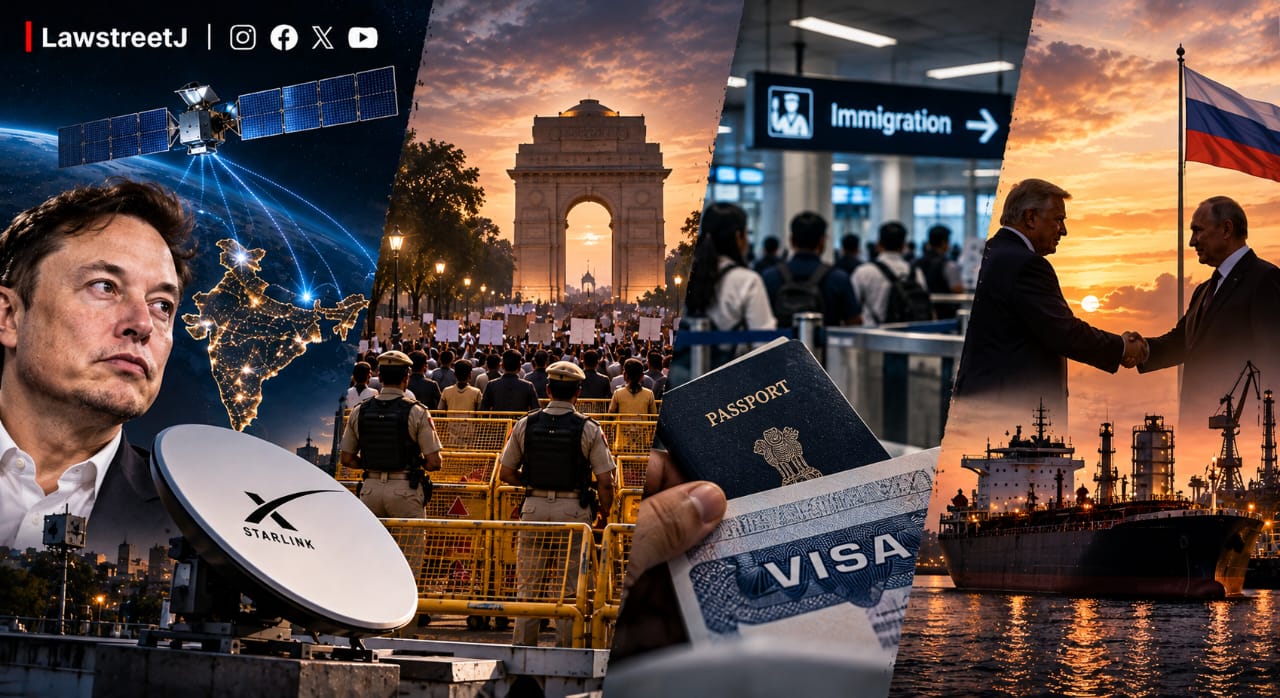
The demonstration referenced in the OHCHR statement was organised by a youth-led movement in Delhi calling for electoral reforms, with its central demand being the resignation of the official heading India's Election Commission, over objections to the Special Intensive Revision of electoral rolls, which protesters say has removed large numbers of names from voter lists. Delhi Police had denied permission for the protest to take place at its originally planned venue, and heavy security deployment and road closures were reported across the city on the day of the demonstration.
India's Permanent Mission to the United Nations in Geneva responded to the OHCHR statement on the social media platform X. The response read in full: "We have seen the OHCHR's remarks about today's events in New Delhi. India is the world's largest democracy, where the right to peaceful assembly is guaranteed by our Constitution and safeguarded by robust institutions, an independent judiciary and a free media. As in every democracy, Indian citizens exercise this right subject to reasonable restrictions in the interest of public order. The authorities, for their part, act in accordance with the law, and our courts remain available to all for redressal of any grievances. The OHCHR's concerns are therefore misplaced and constitute an unwarranted interference in the internal affairs of India. In this context, OHCHR would also do well to devote comparable attention to large-scale protests elsewhere, consistent with its mandate of impartiality and non-selectivity."
Legal and Constitutional Basis for India's Position
India's response invokes several specific constitutional and legal provisions. The right to peaceful assembly in India is guaranteed under Article 19(1)(b) of the Constitution, which protects the right of citizens to assemble peaceably and without arms. This right is not absolute: Article 19(3) permits the State to impose "reasonable restrictions" on the exercise of this right in the interests of the sovereignty and integrity of India or public order. The Supreme Court, in Amit Sahni v. Commissioner of Police (2020), held that while peaceful protest is a constitutionally protected right, protesters cannot claim an unrestricted or indefinite right to occupy public spaces, and that such rights must be balanced against the right of other citizens to free movement and public order, with courts available to adjudicate disputes over specific restrictions imposed by authorities.
India's reference to "non-selectivity" draws on a stated principle of the UN Human Rights Council's own foundational framework. UN General Assembly Resolution 60/251, which established the Human Rights Council in 2006, states that the Council's work should be "guided by the principles of universality, impartiality, objectivity and non-selectivity, constructive international dialogue and cooperation." The OHCHR, as the office supporting the UN High Commissioner for Human Rights, operates under a mandate established by UN General Assembly Resolution 48/141 of 1993, which created the position of High Commissioner and tasked the office with promoting and protecting the enjoyment of human rights globally.
Separately, the principle India references regarding interference in internal affairs draws on Article 2(7) of the UN Charter, which states that "nothing contained in the present Charter shall authorize the United Nations to intervene in matters which are essentially within the domestic jurisdiction of any state," though this provision does not prevent UN human rights bodies, acting under their respective mandates, from commenting publicly on human rights situations in member states, a practice OHCHR has followed with respect to numerous countries.
OHCHR's Record of Statements on Other Countries
India's call for OHCHR to show "comparable attention" to protests elsewhere can be assessed against the office's public record of statements on comparable events in other countries during the same period and in preceding years.
On October 9, 2026, one day before the Delhi statement, OHCHR spokesperson Shabia Mantoo issued a statement on nationwide student protests in France, saying the office was following developments connected to school closures and student demonstrations "with concern," some of which had seen violence, and called on all parties to ensure demonstrations remained peaceful and that there was no disproportionate use of force by law enforcement, while stressing the need to respect the right to peaceful assembly. French authorities had, by that point, reported more than 5,000 to 6,800 detentions in connection with the protests, a large majority involving minors.
In March 2025, OHCHR spokesperson Liz Throssell issued a statement expressing concern over the detention of at least 92 people by Turkish authorities, including Istanbul's elected mayor Ekrem İmamoğlu, and the subsequent detention of more than 1,000 protesters, including at least nine media workers, calling for those detained for the legitimate exercise of their rights to be released immediately and unconditionally, language closely paralleling that used in the India statement.
OHCHR has also previously issued statements on mass detentions connected to protests in Belarus in 2020, where spokesperson Rupert Colville expressed concern over the use of force against demonstrators and called for the release of all those detained for voicing dissent, and separately issued statements in 2020 concerning the detention of protesters during demonstrations in India against the Citizenship Amendment Act, in which the office called for the release of arrested human rights defenders.
A commentary published by the Azerbaijan-based outlet APA on October 7, 2026, separately noted that international human rights organisations, specifically citing Human Rights Watch, had not issued a statement specifically addressing police conduct during the French student protests as of that date, and argued that human rights protection should not be applied selectively, a position echoed in a separate statement issued by the Baku Initiative Group on October 8, 2026, regarding the same French protests.