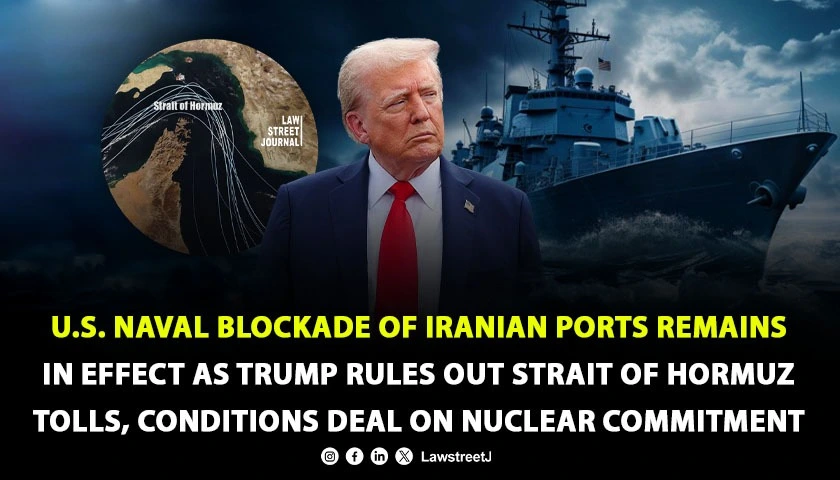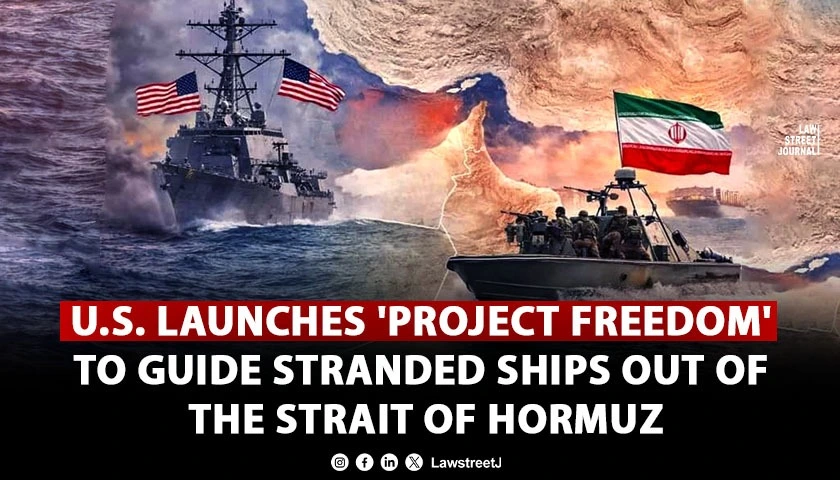
The United States formally launched a military-backed maritime operation on Monday, May 4, 2026, aimed at guiding hundreds of commercial vessels out of the Strait of Hormuz, where a prolonged conflict between the United States, Israel, and Iran has left thousands of sailors stranded and global shipping in a state of near-total paralysis. President Donald Trump announced the operation, named "Project Freedom," through a post on Truth Social late Sunday, with U.S. Central Command confirming the mission shortly after.
The launch marks one of the most consequential maritime interventions in the strait's modern history, set against the backdrop of a fragile ceasefire and ongoing diplomatic negotiations between Washington and Tehran.
The Scale of the Crisis
To understand the weight of Monday's operation, the numbers tell a clear story. Before the United States and Israel launched coordinated airstrikes on Iran on February 28, 2026, under Operation Epic Fury, approximately 3,000 vessels passed through the Strait of Hormuz each month, with oil tankers accounting for an estimated 15 million barrels per day of crude and other oil product exports, roughly one-fifth of the world's entire oil trade. That flow collapsed almost entirely once the conflict began. Traffic through the strait over the following months fell to approximately 5% of the pre-war average, causing severe shortages of refined products, particularly across Asia. Tanker traffic initially dropped by around 70%, with over 150 ships anchoring outside the strait to avoid the risks. Traffic subsequently fell to near zero.
Today, approximately 20,000 seafarers and hundreds of vessels remain stranded in the Persian Gulf, their crews running low on food, medicine, and basic supplies. Trump himself acknowledged the humanitarian dimension, stating that many of these ships are running low on food and everything else necessary for large-scale crews to stay on board in a healthy and sanitary manner. The economic consequences have been severe. Following the closure of the Strait of Hormuz on March 4, 2026, Brent Crude surged past $120 per barrel, forcing QatarEnergy to declare force majeure on all exports. The oil production of Kuwait, Iraq, Saudi Arabia, and the United Arab Emirates collectively dropped by a reported 6.7 million barrels per day by March 10, and by at least 10 million barrels per day by March 12. By March 31, gas prices in the United States hit $4 per gallon, representing a 30% surge directly tied to the disruption.
The human cost extended beyond fuel prices. The maritime blockade triggered a food supply emergency across Gulf Cooperation Council states, which rely on the Strait for over 80% of their caloric intake. By mid-March, 70% of the region's food imports had been disrupted, forcing retailers to airlift staples and resulting in a 40 to 120% spike in consumer prices.
What Project Freedom Involves
U.S. Central Command confirmed that its forces will begin supporting Project Freedom on May 4, with the stated goal of restoring freedom of navigation for commercial shipping through the Strait of Hormuz.
The operation will involve guided-missile destroyers, over 100 land and sea-based aircraft, multi-domain unmanned platforms, and 15,000 service members. U.S. Navy ships will be positioned in the vicinity and will provide commercial vessels with information on the best maritime lanes in the strait, particularly those that were not mined by Iranian forces. Trump framed the operation as a humanitarian intervention rather than a military offensive. He stated that the ship movement is "merely meant to free up people, companies, and countries that have done absolutely nothing wrong, they are victims of circumstance," and described it as a humanitarian gesture on behalf of the United States and Middle Eastern countries.
Trump said the operation was launched at the request of countries whose vessels are stranded in the strait, referring to them as "neutral and innocent bystanders," and warned that any interference with the operation would have to be dealt with forcefully. The State Department simultaneously announced the Maritime Freedom Construct, a new initiative launched in partnership with the Department of War to enhance coordination and information sharing among international partners in support of maritime security in the strait.
The Legal and Diplomatic Dimensions
The legal framework surrounding Project Freedom is significant and deliberate. On May 1, the White House sent a War Powers letter formally ending hostilities while preserving the existing U.S. force posture and asserting Article II constitutional authority. Project Freedom was then announced two days later as a humanitarian operation rather than a military one. This legal structuring means that if Iran were to fire on vessels during the operation, the U.S. position would be that Iran, not the United States, had initiated a new act of hostility.
Under international law, the Strait of Hormuz is governed by the United Nations Convention on the Law of the Sea (UNCLOS), which guarantees the right of transit passage through international straits used for navigation. Iran's blockade, which has included charging tolls of up to $2 million per ship and restricting transit to vessels not affiliated with the U.S. or Israel, directly challenges the freedom of navigation guaranteed under international law. On April 22, Trump claimed the naval blockade of Iranian ports was costing Iran $500 million daily, while the U.S. Department of Defense estimated Iran had lost $4.8 billion in oil revenue by May 1.
Iran's response to Project Freedom was swift. Iranian parliamentary security figure Ebrahim Azizi warned that any American interference in what Tehran calls the new maritime regime of the Strait of Hormuz would be considered a ceasefire violation, stating that the strait would not be managed by what he called Trump's posts. On the diplomatic front, Trump acknowledged that his representatives are engaged in what he described as very positive discussions with Iran, which he said could lead to something very positive for all parties involved. Iranian state-linked media reported that Tehran had submitted a 14-point peace proposal, which would reopen shipping in the Strait of Hormuz and end the U.S. naval blockade, while deferring the nuclear issue but reportedly floating a 15-year freeze on uranium enrichment. Trump indicated he was reviewing the proposal but remained skeptical it would be acceptable in its current form.
The broader international legal community has also taken positions. On April 7, China and Russia vetoed a United Nations Security Council draft resolution on the Strait of Hormuz that called for an end to Iranian attacks and coordinated defensive efforts for shipping access. The United Kingdom and the United States both backed the resolution. The UK and France have separately hosted two diplomatic conferences focused on reopening the strait through sanctions, diplomatic initiatives, and insurance provision for vessels.
As Project Freedom gets underway on Monday, the situation in the strait remains delicate. Two vessels reported attacks in the waters around the Hormuz on Sunday alone. The combination of military deployment, diplomatic signaling, and legal positioning reflects the complexity of an operation that sits at the intersection of international maritime law, geopolitical strategy, and a genuine humanitarian emergency affecting tens of thousands of people at sea. The coming hours will determine whether the operation proceeds without confrontation, and whether it can serve as a foundation for broader de-escalation between Washington and Tehran.

![India reacts to US accusing Indian in foiled plot to kill Khalistan separatist [Read Unsealed Indictment]](/secure/uploads/2023/11/lj_1593_Khalistan_Row.jpg)