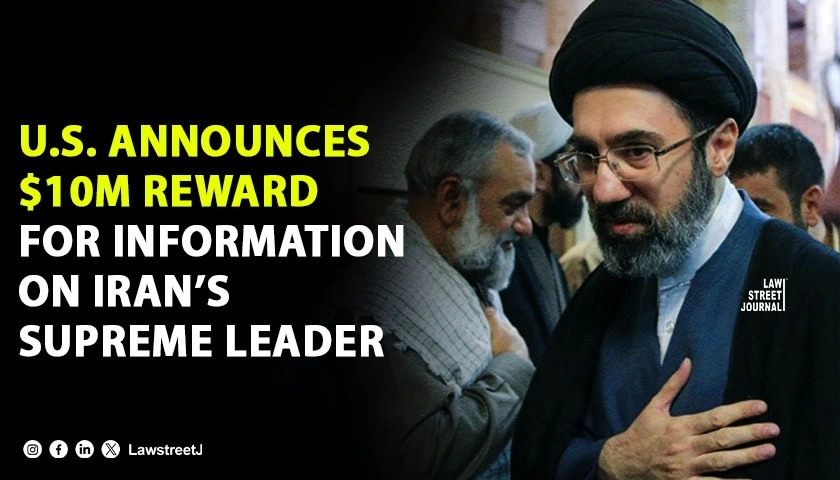
New Delhi: On March 13, 2026, the U.S. Department of State formally declared a reward of up to $10 million for credible information on Mojtaba Khamenei, who assumed the role of Iran’s Supreme Leader following the death of his father, Ayatollah Ali Khamenei, in late 2025. The announcement was made through the Rewards for Justice Program, administered by the Diplomatic Security Service. Established in 1984, the program has historically been used to gather intelligence on terrorism, organized crime, and threats to U.S. national security.
The reward also extends to several senior Iranian officials, including:
- Ali Larijani, Iran’s security chief and former parliament speaker.
- Esmail Khatib, Iran’s Intelligence Minister.
- Eskandar Momeni, Interior Minister.
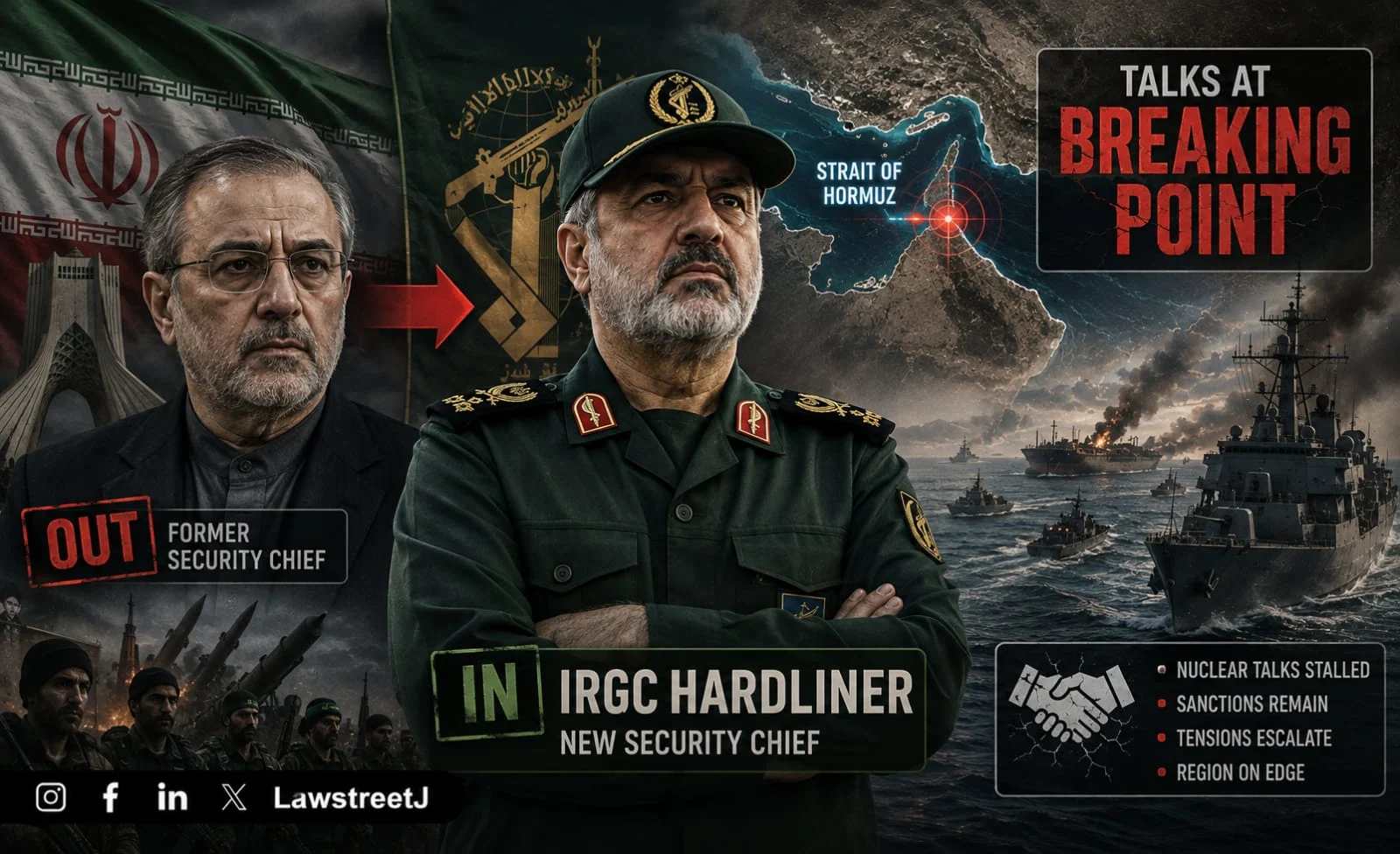
- Senior figures linked to the Islamic Revolutionary Guard Corps (IRGC), including Maj. Gen. Yahya Rahim Safavi.
The U.S. has coupled the financial incentive with the possibility of relocation assistance, signaling its intent to encourage insiders or individuals with access to sensitive information to come forward.
Legal and Diplomatic Dimensions
The Rewards for Justice Program operates under U.S. federal law, specifically the Counterterrorism Rewards Program statute (22 U.S.C. § 2708). This legal framework authorizes the Secretary of State to offer monetary rewards for information that leads to the prevention of international terrorism or the capture of individuals involved in terrorism-related activities. By targeting Mojtaba Khamenei and senior IRGC-linked officials, the U.S. is legally framing its action within the context of counterterrorism and national security rather than direct interference in Iran’s internal governance. This distinction is crucial, as it allows Washington to justify the move under international law while avoiding overt claims of regime change.
Diplomatically, the announcement is expected to further strain U.S.-Iran relations. Tehran has consistently rejected external involvement in its internal affairs, and the targeting of its Supreme Leader represents an unprecedented escalation. Historically, the U.S. has offered rewards for information on militant leaders and terrorist financiers, but extending such measures to a sitting head-of-state–level figure is rare and legally contentious.
Regional and Global Implications
The timing of the announcement coincides with rising instability in the Middle East, particularly after joint U.S.-Israeli strikes on Iranian-linked targets in Syria and Iraq earlier this month. Analysts note that the reward offer is part of a broader strategy to weaken Iran’s leadership structure by isolating Mojtaba Khamenei and undermining the IRGC’s influence.
From a legal perspective, the move also raises questions under international humanitarian law and the Vienna Convention on Diplomatic Relations, as it blurs the line between counterterrorism measures and actions directed at sovereign leadership. While the U.S. maintains that the reward is aimed at preventing terrorism, Iran is likely to interpret it as a direct attack on its sovereignty.
Globally, the announcement has drawn mixed reactions. Allies in Europe have expressed concern over the escalation, urging restraint and renewed diplomatic engagement. Meanwhile, Israel has welcomed the measure, viewing it as consistent with its own security objectives against Iranian influence in the region.
The U.S. decision to place a $10 million reward on Mojtaba Khamenei and senior Iranian officials represents a legally framed but diplomatically provocative step in its confrontation with Tehran. Rooted in the Rewards for Justice Program, the move underscores Washington’s reliance on intelligence-driven strategies to counter perceived threats from Iran’s leadership and the IRGC.
As tensions continue to mount, the announcement highlights the intersection of law, diplomacy, and security policy, setting the stage for further disputes over sovereignty, legitimacy, and international legal norms.