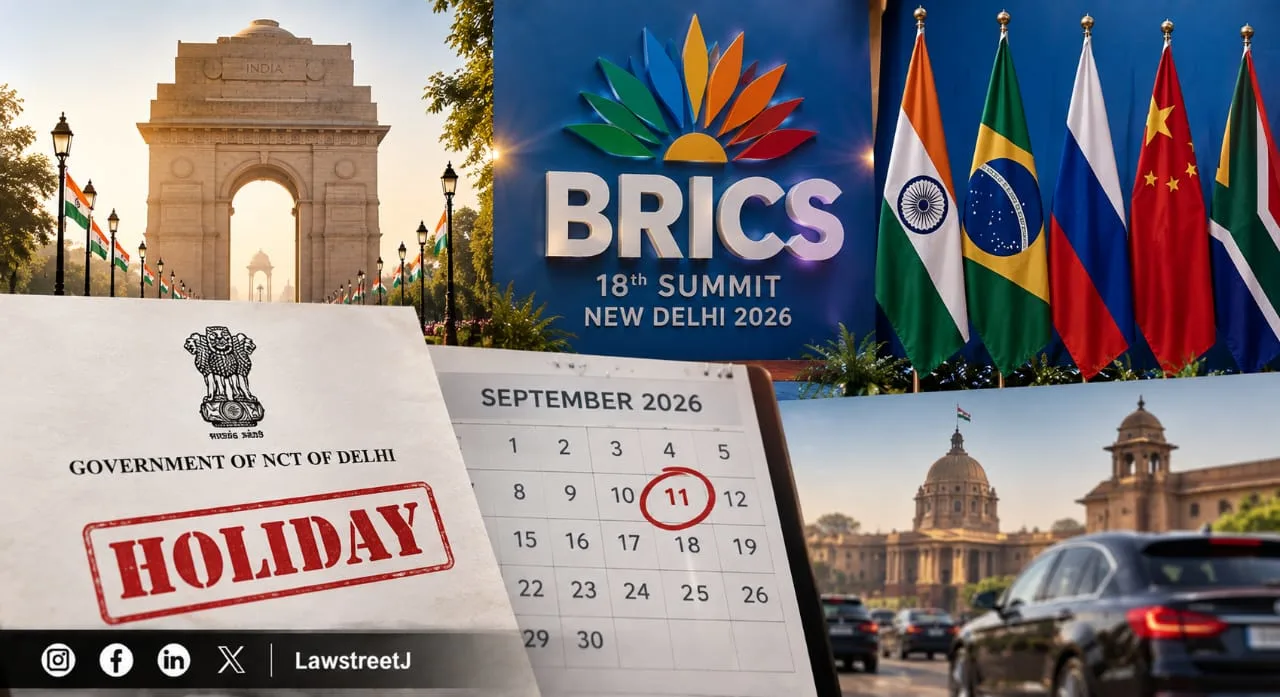

NEW DELHI - Every major international summit hosted by India in recent years has followed a familiar visual script in parts of the Western press. A world leader signs a declaration inside a gleaming convention centre. Outside, the same publication runs a photograph of a cyclist, an auto-rickshaw, or a street vendor passing a summit banner. The BRICS Summit 2026 in New Delhi was no exception, and a close look at how several major outlets chose to illustrate their coverage has reignited a question Indian commentators have been asking for years, is this documentary photography, or a framing habit that quietly narrows the story every time India gets a moment on the world stage?
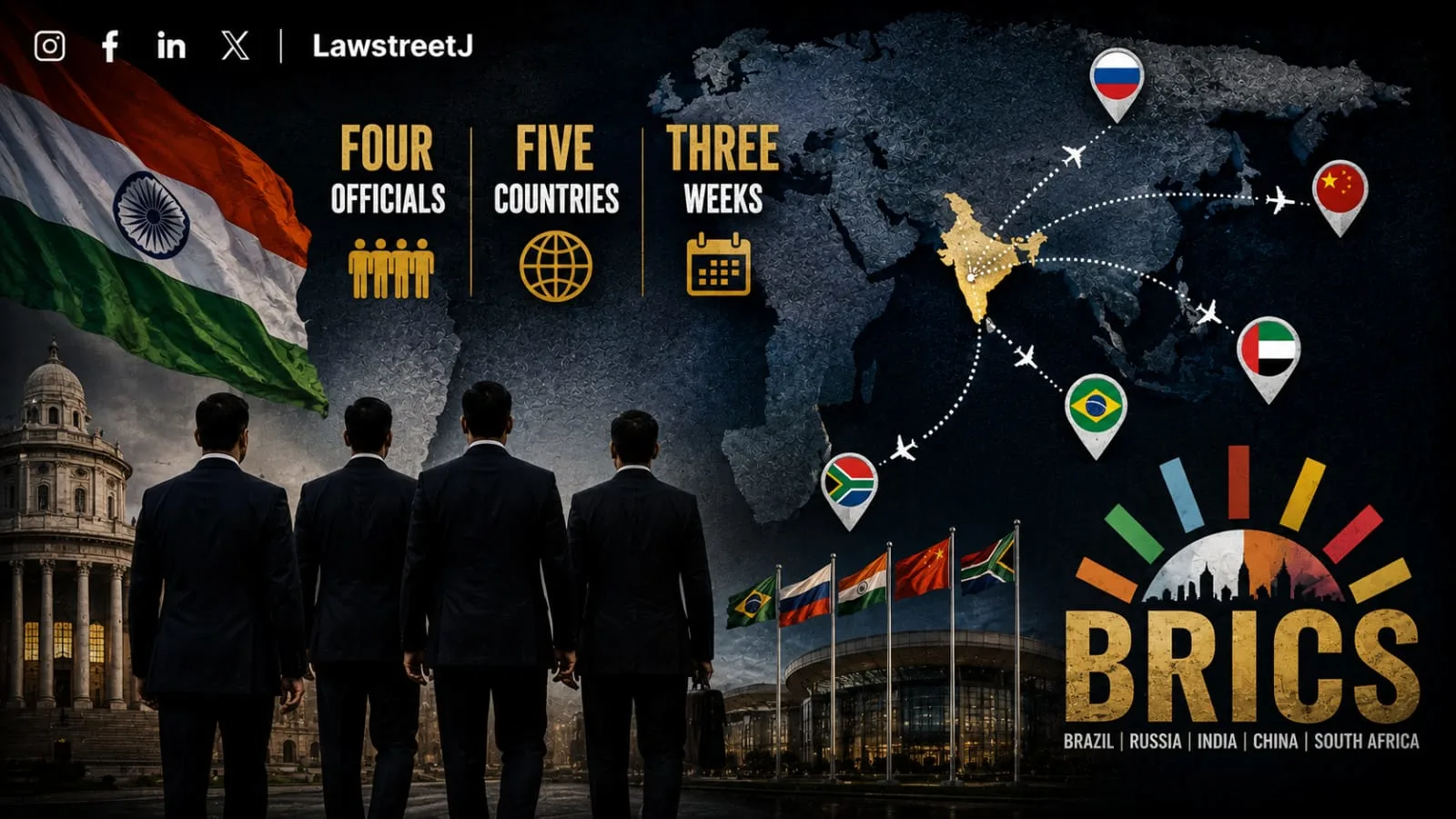
The 18th BRICS Summit was, by any measure, a significant diplomatic event. Eleven member states, representing nearly half the world's population and roughly 40 percent of global GDP, gathered in New Delhi for two days of talks that produced a unanimously adopted declaration despite sharp internal divisions. It was the kind of gathering that should, in theory, be illustrated by its substance. Instead, a scroll through the accompanying imagery in several Western publications tells a narrower story than the one that actually unfolded inside Bharat Mandapam.
The Pattern in the Pictures

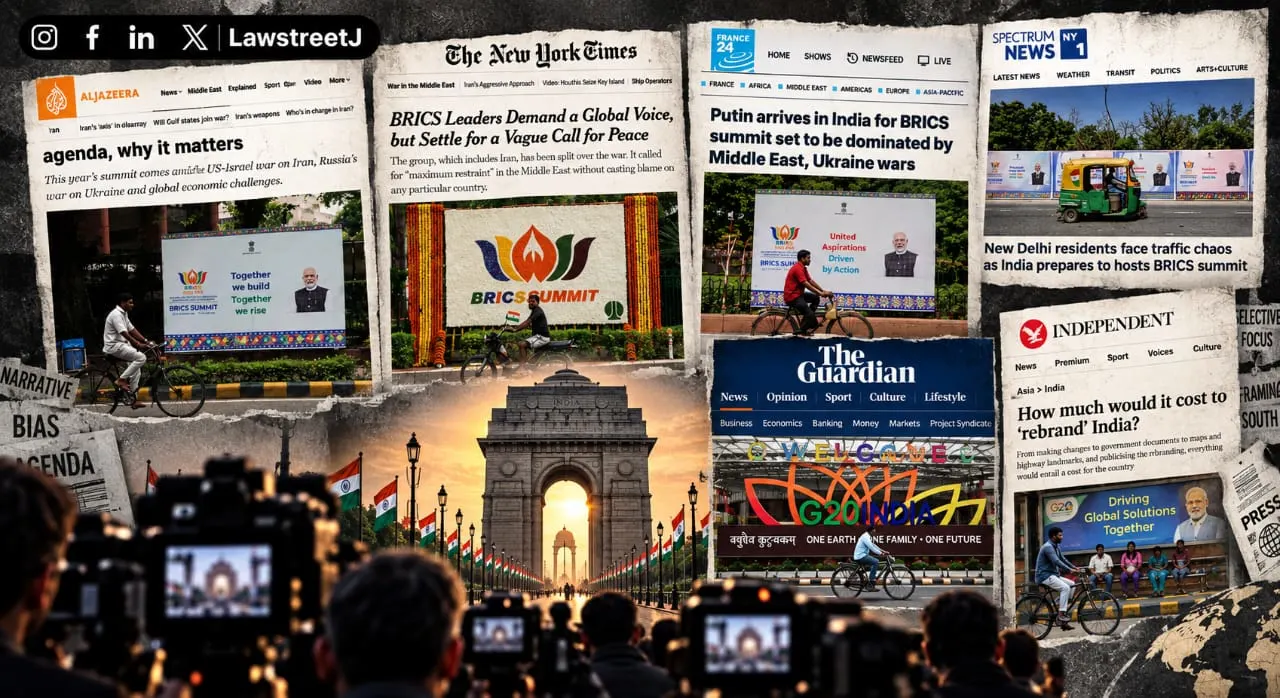
Look at how the coverage was actually illustrated and the repetition becomes hard to miss. France 24's preview piece, published on September 11, led with a man cycling past a BRICS 2026 hoarding in the Indian capital. Al Jazeera's explainer on why the summit mattered ran an almost identical frame, a cyclist pedalling past a Modi-branded billboard, captured from a near-identical angle. Spectrum News in New York, syndicating an Associated Press photograph, ran its story under the headline "New Delhi residents face traffic chaos as India prepares to host BRICS summit," pairing a green-and-yellow auto-rickshaw with summit banners in the background, days before a single head of state had even landed in the country.

None of these images are fabricated. New Delhi does have cyclists. It does have auto-rickshaws. It does have traffic. That much is simply true, and no fair reading of this pattern should pretend otherwise, or suggest that showing these realities is itself the problem.
What is worth examining is the editorial choice being made, independently, by multiple outlets, at the exact moment India is hosting one of its most significant diplomatic gatherings of the year. When Russia hosted BRICS in Kazan in 2024, the opening images accompanying Western coverage tended toward motorcades, handshakes and skylines, the standard visual grammar of a major-power summit. In India's case, the frame that keeps recurring is the same one typically reserved for stories about congestion, poverty or civic dysfunction, regardless of what the article underneath actually says. A summit about global governance reform, de-dollarisation and West Asia diplomacy gets opened, visually, with a bicycle.
The Criticism Isn't About Hiding Reality, It's About Consistency

It is worth being precise about what this criticism is actually claiming, because it is easy to caricature. The argument is not that Western outlets should pretend poverty, inequality or rural hardship don't exist in India. They do, and honest journalism has always had a responsibility to cover them. Pretending otherwise would be its own kind of distortion.
The actual question being raised is narrower and harder to dismiss, is the same visual lens applied with equal consistency when powerful Western nations host their own major international events? When Britain hosted the G7, or when France hosted a G20 summit, coverage did not typically open with images chosen to evoke hardship or dysfunction, even though both countries have their own visible inequality, homelessness and infrastructure strain. When India hosts a summit involving leaders from major emerging and established economies alike, reducing the country's image to poverty-associated visuals produces a far narrower picture than the one actually on the ground, not because the visuals are false, but because they are selectively deployed.
That selectivity becomes harder to explain away as coincidence when it happens on this scale. India today is a country simultaneously managing real poverty and inequality while also operating one of the world's largest real-time digital payment ecosystems, expanding metro and highway infrastructure at record pace, running an increasingly ambitious space programme, and drawing sustained global investment interest even as it plays a growing role in international diplomacy, a role substantial enough to host eleven heads of state and broker a unanimous joint declaration amid genuine geopolitical fault lines. None of that complexity requires poverty to be edited out of the picture. It simply requires it not to be the only picture offered.
This Is Not the First Time

If this feels like déjà vu to Indian readers, that's because it is, almost beat for beat. The same pattern played out during India's G20 presidency in September 2023, and it did not go unnoticed then either.
In the run-up to that summit, an old and completely unrelated photograph of Mumbai went viral, having originally been taken months earlier in a different context entirely, only to be recirculated as though it depicted the city's condition ahead of the G20. Fact-checkers eventually traced the image back to its original source and debunked the framing. Around the same period, The Guardian ran an editorial headlined "A backsliding democracy gets to play host," a piece that spent more time on domestic Indian politics than on the substance of India's G20 chairmanship. The Washington Post, for its part, ran a piece scrutinising India's "global rebrand" rather than its policy agenda. The Independent published a piece asking "How much would it cost to 'rebrand' India?", a headline better suited to a skeptical op-ed than a summit dispatch.
Indian media critics raised much the same question back then that has resurfaced now. Commentary published at the time asked bluntly whether the Western press is "hardwired to view countries in the Global South as familiar strangers," and whether the recurring trope of India as "a land of millions of poor and an elite superrich" reflects genuine reporting priorities or something closer to editorial habit. That question was left largely unresolved in 2023. Three years later, with near-identical imagery accompanying near-identical BRICS coverage, it resurfaces with more evidence behind it, not less.
It is worth stressing again, this is not one outlet making one lazy call on one deadline. It is a pattern visible across separate publications, across separate summits, separated by three years and an entirely different subject matter, trade and diplomacy in one case, global governance reform in another, yet converging on the same handful of images each time.
Substance Versus Framing
The frustrating part, for those raising this criticism, is that the substance of India's BRICS chairmanship this year was not thin by any measure. Under India's year-long presidency, more than 350 meetings were held across nearly 30 Indian cities. The summit itself produced the New Delhi Declaration, adopted unanimously by all eleven member states despite sharp divisions between Iran and the UAE over the ongoing West Asia conflict, an outcome that required, by most independent accounts, genuinely difficult last-minute diplomacy from Indian negotiators working to find language acceptable to both sides.
Modi used the platform to press one of the more substantive reform agendas any BRICS host has articulated in years. His "3Rs" framework, Representation, Responsiveness and Rule-making, called for time-bound reform of the UN Security Council, rebalanced voting power at the IMF and World Bank, and a genuine seat for the Global South in shaping the rules governing emerging technologies like artificial intelligence. Even commentary that was otherwise skeptical of the summit's outcomes, such as The New York Times' own analysis describing the bloc's Middle East statement as a "vague call for peace," still engaged seriously with the underlying diplomacy, the trade-offs between Iran and the UAE, the de-dollarisation debate, the internal contradictions of an eleven-member bloc trying to speak with one voice.
None of that complexity made it into the image chosen to greet readers scrolling past the headline. Instead, the visual shorthand on offer, again and again, was a cyclist, an auto-rickshaw, a "chaotic" street, reducing a summit of genuine geopolitical weight to a single note before a word of the actual reporting had been read.
Questioning the Intent
Is this laziness, habit, or something more deliberate? That is genuinely harder to answer than the pattern itself is to observe.
What can be established with confidence is this, multiple major outlets, across two separate India-hosted summits three years apart, independently reached for near-identical street-level imagery, cyclists and auto-rickshaws set against summit banners, rather than imagery reflecting the diplomatic substance of the events they were covering. That is not speculation- it is visible, side by side, in the published pages themselves.
What is harder to establish, and remains genuinely a matter of interpretation rather than settled fact, is whether this reflects conscious editorial bias, an unconscious institutional reflex built up over decades of reporting conventions on the Global South, or simply photo desks reaching for whatever generic "local colour" shot is available on a tight deadline. These are not necessarily the same thing, and collapsing them into a single accusation of deliberate mockery would overstate what the evidence actually shows.
It is also fair to note the other side of this. Some of the reporting that accompanied these images was, on its own terms, serious and detailed, the Financial Times' coverage of Xi Jinping's peacemaking appeal, for instance, or the Times' own granular breakdown of the Iran-UAE standoff within the bloc, engaged with real complexity rather than caricature. Indian commentators have themselves, at times, acknowledged genuine shortcomings in how India prepares for these events, including criticism during the 2023 G20 over slum clearance drives ahead of the summit. A photograph of a street is not, by itself, proof of intent to mock.
A Pattern Too Consistent to Ignore
But consistency is exactly what makes this different from a single bad editorial call. This is not one photograph. It is not one summit. It is a pattern that has now repeated itself across two of India's most significant hosting moments in the space of three years, involving different publications, different photographers and different editors, all converging, independently, on the same handful of visual tropes.
The BRICS Summit was, at its core, about India's growing role in shaping conversations on the global stage, from Security Council reform to de-dollarisation to brokering consensus among leaders on opposite sides of an active war. That broader reality deserves coverage too, not as a replacement for honest reporting on India's real and ongoing struggles with poverty and inequality, but alongside it. For a country hosting eleven heads of state and pushing one of the more detailed reform agendas any BRICS chair has offered in recent memory, the persistent editorial choice to greet that story with a bicycle rather than a boardroom is, at minimum, worth asking questions about. Whether the answer is bias, habit or simple convenience, the pattern itself is no longer new and neither, it seems, is the reluctance to examine it.