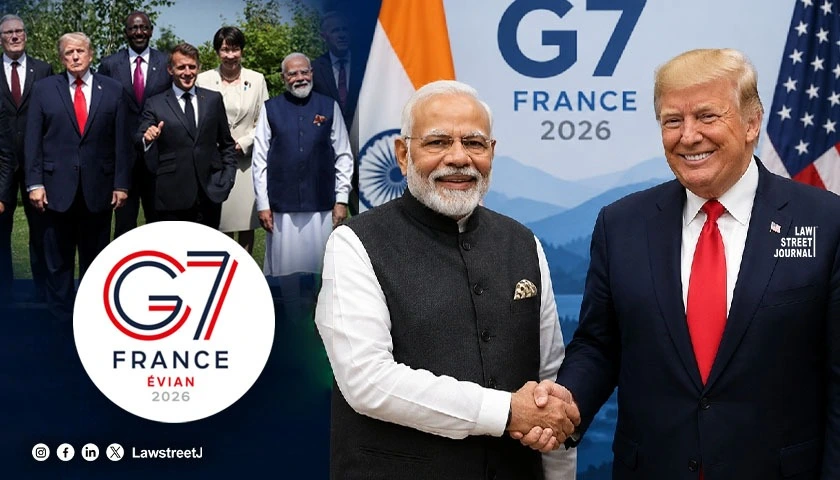
Prime Minister Narendra Modi told leaders gathered at the 52nd G7 Summit in France that the central deficit facing the international system today is not one of resources but of trust, delivering the remarks at a moment when India's own relationship with the United States remains under visible strain. Addressing the Outreach Session of the summit in Evian, Modi called for deeper cooperation in an increasingly interconnected world, with the session built around the theme "Forging New Partnerships and Rebuilding International Solidarity."
In a post on social media, India's Ministry of External Affairs quoted the Prime Minister as underscoring that trust must remain the foundation of global partnerships, and that international cooperation should move beyond the traditional donor-recipient model toward one rooted in solidarity and equality. Modi's own post on the social media platform X read: "Mutual trust is the most important strategic asset today. But, sadly, today, the world does not suffer from a shortage of resources…it suffers from a shortage of trust. And the future of our partnerships depends on re-building this trust." https://x.com/i/status/2066915358850859250
A Brief, Closely Watched Encounter With Trump
Prior to the Outreach Session, Modi and US President Donald Trump held a brief interaction following the traditional family photograph on the second day of the summit. Visuals from the gathering showed the two leaders shaking hands, with Trump patting Modi on the arm. The exchange marked the first face-to-face meeting between the two leaders since Modi's visit to Washington in February of the previous year, a gap of sixteen months. The Prime Minister and the US President also sat side by side during the G7 outreach session.
A more substantial bilateral meeting between the two leaders was scheduled for June 17, which, according to the White House, would focus significantly on advancing the proposed India-US trade agreement.
The brevity of the Evian interaction, and the considerable media attention it drew, reflects how complicated the bilateral relationship has become over the preceding year.
The Backdrop: A Year of Strain Between New Delhi and Washington
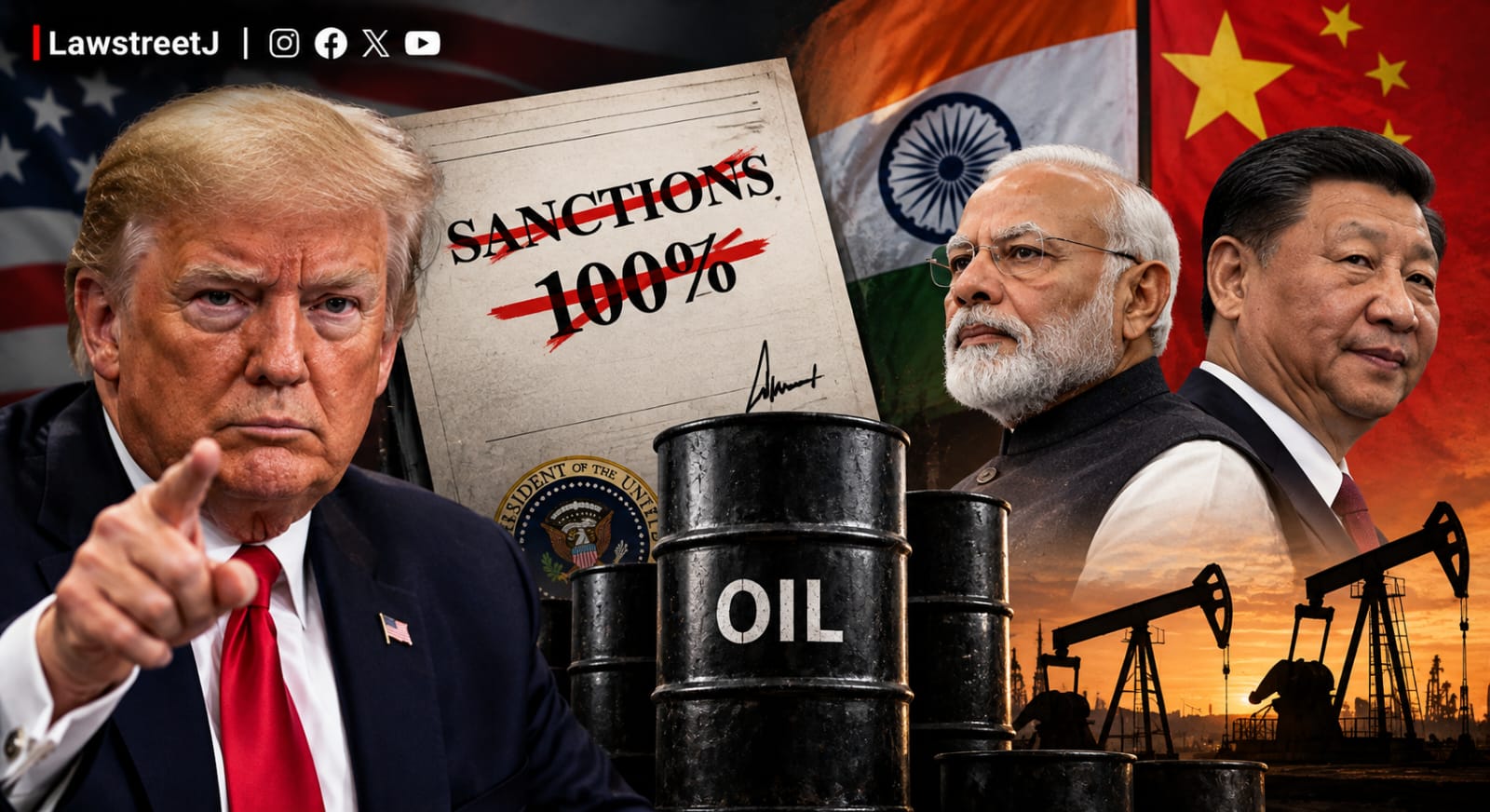
The cordial optics in France followed a stretch of unusually difficult months between the two countries. Relations between India and the United States came under significant strain over trade and other issues, with Trump threatening companies manufacturing in India, moving closer to Pakistan, and making disparaging remarks about India's economy. Citing India's substantial purchases of Russian oil, Trump moved to substantially increase tariffs on Indian imports, which had already been among the highest imposed on any Asian country. India's Ministry of External Affairs responded at the time that the criticism was unjustified and unreasonable, noting that India had originally begun importing Russian oil after traditional supplies were diverted to Europe following the outbreak of the war in Ukraine, with the United States having actively encouraged such imports to help stabilise global energy markets.
Modi had long balanced India's ties with Russia and the United States under the country's policy of strategic autonomy, a task made considerably more difficult by pressure from the Trump administration to halt Russian oil purchases, which saw US tariffs on Indian goods rise as high as 50 percent. Trade talks were further complicated by Trump's repeated claim that he had brokered a peace settlement between India and Pakistan in May, a characterisation New Delhi consistently rejected, with analysts noting that the personal chemistry between the two leaders appeared to have weakened over the course of the year.
A turning point came in early February 2026. Trump agreed to slash tariffs on Indian goods from 50 percent to 18 percent, in exchange for India lowering its trade barriers and agreeing to stop purchasing Russian oil, instead buying oil from the United States and potentially Venezuela. Announcing the agreement, Trump said the reduction was made "out of friendship and respect" for Modi and at his request. As part of the arrangement, India committed to reducing tariffs on US goods to zero in several categories and to investing more than 500 billion dollars in American agriculture, coal, energy, and technology sectors.
Modi confirmed the new 18 percent tariff rate in a post on social media, describing the agreement as a step toward restoring stability and momentum in the bilateral relationship, and stated he looked forward to working closely with Trump to take the partnership to unprecedented heights. Notably, Modi did not directly reference Russian oil or Trump's claim regarding the elimination of Indian tariffs on American goods. Trade analysts cautioned at the time that significant ambiguity remained in the fine print of the agreement.
Modi's Wider Message and India's Diplomatic Calendar in Evian
Beyond his remarks on trust, Modi spotlighted India's "humanity first" approach to global engagement, pointing to initiatives including the International Solar Alliance, the Coalition for Disaster Resilient Infrastructure, the Global Biofuel Alliance, Mission LiFE, and the "Ek Ped Maa Ke Naam" tree-planting campaign as examples of India's contribution to collective global solutions. He further described India's approach to international partnership as rooted in the philosophy of "Vasudhaiva Kutumbakam", the world is one family, reiterating the country's commitment to sustainable and inclusive global development.
Modi's appearance in Evian marked India's thirteenth appearance at the G7 Summit as a partner nation and the seventh consecutive occasion on which the Prime Minister has personally participated in the forum. He had arrived in France following an official invitation extended by French President Emmanuel Macron, and was welcomed at the summit venue before joining other G7 leaders and invited nations for the customary group photograph. The leaders photographed alongside Modi included European Council President Antonio Costa, Italian Prime Minister Giorgia Meloni, Egyptian President Abdel Fattah el-Sisi, French President Emmanuel Macron, German Chancellor Friedrich Merz, UK Prime Minister Keir Starmer, European Commission President Ursula von der Leyen, and Brazilian President Luiz Inacio Lula da Silva, in addition to President Trump.
Alongside the Trump meeting, Modi's schedule in Evian included an intensive run of bilateral diplomacy, with separate meetings held with Canadian Prime Minister Mark Carney, UK Prime Minister Keir Starmer, and UAE President Sheikh Mohamed bin Zayed Al Nahyan.
The combination of a pointed public message about the global trust deficit, delivered on the same day as his first in-person meeting with Trump in over a year, places Modi's Evian appearance at the centre of ongoing efforts by both governments to stabilise a relationship that has, by most independent accounts, experienced one of its most turbulent periods in the past two decades.
![Gujarat High Court Denies Bail to Man for Obscene Comments on PM and Late Mother [Read Order]](/secure/uploads/2023/06/lj_1661_9baa7d8a-0faf-4761-b395-81c631cd129f.jpg)