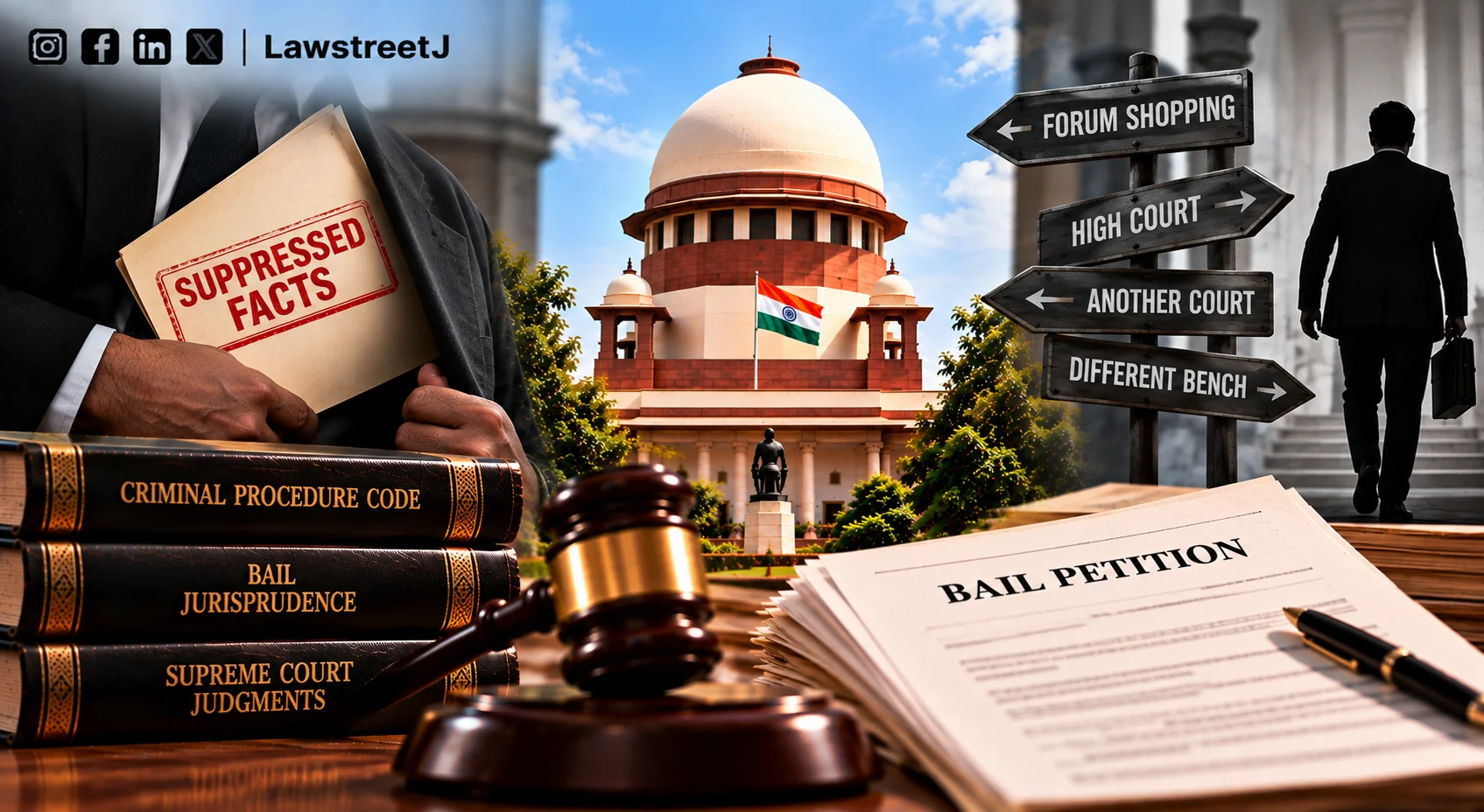
Mumbai: The Court of Sessions, Greater Bombay, has granted bail to an accused in a major cyber fraud case involving Rs. 1.93 crore, holding that prolonged incarceration serves no purpose when the investigation is complete and the accused is not the direct beneficiary of the fraudulent transaction, while reaffirming the constitutional principle that “bail is the rule and jail is the exception.”
Additional Sessions Judge Amit Anant Laulkar made crucial observations on the principles of bail jurisprudence, completion of investigation, and the constitutional right to personal liberty in economic offences.
The court addressed the case involving Akshay Gorakhanath Shelake, aged 29 years, a resident of Nashik, who sought regular bail in connection with C.R. No. 137/2025 registered with Cyber Police Station, Western Division, Bandra, Mumbai.
The prosecution’s advocate submitted that if the accused is released, there are chances that he may tamper with evidence and pressurise witnesses, highlighting the active involvement of the accused in the crime.
The accused’s advocate submitted that the applicant is innocent and falsely implicated in the crime, that the investigation is complete with the final report filed, and that the entire disputed amount of Rs. 1,93,06,000/- was transferred to the ICICI Bank account belonging to accused No. 1, Shubham Kunjir.
Addressing the nature of the alleged offence, the court observed that except for the offence under Section 318(4) of the BNS, all other alleged offences are bailable in nature and triable by a Magistrate and are, therefore, compoundable in nature.
The court highlighted the completion of the investigation, stating:
“In the present crime, the Final Report is placed before this Court and now it stands over for further due deliberation. Having scanned the police papers cum charge-sheet, it is crystal clear that the investigation, as regards the present accused, is already over.”
While characterising the accused’s role in the alleged fraud, the court found that the applicant’s role was smaller than that of the others and that the amount of alleged deception was deposited in the account of co-accused Shubham Kunjir. Apparently, the court stated that the applicant was therefore not the direct beneficiary of the monetary transaction.
“The only role ascribed to the applicant is that he had booked hotel rooms in Mumbai and later handed over the bank account kits and SIM cards linked to the accounts of certain persons to the individuals. Thus, the role is comparatively minor,” the court stated.
The court further highlighted the principle of parity in bail matters, observing that the other co-accused have been granted bail even though they were shown to have played a much greater role than the applicant.
Addressing constitutional principles governing bail, the court relied on a catena of precedents from the apex court and stated:
“The Hon’ble Supreme Court has repeatedly highlighted the proposition that bail is the rule and jail is the exception. Even if, for the sake of argument, it is assumed that there are grounds attributing alleged guilt towards the accused persons, yet it may not take exception to the jurisdiction of this Court to enlarge the accused on bail.”
The court also noted the deleterious effects of prolonged incarceration, observing:
“Incarceration has further deleterious effects where the accused belongs to the weakest economic strata: immediate loss of livelihood and, in several cases, scattering of families as well as loss of family bonds and alienation from society.”
Applying established legal principles to economic offences, the court stated:
“Even if the allegation is one of grave economic offence, it is not the rule that bail should be denied in every case, since there is no such bar created in the relevant enactment passed by the legislature, nor does bail jurisprudence provide so.”
The court further emphasised the duration of custody already undergone, noting that the accused/applicant had already been incarcerated for over six months and that his custodial interrogation was no longer required.
Granting bail, the court directed:
“The accused Akshay Gorakhnath Shelake be released on P.B. of Rs. 30,000/- with one or two sureties in the like amount.”
To address the prosecution’s concerns, the court stated:
“The anxiety expressed by the prosecution as regards the gravity of the crime can be taken care of by imposing stringent conditions upon him.”
The court imposed conditions, directing:
“He shall mark his presence before the Cyber Police Station, Western Division, Bandra, Mumbai, on the first Thursday of every month between 11.00 a.m. and 01.00 p.m., except on the days when he is required to attend the Court, for a period of three years or till the conclusion of trial, whichever is earlier.”
The court also directed travel restrictions:
“He shall surrender his passport, if any, to the Investigating Officer/Respondent immediately. He shall not leave India without prior permission of the Court.”
The accused was directed not to directly or indirectly induce, threaten, or promise any person acquainted with the facts of the case and to attend each and every date of trial, failing which the bail shall be treated as cancelled.
The court further directed that provisional cash bail of Rs. 20,000/- in lieu of surety shall stand granted for a period of six weeks, with final bail to be executed before the jurisdictional court.
Advocate Shirish Desai appeared for the applicant, while APP Abhijit Gondwal appeared for the State of Maharashtra.
Case Title: Akshay Gorakhanath Shelake v. The State of Maharashtra