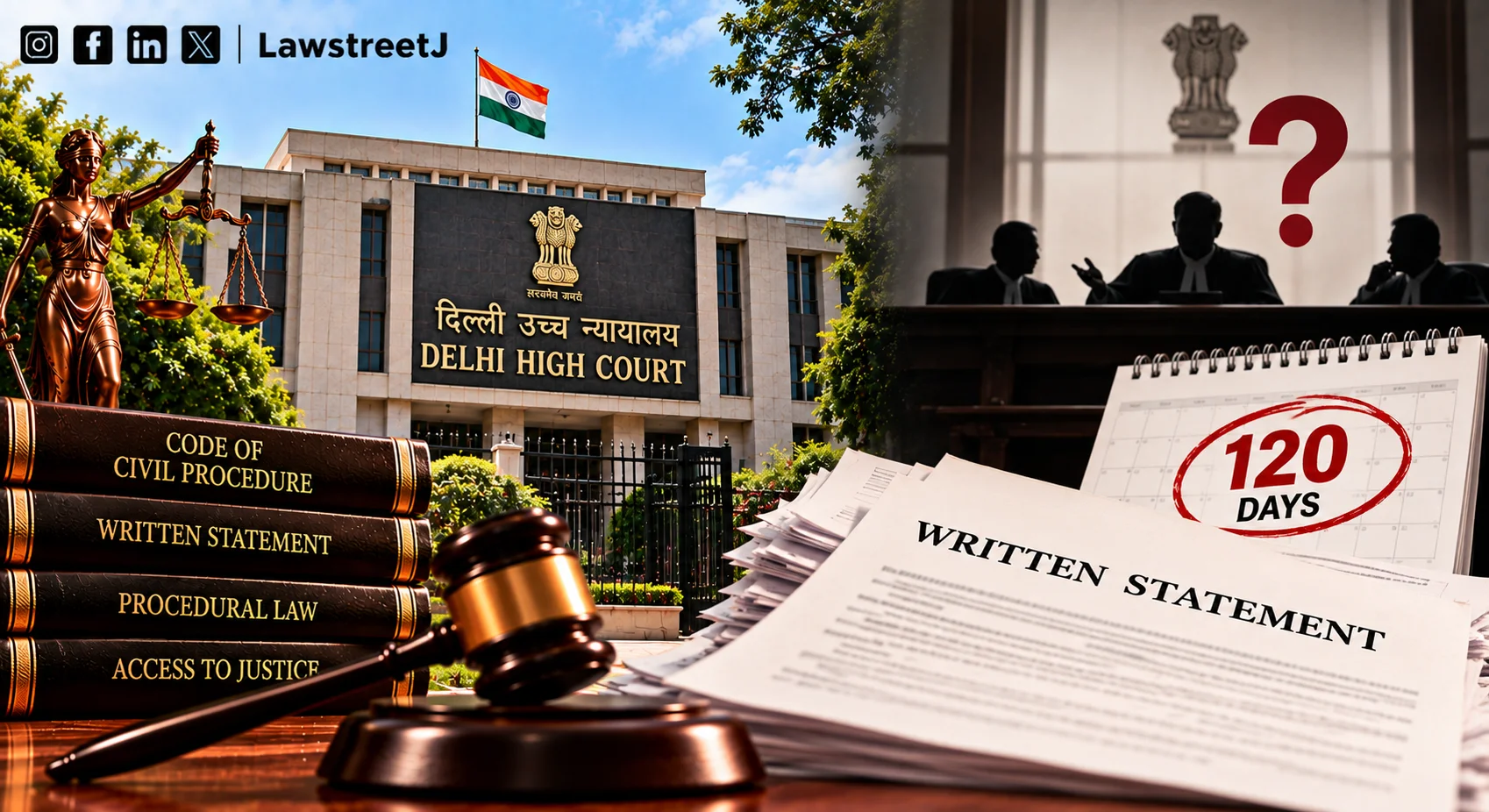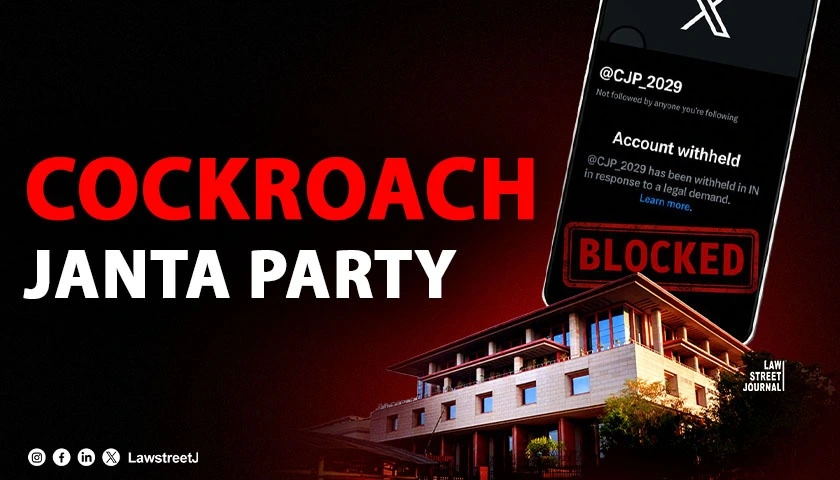
New Delhi: The Delhi High Court on May 29, 2026 issued notice to the Union government and X (formerly Twitter) on a petition filed by Cockroach Janta Party (CJP) founder Abhijeet Dipke challenging the blocking of the CJP’s X account. However, Justice Purushaindra Kumar Kaurav declined to grant immediate restoration of the account, stating that such relief could be granted only after hearing the government, given the far-reaching consequences of the matter.
“There may be some substance in your submissions but they all need to be considered. They will be considered holistically after hearing the other side. There are far-reaching issues. There are wider ramifications,” the Court observed.
The matter has been listed for hearing on July 6, 2026, with the Union of India directed to file a comprehensive response within four weeks.
The “Cockroach Janta Party” emerged in May 2026 as a satirical online movement that gained rapid traction across social media platforms, particularly among younger users. The movement grew out of proceedings before the Supreme Court on May 15, 2026, during which a Bench headed by the Chief Justice of India expressed concern over unemployed young lawyers drifting away from practice toward social media and RTI activism. The Chief Justice observed that such “youngsters like cockroaches” were becoming parasites in society, remarks which he subsequently clarified were directed at individuals entering professions through forged qualifications and fake degrees, and not at unemployed young Indians generally.
The collective, started by Dipke, a resident of Boston, United States of America, uses political satire to comment on issues such as unemployment, institutional accountability, and media freedom. At the time of blocking, the account had garnered hundreds of thousands of followers on X and over 22 million followers on Instagram.
The Central government, acting on inputs from the Intelligence Bureau raising national security concerns, directed the Ministry of Electronics and Information Technology (MeitY) to ask X to withhold the account under Section 69A of the Information Technology Act, 2000.
Senior Advocate Akhil Sibal, appearing for Dipke, pressed for restoration of the account during the pendency of the petition. He submitted that the CJP was a work of “pure satire” and argued that during the pendency of the challenge, individual tweets could be blocked rather than the account in its entirety. He referred to at least five precedents in which similar orders had been passed, in three of which accounts had been unblocked.
The Court, however, said it could only issue notice at this stage. It noted that the law on blocking orders remained at a nascent stage and observed that neither the petitioner nor the Court had seen the blocking order itself.
“I have seen the page, the communication by X to you, there is nothing in that. The blocking order neither you have seen nor I have seen,” the Bench said.
The Court drew a distinction between the present matter and cases in which interim restoration had previously been ordered, observing: “There seems to be a slight difference between other cases and in this case. In this case what seems to be the reasons is that the entire activity is per se slightly offending.”
The Court also noted that it does not, in some cases, even direct the intermediary to supply the blocking order, and that questions of confidentiality could be considered at a later stage. It observed that directing the intermediary to read out the blocking order in court could sometimes create difficulties.
Solicitor General Tushar Mehta, representing the Union government, was told by the Court that it would hear the government before passing any orders. Mehta remarked that the intermediary appeared to be helping the petitioner.
The Court additionally directed a review of the blocking order by the statutory review committee, noting that the committee is required to meet every two months under the relevant rules and is empowered to examine all aspects of the blocking order.
“It is directed that the review committee will examine all these aspects. The decision be placed on record,” the Bench said.
Since Dipke is not in India, the Court noted that he may make a request to appear before the review committee through video conferencing.
Case Details
- Court: High Court of Delhi
- Judge: Justice Purushaindra Kumar Kaurav
- Date of Hearing: May 29, 2026
- Next Date: July 6, 2026
- Petitioner: Abhijeet Dipke, founder, Cockroach Janta Party
Appearances:
- For the Petitioner: Senior Advocate Akhil Sibal; Advocates Vrinda Grover, Nakul Gandhi, Gurdeep Singh, Siddhi Sahoo, Krishnesh Bapat, Jahnavi Sindhu and Aditya Raj Patodia.
- For the Union of India: Solicitor General Tushar Mehta, Additional Solicitor General Chetan Sharma, Advocate Rajat Nair and CGSC Avshreya Rudy.

![Delhi High Court Sets Aside Arbitral Tribunal's Award Against NHAI in Highway Project Delay Case [Read Judgment]](/secure/uploads/2023/07/lj_9605_23374c2e-392c-4491-a2fe-f2f12fc5272f.jpg)
![Delhi Court Rejects Stay Request in Defamation Case Against Rajasthan CM Ashok Gehlot [Read Order]](/secure/uploads/2023/08/lj_5208_80de1ddc-d76a-4f7f-b180-408e3ae14fb4.jpg)