New Delhi: The Supreme Court has held that its order dated 20.11.2026, permitting the lighting of the ceremonial lamp at the stone pillar known as “Deepathoon” atop the Thiruparankundram Hill in Madurai, was prima facie wilfully disobeyed, and has called upon senior Tamil Nadu officials and the temple’s trustees to show cause why contempt proceedings should not be initiated against them.
The Court also suspended and superseded the Board of Trustees of the Arulmigu Subramania Swamy Temple, Thirupparankundram, appointed two former High Court judges as Joint Receivers, handed over security of the temple and the entire hill to the Central Reserve Police Force (CRPF), and directed that the Karthigai Deepam be lit at Deepathoon on 28.11.2026. The order was passed on 27.11.2026 by a Bench of Justice Aravind Kumar and Justice Vipul M. Pancholi.
By its order dated 20.11.2026, the Court had stayed the observations in paragraphs 1 to 141 of the High Court’s impugned judgment dated 06.01.2026 and, as a temporary arrangement not recognising any customary, religious or proprietary right, permitted the lamp to be lit at Deepathoon on 24.11.2026 through a restricted team authorised by the Devasthanam. The District Collector, Madurai, was made the nodal officer and was to settle the team’s composition in consultation with the Temple Executive Officer, the Archaeological Survey of India (ASI) and the Commissioner of Police.
On 24.11.2026, in writ petitions filed by devotees before the Madurai Bench of the Madras High Court, the Senior Counsel for the District Collector submitted on instructions that the Supreme Court’s order would be complied with. However, by Resolution No. 1 dated 24.11.2026, the Board of Trustees resolved to light the lamp at its customary place, citing Agama rules, historical continuity and the opinions of the sthanikars. The Mahadeepam was lit at about 6:00 p.m. at the Deepa Mandapam near the Uchippillaiyar Temple, and not at Deepathoon.
Senior Advocates Guru Krishna Kumar, J. Sai Deepak, P. Valliappan and S. Sriram, for the petitioners, alleged flagrant disobedience by the State authorities in connivance with their political bosses, sought supersession of the Board, and prayed that the lamp be lit at Deepathoon within the month of Karthigai. Solicitor General Tushar Mehta, for the ASI, supported them and sought a neutral administrator and a central agency for security, pointing out that an ASI official had been prevented from entering the Deepathoon site.
For the respondents, it was argued that the Collector had complied with the order and that the undertaking before the High Court was only to comply with the order, not to ensure that the lamp was lit; that 5,797 police personnel had been deployed; that the Executive Officer had no power to overrule the Board’s decision on religious matters; and that the order of 20.11.2026 had given the Trustees a certain leeway.
Rejecting these contentions, the Court said that the word “Alas!” was the appropriate expression for the situation and that such situations must be dealt with an iron hand, as otherwise it may lead to constitutional chaos. Relying on T.N. Godavarman Thirumulpad v. Ashok Khot, (2006) 5 SCC 1, and Article 144 of the Constitution, the Court held that an order of the Court is not an invitation to negotiate and binds the State, its officers and every statutory or religious institution until the Court itself modifies it. It added that, as a Court of Record under Article 129, it would not shy away from using the Contempt of Courts Act, 1971 where the administration of justice so requires.
The Court held that the resolution, passed barely a few hours before the Deepam was to be lit, amounted to a categorical refusal to implement its order. It took strong exception to the Board’s statement that the temple’s traditions should be brought to the Court’s notice, since both sides had been heard at length on those very traditions, and noted that the Board had never appeared before it. An executive authority that presumes to decide whether an order of the Court deserves to be obeyed, the Court said, arrogates to itself a power the Constitution never conferred upon it.
Observing that the conduct prima facie revealed utter administrative chaos in Tamil Nadu, or at least in Madurai District, and that the authorities seemed to have acted at the dictates of their political bosses, the Court directed the Chief Secretary to file an affidavit detailing the emails, calls and messages exchanged between officials, with Call Detail Records, and to appear in person. It described the Collector’s preliminary report dated 25.11.2026, which apologised and blamed the temple administration, as prima facie nothing but crocodile tears, and took it on record for statistical purposes only.
Show cause notices were issued to fourteen persons, including the Director General of Police, the HR&CE Secretary and Commissioner, the District Collector, the Commissioner of Police and other police officers of Madurai, the HR&CE Joint Commissioner, the temple’s Executive Officer, and the Chairman and four Trustees of the Board. All of them must file replies within 10 days of service and appear in person on 15.12.2026 at 2:00 p.m. The Secretary, Home Department, Government of Tamil Nadu, must ensure personal service of the notices within five days and file a personal affidavit confirming service, failing which he or she shall appear in person.
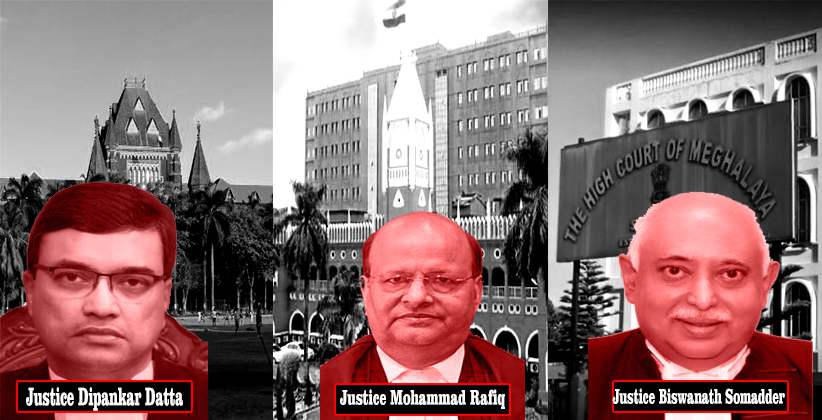
Finding a complete failure on the part of the Board, the Court appointed Justice S. Vaidyanathan, Former Chief Justice of the Meghalaya High Court, and Justice V. Parthiban, Former Judge of the Madras High Court, as Joint Receivers to take charge of the temple forthwith. The Receivers are to administer the temple in keeping with its traditions and rituals and the applicable law, with all logistical and administrative support from the State Government. The CRPF, Chennai, was directed to take over security of the temple and the hill and ensure that devotees of both the temple and the Dargah can worship without obstruction, while the Madurai police will continue to provide security for the area surrounding the hill.
The Receivers were directed to ensure that the Deepam is lit at Deepathoon on 28.11.2026, afresh if the flame lit on 24.11.2026has gone out. Since the authorities had not even attempted to purge the contempt, the Court also vacated its stay of the impugned judgment and directed the Receivers to permit devotees to light lamps at Deepathoon and other designated places at least 50 metres from the Dargah on all sides. The safeguards laid down in paragraph 14 of the order dated 20.11.2026 will continue to operate, subject to the present directions, and the Court clarified that the order would not create any equities in favour of either party. The matter will next be heard on 15.12.2026.
For the Petitioners: Mr. Guru Krishna Kumar, Mr. J. Sai Deepak, Mr. P. Valliappan and Mr. S. Sriram, Senior Advocates, and others
For the Archaeological Survey of India: Mr. Tushar Mehta, Solicitor General of India, Mr. K. M. Nataraj, Additional Solicitor General, and others
For the Respondents: Dr. Abhishek Manu Singhvi, Mr. Sidharth Luthra, Mr. Jaideep Gupta, Mr. Gopal Sankaranarayanan and Mr. Prashanto Chandra Sen, Senior Advocates, assisted by Mr. B. Karunakaran, Standing Counsel for the State, and others
Case Title: Hindu Dharma Parishad v. The Union of India & Ors., Writ Petition (Civil) No. 1280 of 2025 with C.A. No. 14686-14705 of 2026 and connected matters