New Delhi: The Supreme Court has held that a Magistrate cannot take cognizance of a complaint under Section 138 of the Negotiable Instruments Act, 1881, filed beyond the prescribed period of one month, without first condoning the delay in its presentation upon being satisfied that the complainant had sufficient cause for the delay.
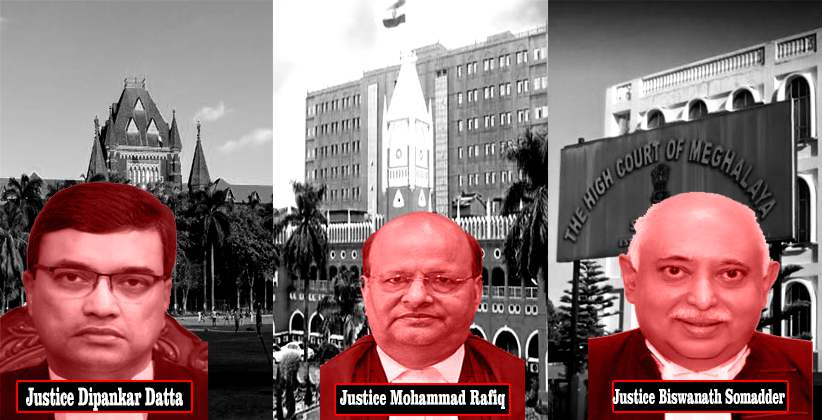
A Bench of Justice Sanjay Kumar and Justice Alok Aradhe allowed the appeal filed by S. Nagesh, setting aside the Karnataka High Court’s order which had upheld cognizance taken by the Magistrate before the delay in filing the complaint was condoned.
The case arose from a complaint filed by Shobha S. Aradhya alleging that Nagesh had approached her and her husband seeking financial assistance to purchase a house and meet legal necessities. They lent him ₹5,40,000 between January 27, 2010, and July 26, 2010. Nagesh issued a cheque dated July 10, 2013, drawn in her name for the said amount, assuring that it would be honoured upon presentation. However, the cheque was dishonoured on July 17, 2013, due to insufficiency of funds.
Shobha issued a legal notice dated August 13, 2013, calling upon Nagesh to pay the cheque amount within 15 days. The notice was returned as “unclaimed” on August 22, 2013. Although the notice sent through courier was not returned unserved—which the complainant claimed amounted to deemed service—no payment was made. She subsequently filed the complaint on October 9, 2013, seeking cognizance of the offence under Section 138 of the NI Act.
The Magistrate, after perusing the complaint and accompanying documents and noting the complainant’s presence, took cognizance on October 9, 2013 itself—the very day the complaint was filed. However, by an order dated May 23, 2014, the successor Magistrate observed that although there was a delay of two days in filing the complaint, cognizance had already been taken by his predecessor, and liberty was granted to the accused to contest the delay during trial. The case was registered and summons were issued.
Subsequently, by order dated February 4, 2016, the Magistrate noted that an application for condonation of the two-day delay had been filed and opined that it required consideration before trial on merits. After considering objections, the Magistrate passed an order on October 30, 2018, allowing the application. The complainant stated that she was suffering from viral fever and was unable to present the complaint within time, producing a medical certificate showing treatment from October 4 to 7, 2013. The Magistrate opined that the delay was bona fide, condoned it, and directed issuance of a non-bailable warrant against Nagesh.
Aggrieved, Nagesh filed Criminal Petition No. 9119 of 2018 before the High Court on December 6, 2018. He contended that the delay was sixteen days, not merely two, and that the procedure of taking cognizance on the same day as filing was contrary to the statutory scheme of the NI Act. He argued that the condonation of delay by the Magistrate was without jurisdiction and in violation of the prescribed procedure, as cognizance could not be taken prior to condonation.
The High Court rejected the petition by the impugned order dated June 28, 2024. The learned Judge concurred that the delay was only two days and was bona fide, justifying condonation. The Court noted that the proviso to Section 142(1)(b) of the NI Act empowered the Court to take cognizance of a complaint even after the prescribed one-month period, provided sufficient cause was shown.
Crucially, the High Court held that whether delay was condoned before or after taking cognizance did not vitiate the proceedings, observing that what mattered was whether the delay had ultimately been condoned. It held that taking cognizance without prior condonation constituted only a “curable irregularity.”
Before the Supreme Court, counsel for Nagesh argued that cognizance of a belated complaint could not be taken without first condoning the delay upon sufficient cause being shown. Relying on the three-Judge Bench decision in Dashrath Rupsingh Rathod v. State of Maharashtra (2014) 9 SCC 129, it was contended that the High Court had erred in rejecting the quash petition.
Justice Sanjay Kumar, authoring the judgment, held that the language of the proviso to Section 142(1)(b) is clear and unambiguous: the power to take cognizance of a belated complaint is conditioned upon prior satisfaction of sufficient cause and condonation of delay. Such satisfaction must necessarily precede the act of taking cognizance.
The Court held that the Magistrate erred in taking cognizance of the complaint under Section 138 of the NI Act before condoning the delay. Consequently, the High Court’s order refusing to quash the proceedings was set aside.
The appeal was allowed, and the complaint in PCR No. 3144 of 2013, later registered as CC No. 1439 of 2014, was quashed.
Case Title: S. Nagesh v. Shobha S. Aradhya