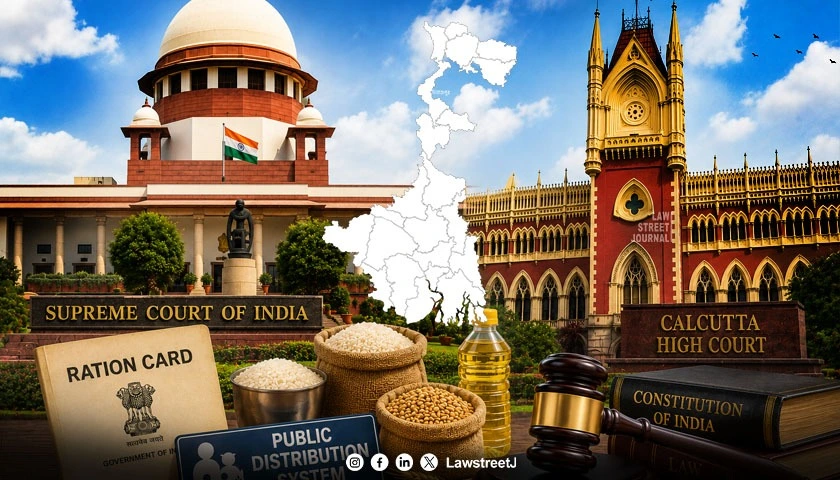
A petition challenging West Bengal’s decision to link Public Distribution System and Annapurna Yojana entitlements to Special Intensive Revision electoral classifications was redirected to the Calcutta High Court by a Supreme Court vacation bench on June 23, as the bench held that the cause of action did not warrant an Article 32 petition.
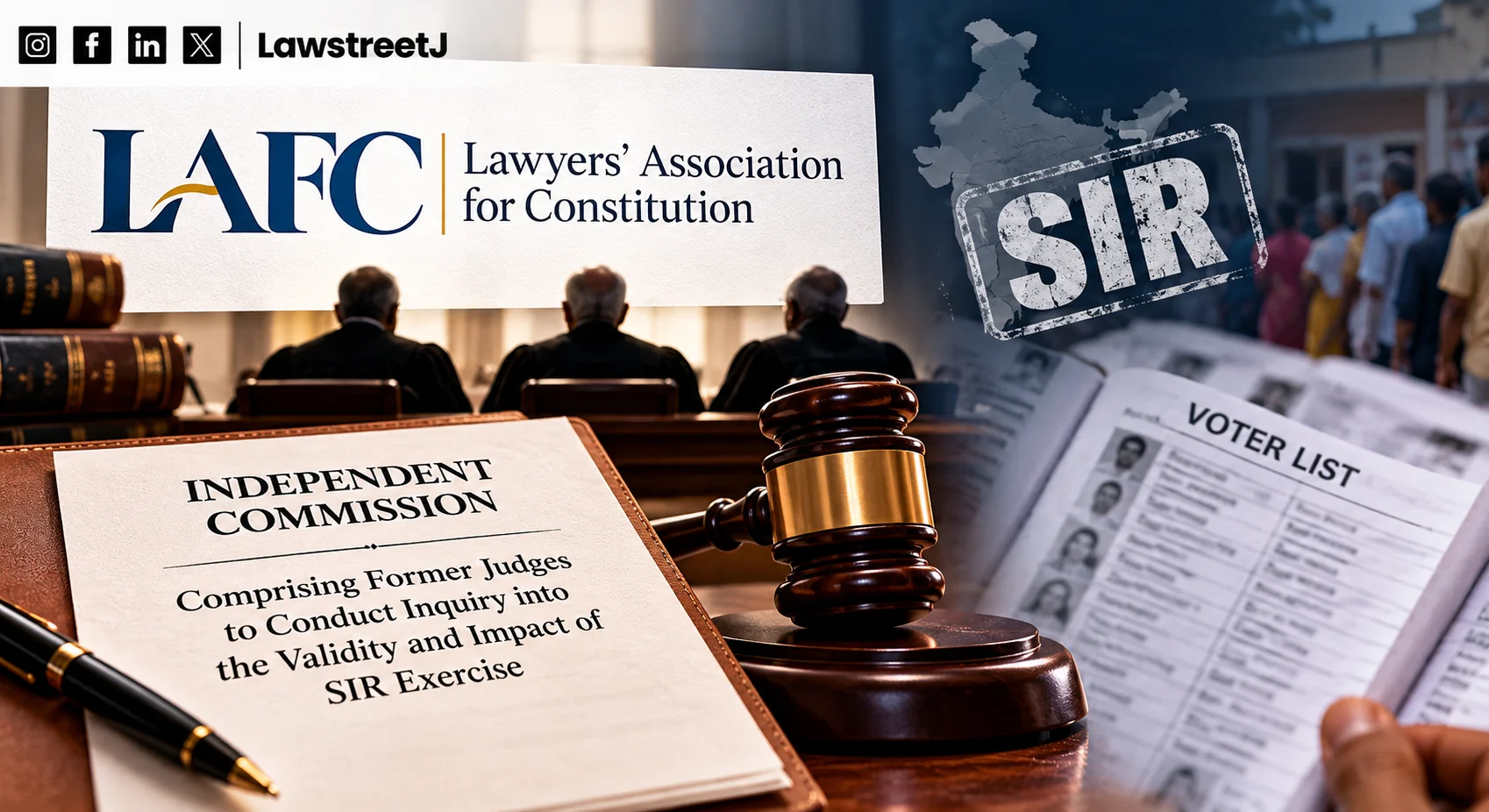
The Supreme Court on Monday asked a petitioner challenging the exclusion of persons from West Bengal’s ration distribution system on the basis of their deletion from the electoral rolls during the Special Intensive Revision (SIR) exercise to approach the Calcutta High Court, holding that the question raised, whether welfare beneficiaries so excluded should continue to receive food entitlements, fell outside the scope of an Article 32 petition.
The matter was mentioned before a vacation bench of Justices BV Nagarathna and Joymalya Bagchi. The petition was filed by Paschim Banga Khet Majoor Samity, an agricultural workers’ union, and warned that between 35 lakh and 60 lakh ration cards could be rendered inactive if the State continues to mechanically apply the SIR-welfare linkage.
The Orders Under Challenge
The petition targets two government orders: one dated June 4 issued by the West Bengal Food and Supplies Department, and another dated May 19 issued by the Department of Women and Child Development and Social Welfare.
Both orders tie a person’s eligibility as a beneficiary under the Public Distribution System (PDS) and the Annapurna Yojana, a Central scheme providing free food grains to destitute persons, to their classification during the SIR exercise. That exercise, conducted by the Election Commission of India in West Bengal, resulted in large-scale deletions from the electoral rolls under categories including dead, shifted, deleted, and absentee electors.
The petitioner contends that using these SIR classifications to deactivate ration cards is constitutionally impermissible. Exclusion from an electoral roll does not establish that a person is economically self-sufficient, does not determine citizenship, and was never intended to serve as a criterion for food security entitlements. Advocate Prasanna Kumar, appearing for the petitioner, noted that the Supreme Court had itself clarified this position in Association for Democratic Reforms v. Election Commission of India, in which the SIR process was upheld but its scope confined to electoral purposes.
Between 35 lakh and 60 lakh ration cards could become inactive if the State applies the SIR-welfare linkage mechanically.
The Constitutional Argument
The petition raises two connected constitutional grounds. The first is that the linkage violates Articles 14 and 21 of the Constitution. Article 14 guarantees equality before law; the petitioner argues that classifying welfare beneficiaries on the basis of SIR outcomes, a classification that bears no rational nexus to economic vulnerability or need, is arbitrary and discriminatory. Article 21 protection of the right to life has been read by Indian courts to include the right to food and livelihood; cutting ration entitlements on the basis of electoral exclusion, the petition argues, strikes at that right.
The second ground concerns the doctrine against repurposing of statutorily collected data. The SIR was conducted for a specific statutory purpose, revision of electoral rolls under the Representation of the People Act. The petition contends that using the data and classifications generated in that exercise for an entirely different regulatory purpose, determining who is entitled to receive subsidised food grains under the National Food Security Act, is an impermissible collateral use that falls outside the scope of the original statutory authority.
SIR exclusion does not determine economic vulnerability or citizenship status, a point the Supreme Court itself clarified in the ADR judgment.
Why the Supreme Court Redirected the Matter
Justice Nagarathna questioned the choice of Article 32 as the vehicle for the petition. She noted that the cause of action in the present petition was distinct from the SIR challenge already adjudicated by the Court in the ADR case. The question of whether persons classified under SIR categories should continue to receive ration entitlements, she observed, raises a separate and discrete factual and legal inquiry: one concerning welfare administration rather than the constitutional validity of the electoral revision process itself.
She held that this question ought to be agitated before the Calcutta High Court, which is the appropriate constitutional forum for the State-specific challenge, and is better positioned to examine the factual dimensions of the impugned State orders.
The petitioner’s submission that other States were adopting a similar pattern of linking SIR outcomes to welfare entitlements, and that the matter therefore had a national dimension warranting urgent listing, did not persuade the bench to retain jurisdiction.
Case Details
- Case Title: Paschim Banga Khet Majoor Samity v. Union of India & Others
- Court: Supreme Court of India
- Bench: Justice BV Nagarathna and Justice Joymalya Bagchi
- Date of Hearing: June 23, 2026
- For Petitioner: Advocate Prasanna Kumar


![Calcutta High Court conducts late-evening hearing, orders release of lawyer arrested inside court [Read Order]](/secure/uploads/2023/12/lj_4146_Court_lawyers_arrest.jpg)
![Indian Courts this Week: Law Street Journal's Weekly Round-Up of SC & HCs [Jan 1 - Jan 6]](/secure/uploads/2024/01/lj_9050_WhatsApp_Image_2024-01-06_at_12.07.10_PM.jpeg)