The Supreme Court has set aside a Telangana High Court order permitting an accused, charged in connection with the suspicious death of the appellant’s father, to travel to the United States of America for medical treatment, holding that the right to travel abroad under Article 21 of the Constitution cannot be viewed in isolation and must be balanced against the victim’s right to a speedy trial and society’s interest in effective administration of criminal justice.
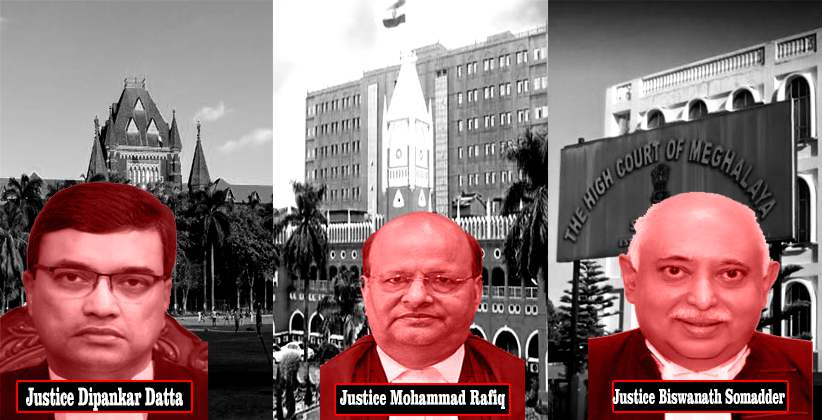
A Bench of Justice Dipankar Datta and Justice Satish Chandra Sharma passed the judgment on June 4, 2026, in Criminal Appeal arising out of SLP (Criminal) No. 18022 of 2025, filed by Seesa Santosh against the State of Telangana and the accused.
Background
The appellant lodged a complaint on October 12, 2014 regarding the suspicious unnatural death of her father. An unnatural death case under Section 174 of the Code of Criminal Procedure was registered, which culminated in FIR No. 173 of 2014 for offences under Sections 120B and 306 read with Section 34 of the Indian Penal Code. Respondent No. 2 was arrayed as an accused and a chargesheet was filed against him on February 29, 2016. Despite the filing of the chargesheet nearly ten years ago, the matter still remains at the stage of committal and the trial is yet to commence.
The respondent No. 2 filed Writ Petition No. 17530 of 2015 seeking quashing of the FIR and also applied for permission to travel abroad, which was dismissed on August 26, 2015. The writ petition was subsequently withdrawn on October 19, 2016. Having failed to appear before the trial court and not engaged any lawyer, a non-bailable warrant and a Look Out Circular were issued against him.
He thereafter filed Criminal Petition No. 14462 of 2016 before the High Court seeking quashing of the criminal proceedings. The High Court, on an application by him, suspended the operation of the LOC by an order dated October 14, 2016. The respondent No. 2 then left the country in 2017. In the interregnum, another FIR bearing No. 320 of 2021 under Sections 443, 427, 420 and 506 IPC was registered against him. The quashing petition was eventually withdrawn on August 23, 2023 without final adjudication.
On April 19, 2025, upon his return to India, the respondent was arrested at the Rajiv Gandhi International Airport, Hyderabad. Upon release from custody, he filed an application before the Magistrate seeking return of his passport. The Magistrate, by order dated May 7, 2025, directed return of the passport but clarified that the release would not amount to permission to leave the country and that prior permission of the competent court would be required for foreign travel.
The State preferred a revision before the Sessions Court, which by order dated September 26, 2025 reversed the Magistrate’s order and directed the respondent to deposit his passport, having regard to the prolonged pendency of the matter, and also recommended to passport authorities that his movement be restricted under the Passports Act, 1967. The respondent challenged this before the Telangana High Court, which allowed his revision petition, set aside the Sessions Court’s order and permitted him to travel to the USA after committal of the case, subject to conditions, holding that he had appeared before the Magistrate on twelve previous occasions and required medical treatment in the USA. It is this order that was challenged before the Supreme Court.
Submissions
Senior counsel for the appellant submitted that the respondent No. 2 had consistently misused the process of law by filing successive petitions and applications to delay and obstruct the trial. It was alleged that the earlier writ petition seeking quashing had been suppressed before subsequent courts, that the medical certificate placed before the High Court was forged, and that there was no material on record establishing any genuine medical ailment requiring treatment in the USA. It was urged that surrender of the passport was imperative to secure the respondent’s presence and ensure unhindered continuation of criminal proceedings.
Senior counsel for the respondent No. 2 contended that requiring surrender of his passport would amount to an unjustified curtailment of his fundamental right to travel abroad under Article 21. He submitted that the respondent had suffered two brain strokes in 2023 and had been undergoing medical treatment in the USA, where he is a citizen and where his family resides. It was submitted that the delay could not be attributed solely to him, as the other accused had also filed petitions seeking quashing, and that the appellant herself had sought further investigation nearly nine years after registration of the FIR.
Supreme Court’s Findings
The court found that despite the lapse of nearly ten years since the chargesheet was filed in 2016, the matter still remains at the stage of committal and the trial is yet to commence. While noting that delay cannot invariably be attributed to the accused alone, the court observed that the chronology of events disclosed the respondent’s proactive role in seeking judicial intervention at every turn, and that his conduct of withdrawing petitions before their final adjudication but after securing interim protection raised serious doubts about his bona fides.
The court was particularly critical of the respondent having used the suspended LOC in 2016 to leave the country without seeking leave of the court, thereby evading the criminal process in multiple proceedings.
On the High Court’s reasoning, the court held that the factors cited, that the respondent had appeared before the Magistrate on twelve previous occasions and required medical treatment abroad, did not justify the grant of permission to travel, having regard to the overall trajectory of the proceedings, the respondent’s conduct, the nature of his ailment and the medical facilities available in India.
“Having regard to the trajectory of the proceedings right from the date the FIR was registered, the conduct of the respondent no.2, the nature of his ailment, and the medical facilities available in India (which, we believe, are comparable with any facility available in any foreign country), we have no doubt in our mind that the High Court instead of exercising judicial restraint was indulgent towards the respondent no.2 and permitted him to travel to the USA even though all medical facilities exist domestically,” the Bench held.
On the Article 21 argument, the court held that the right to travel abroad cannot be viewed in isolation. Relying on the Supreme Court’s earlier judgment in Rajesh Ranjan Yadav v. CBI, reported in (2007) 1 SCC 70, the court held that a balance must be struck between the individual liberty of the accused on one hand, and the right of the victim to a speedy trial together with the larger societal interest in ensuring effective administration of criminal justice, on the other. “The right to a speedy trial is equally an integral facet of Article 21,” the court observed.
Directions
The court set aside the High Court’s impugned order as well as the Sessions Court’s order directing deposit of the passport. It held that the Magistrate’s order dated May 7, 2025, directing return of the passport without granting permission to travel, was justified on facts and did not require interdiction.
The court clarified that while the respondent need not deposit his passport, he shall not be entitled to fly out of the country without the express permission of the Sessions Court, to which he may apply after committal of the case. The civil, police and airport administration were directed to coordinate with each other to ensure the respondent does not leave the country without the express permission of the Sessions Court. The court also encouraged expediting the process of committal if it had not already been done.
The court clarified that observations in the order would not be treated as findings on the merits of the case.
Case Details
- Case Title: Seesa Santosh v. The State of Telangana and Another
- Citation: 2026 INSC 628
- Case Number: Criminal Appeal of 2026 arising out of SLP (Criminal) No. 18022 of 2025
- Court: Supreme Court of India
- Bench: Justice Dipankar Datta and Justice Satish Chandra Sharma
- Date of Judgment: June 4, 2026
- Appellant’s Advocate: Mr. Parameshwar, Senior Advocate
- Respondent’s Advocate: Mr. Niranjan Reddy, Senior Advocate