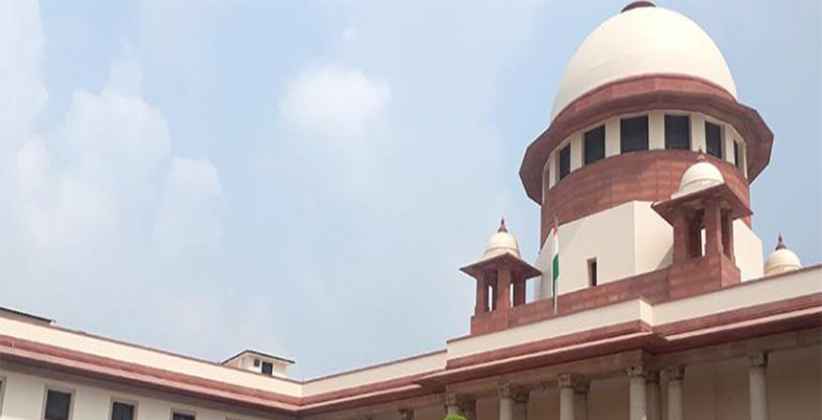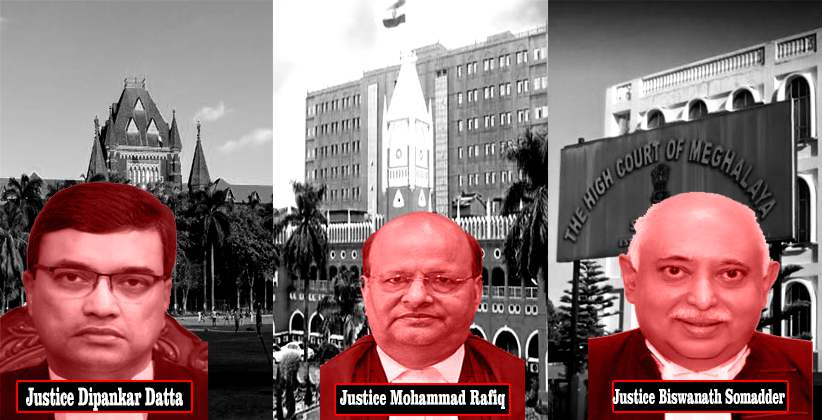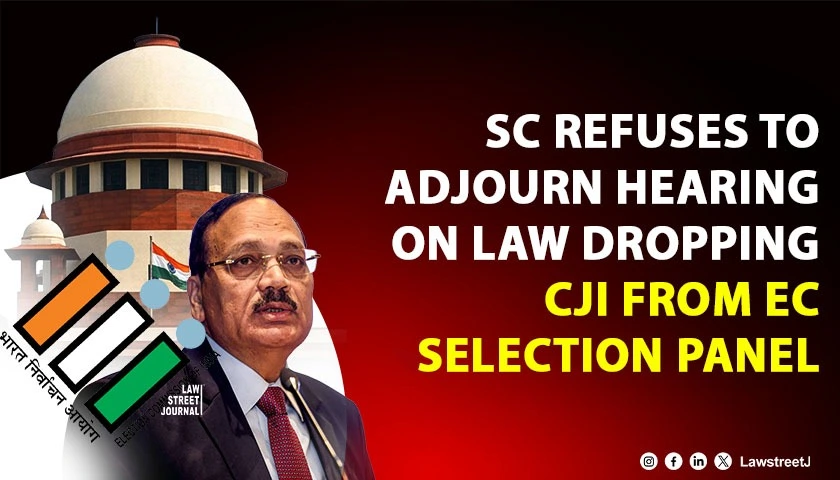
New Delhi: The Supreme Court of India on 06.05.2026 refused to adjourn the hearing of petitions challenging the law that removed the Chief Justice of India from the panel responsible for appointing the Chief Election Commissioner and other Election Commissioners, with Justice Dipankar Datta declaring the matter to be “most important” and declining Solicitor General Tushar Mehta’s request to defer the hearing.
A bench comprising Justice Dipankar Datta and Justice Satish Chandra Sharma heard the matter, with Senior Advocate Vijay Hansaria and Senior Advocate Gopal Sankarnarayanan appearing for the petitioners.
In March 2023, the Supreme Court ruled that the Chief Election Commissioner and other Election Commissioners should be selected by a panel comprising the Prime Minister, the Leader of the Opposition in the Lok Sabha, and the Chief Justice of India. Later that year, the Centre enacted the Chief Election Commissioner and Other Election Commissioners (Appointment, Conditions of Service and Term of Office) Act, which replaced the Chief Justice of India on the selection panel with a Union Minister nominated by the Prime Minister. Petitions have been filed challenging appointments made under this law on the ground that it gives the government an upper hand in the selection of officials responsible for conducting free and impartial elections.
The petitions were originally listed before a bench led by Chief Justice Surya Kant. However, in March 2026, Chief Justice Kant recused himself from the case, observing: “Should I even hear this matter? Perhaps somebody will accuse me of having a conflict of interest.” Advocate Prashant Bhushan, appearing for one of the petitioners, submitted that no such accusation would be made but suggested that it would be better if the Chief Justice did not hear the matter. The Chief Justice then directed that the petitions be listed before a bench in which no judge in line to become the Chief Justice of India would sit. Bhushan agreed, stating: “I had this in mind. So it can be listed before a bench not having a prospective Chief Justice of India.”
When the matter came up for hearing, Solicitor General Tushar Mehta sought an adjournment, submitting that he was engaged in the nine-judge bench hearing in the Sabarimala reference and wished to be present when the petitioners presented their arguments. He requested that the matter be listed the following week.
Justice Datta declined the request, observing that the hearing date had been fixed a month in advance. He told the Solicitor General that if the request had been made a week earlier, it could have been accommodated, but noted that the nine-judge bench hearing would not conclude the following week. He directed that the Solicitor General’s associates take notes for the day and allowed the petitioners to begin their arguments, adding that the Court would hear the Solicitor General’s submissions on a later date.
He further observed that all matters are important and noted that a newspaper report had indicated that the nine-judge bench in the Sabarimala matter had itself observed that the PIL in that case should not have been entertained in the first place, despite nine judges being occupied with the matter.
Senior Advocate Vijay Hansaria took the Court through the procedure provided under the impugned Act, submitting that Section 7 of the Act grants primacy to the ruling executive in the matter of selection and appointment of the Chief Election Commissioner and other Election Commissioners, contrary to the law laid down by the five-judge bench in Anoop Baranwal v. Union of India.
Hansaria submitted that the ruling party has an inherent and direct interest in the outcome of elections conducted by the Election Commission of India, and that just as the judiciary must remain outside executive control in matters concerning judicial appointments to preserve its independence, the appointment of Election Commissioners must similarly remain outside executive control due to the conflict of interest between the conduct of elections and the party in power.
He argued that the impugned legislation is expressly contrary to the basic structure of the Constitution, submitting that legislation can remove the basis of a constitutional court judgment but cannot directly or indirectly overrule it. According to him, granting the executive the final say in the appointment of Election Commissioners is contrary to the independence of the Election Commission.
He drew an analogy with the Supreme Court’s decision striking down the 99th Constitutional Amendment and the National Judicial Appointments Commission Act on the ground that judicial independence forms part of the basic structure of the Constitution. He submitted that, by the same reasoning, dominant executive control over the appointment of the Chief Election Commissioner and Election Commissioners adversely affects the basic structure.
Hansaria also relied on Constituent Assembly debates, reading out Dr. B.R. Ambedkar’s speech while introducing draft Article 289, now Article 324 of the Constitution. He submitted that members of the Constituent Assembly had emphasised that the Election Commission must remain independent, impartial, and free from government control. He further noted that the Fundamental Rights Sub-Committee had unanimously concluded that elections should be managed by an independent Commission established under Union law.
He added that the Minority Sub-Committee had described the Election Commission as an independent quasi-judicial body, while Dr. Ambedkar had stressed the significance of adult suffrage. Hansaria submitted that several committees formed before and after the Constitution consistently recommended that the selection committee should not be left solely to the Prime Minister and must instead be broad-based.
Hansaria contended that under the impugned Act, if the Prime Minister proposes the appointment of a particular individual, there is effectively no possibility of another candidate being appointed, making it, in substance, the Prime Minister’s choice. He submitted that there is no meaningful consultation with the Leader of the Opposition under the present framework, noting that in one instance, the Leader of the Opposition was provided a list of six candidates on the very morning of the selection meeting despite having submitted two hundred names.
He argued that the Election Commission could potentially make illegal, unfair, or mala fide decisions under the influence of the ruling party, and that once election results are declared, the situation often becomes a fait accompli. He further submitted that delay or omission in decision-making itself could cause irreparable harm and that relief in an election petition may not adequately remedy elections conducted in an illegal or mala fide manner.
Justice Datta questioned whether the observations in the Anoop Baranwal judgment, which spans over 300 pages, justified the framework laid down by the Court only as an interim arrangement until Parliament enacted a law, and whether any law subsequently enacted by Parliament must necessarily conform to those observations.
Hansaria responded that the judgment was rooted in the constitutional principle that appointments cannot be left solely to the executive. He argued that Anoop Baranwal laid down norms intended to operate only until a law was enacted, but with the expectation that such law would remain consistent with the constitutional principles recognised in the judgment. He submitted that Parliament had neither removed the basis of the judgment nor amended the Constitution.
According to Hansaria, if the Constitution remains unamended and a Constitution Bench has unanimously held that the executive cannot exercise exclusive control over such appointments, the impugned law cannot survive constitutional scrutiny. He added that the only way to override the judgment would have been through a constitutional amendment, which has not been done.
Senior Advocate Gopal Sankarnarayanan, who was permitted to argue on 06.05.2026 after expressing difficulty in appearing on subsequent dates, submitted that Article 26 is not a new right but an amplification of Article 25, and that it need not necessarily be made subject to other constitutional provisions, although expressions such as “with regard to” could be used to harmonise the two provisions.
Sankarnarayanan concluded his arguments, while the petitioners’ submissions will continue on the next date of hearing.
Case Details
- Case: Challenge to the Chief Election Commissioner and Other Election Commissioners (Appointment, Conditions of Service and Term of Office) Act
- Court: Supreme Court of India
- Bench: Justice Dipankar Datta and Justice Satish Chandra Sharma
- Date of Hearing: 06.05.2026
Appearances:
- For the Petitioners: Senior Advocate Vijay Hansaria; Senior Advocate Gopal Sankarnarayanan; Advocate Prashant Bhushan
- For the Union of India: Solicitor General Tushar Mehta