New Delhi: The Supreme Court has refused to interfere with a Madras High Court ruling that contempt proceedings are not maintainable as a means of enforcing a court order directing payment of music royalties where the amount payable has not been quantified in the original order and the said order is pending challenge before the Supreme Court as a numbered civil appeal.
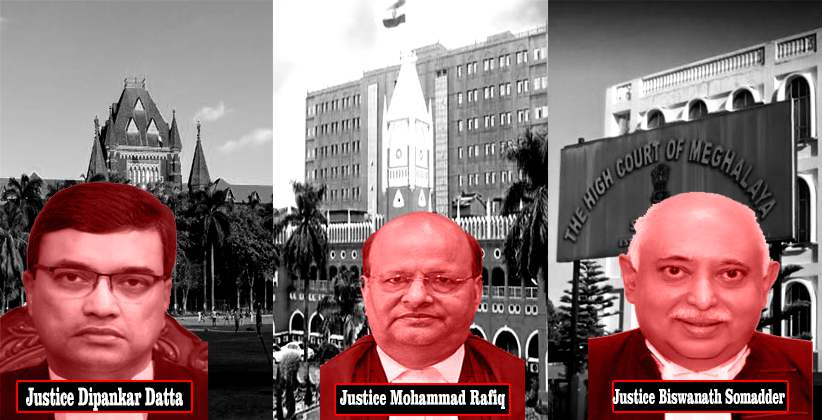
A Bench of Justices Dipankar Datta and Satish Chandra Sharma dismissed the Special Leave Petitions filed by the South Indian Music Companies Association on April 25, 2026, stating, “We are not inclined to interfere with the impugned judgment(s) and order(s) of the High Court; hence, the special leave petitions are dismissed.”
With the Supreme Court declining to interfere, the position laid down by the Madras High Court’s Division Bench, that non-payment of an unquantified amount cannot constitute wilful disobedience sufficient to invoke contempt jurisdiction, now continues to hold the field.
A Division Bench comprising Justice N. Sathish Kumar and Justice M. Jothiraman, by a common judgment pronounced on December 10, 2025, had allowed six Letters Patent Appeals filed by radio broadcasters Entertainment Network India Limited and Music Broadcast Private Limited against orders passed by a learned Single Judge in contempt petitions filed by Phonographic Performance Limited and the South Indian Music Companies Association.
Entertainment Network India Limited operates radio broadcasting stations under the name Radio Mirchi, while Music Broadcast Private Limited operates Radio City. Both are radio broadcasters requiring licences to broadcast music. Phonographic Performance Limited is a copyright society that grants licences to broadcast music on behalf of major music companies and record labels including Sony Music, T-Series, and Saregama, among others.
As some music works were not covered under PPL’s licence, the broadcasters invoked Section 31(1)(b) of the Copyright Act, 1957 and approached the Copyright Board seeking compulsory licences. The Copyright Board, by order dated November 19, 2002, fixed a standard royalty rate of Rs. 1,200 per needle hour during prime time, with 60% of the standard rate for 12 normal hours and 25% of the standard rate for 8 lean night hours. This order was challenged before the Bombay High Court, which remitted the matter to the Copyright Board for fresh consideration. The Delhi High Court similarly remitted the matter on appeals filed before it.
The Supreme Court, by judgment dated May 16, 2008, in Entertainment Network (India) Limited v. Super Cassette Industries Limited, reported in (2008) 13 SCC 30, set aside the order of the Copyright Board and remitted the matter for fresh consideration. Following remand, the Copyright Board passed an order dated August 25, 2010, fixing the licence fee at 2% of net advertisement earnings of each FM radio station, payable on a revenue-sharing basis to all music providers for the period from September 1, 2010 to September 30, 2020.
The South Indian Music Companies Association, which represents music production and distribution companies in South India and was not a party before the Copyright Board, filed third-party appeals before the Madras High Court under Section 72(2) of the Copyright Act, 1957. PPL also filed appeals before the Madras High Court.
The learned Single Judge, by a common judgment dated April 27, 2023, held that the Copyright Board’s order dated August 25, 2010 was not binding on SIMCA, since its members had entered into independent agreements with the radio stations. The Single Judge upheld the royalty fixed by the Copyright Board at 2% of net advertisement earnings and additionally modified the order by fixing a minimum floor rate of Rs. 660 per needle hour, uniformly applicable irrespective of timing or location, as the order covered the past decade from 2010 to 2020.
The broadcasters challenged this judgment before the Supreme Court in SLP(C) Nos. 10085–10088 of 2023, which was subsequently numbered as Civil Appeal Nos. 13220–13223 of 2024. The Supreme Court, by order dated May 15, 2023, issued notice and directed that any payment made in the meantime would abide by the final result. No interim stay was granted.
Two sets of contempt petitions were thereafter filed before the Single Judge. PPL filed contempt petitions contending that ENIL had admitted before the Supreme Court a liability of Rs. 40 crores and MBL had admitted a liability of Rs. 31 crores, and that the broadcasters’ refusal to pay constituted wilful disobedience of the court’s order. SIMCA filed separate contempt petitions on the ground that the broadcasters had not furnished log sheets of all music played between August 2010 and December 2020, and had not made payment to its members in compliance with the order in the CMAs.
The learned Single Judge, by orders dated July 31, 2024, directed ENIL and Music Broadcast to deposit 50% of the amounts projected in their grounds of appeal before the Supreme Court within four weeks. By a subsequent order dated August 26, 2025, the Single Judge directed the broadcasters to produce logs of all music pertaining to SIMCA played at their radio stations from August 2010 to December 2020 and to calculate royalty at the per-needle-hour rate. Aggrieved by both sets of orders, the broadcasters filed the present Letters Patent Appeals.
Senior Advocates Mr. N.L. Rajah and Mr. G. Masilamani, appearing for the appellants before the Division Bench, submitted that the amount payable had not been quantified in the judgment in the CMAs and that, in such circumstances, the proper remedy was to approach the Registrar of the High Court for issuance of a certificate under Section 75 of the Copyright Act, 1957, which would enable the order to be treated as a decree of a civil court and rendered executable. They further submitted that without quantification of the amount, contempt proceedings were not maintainable. They also contended that the Single Judge lacked jurisdiction in contempt proceedings to add or substitute new directions when the original order was already under challenge before the Supreme Court. They argued that the statements made in the stay petition before the Supreme Court regarding the projected liability of Rs. 40 crores and Rs. 31 crores could not be construed as admissions of liability.
As regards SIMCA, the appellants contended that since the Single Judge had held the Copyright Board’s order not binding on SIMCA and had recognised the existence of independent contractual agreements, SIMCA could not use contempt proceedings to enforce those contractual terms. They submitted that no specific direction had been issued in the judgment in the CMAs in favour of SIMCA to compel any payment, and that the appropriate course was for SIMCA to enforce its agreements through civil proceedings.
Senior Advocate Mr. Vijay Narayan and counsel Mr. M.V. Swaroop, appearing for the respondents, submitted that since the minimum floor rate of Rs. 660 per needle hour had been fixed without dispute as to the needle hours, the direction to deposit amounts was not open to challenge. They argued that the appellants’ own affidavits before the Supreme Court constituted admissions of liability, and that the availability of an execution remedy under the Copyright Act did not divest the High Court of contempt jurisdiction, which could run concurrently with execution proceedings.
The Division Bench held that the statements made in stay petitions before the Supreme Court, reflecting projected liability to demonstrate hardship, could not be treated as admissions of liability. It observed that it was normal for a party seeking a stay to indicate the nature of liability it may incur if the order below is not stayed, and that such averments did not constitute an admission of debt.
The court further held that since the original order in the CMAs had not quantified any specific amount payable by the broadcasters and only fixed a rate per needle hour, the total amount payable remained unascertained. In such circumstances, non-payment of an unquantified amount could not constitute wilful disobedience sufficient to invoke contempt jurisdiction. The court held that the respondents ought to have filed an application before the Registrar for issuance of a certificate under Section 75 of the Copyright Act, which would have enabled quantification of the amount and its execution as a civil court decree.
The Bench held that once the matter had been numbered as a civil appeal before the Supreme Court, the Single Judge could not, in contempt proceedings, issue further directions to deposit amounts or add to the original directions, as this would effectively amount to a review of the original order.
On SIMCA’s contempt petitions, the court held that since the Single Judge had expressly held the Copyright Board’s order not binding on SIMCA and had recognised that SIMCA’s members had independent agreements with the radio stations, SIMCA’s proper remedy was to enforce those contractual agreements. The court observed that by using contempt proceedings to compel production of log sheets and payment, SIMCA was effectively seeking to enforce its contractual rights without filing appropriate civil proceedings, which was not permissible.
The court noted that contempt jurisdiction can be invoked only when a definite sum is fixed, a specific direction for enforcement is issued, and there is wilful and intentional non-compliance. It held that none of these conditions were met in the present case.
Relying on the Supreme Court’s decision in Kunhayammed and Others v. State of Kerala, reported in (2000) 6 SCC 359, the court held that once the matter had been carried to the Supreme Court and numbered as a civil appeal, it was not open to the High Court to travel beyond the scope of the original order in contempt proceedings.
Accordingly, all six Letters Patent Appeals were allowed and the orders passed by the Single Judge in all six contempt petitions were set aside. SIMCA’s challenge to that ruling having now been dismissed by the Supreme Court, the Division Bench’s findings stand affirmed.
Case Details
- Court: Supreme Court of India
- Bench: Justice Dipankar Datta and Justice Satish Chandra Sharma
- Date of Order: April 25, 2026
- Petitioner’s Advocates: Arjun Krishnan, AOR; Advocates M.V. Swaroop and Devadharshini
- Respondents’ Advocates: Senior Advocates Abhishek Malhotra and Neeraj Kishan Kaul with Advocates Srishti Gupta, Kartikay Dutta, Anukriti Trivedi, Anjali Singariya, Sonali Jain, AOR; Sagar Chandra; Vanshaja Shukla, AOR; Srijan Uppal; Mehek Dua; Saakshi Khandelwal; Stuti Jain; Dhanya S. Krishnan; Raghav Agrawal
- Case Title (Madras High Court):
Music Broadcast Private Limited (Radio City) v. South Indian Music Companies Association;
Entertainment Network India Ltd. (Radio Mirchi) v. South Indian Music Companies Association;
Entertainment Network India Ltd. v. Phonographic Performance Limited;
Music Broadcast Limited v. Phonographic Performance Limited - Case Numbers: LPA Nos. 47, 48 and 49 of 2025 and LPA Nos. 15, 16 and 17 of 2024
- Citation: 2025:MHC:2817