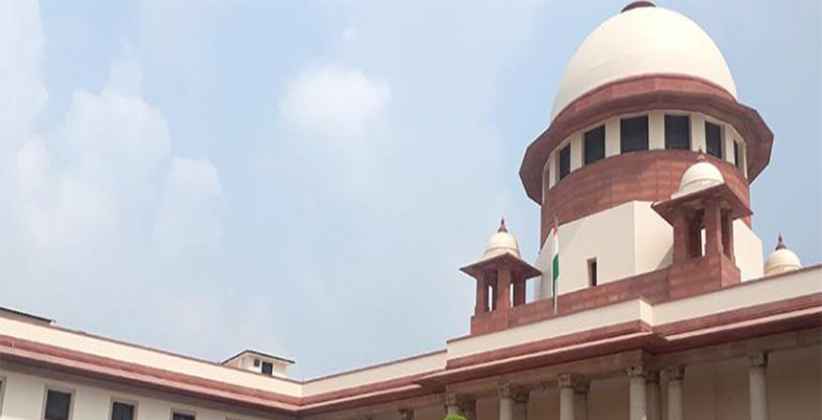
The Supreme Court on May 29, 2026 awarded ₹11 lakh as compensation to a convict who remained in custody for 24 days after a High Court order directed his release on permanent parole, holding that the State of Rajasthan’s failure to act on the court order constituted illegal detention in violation of Article 21 of the Constitution of India [Daudayal v. State of Rajasthan and Others, 2026 INSC 599, Criminal Appeal arising out of SLP (Crl.) No. 5036 of 2025].
A Bench of Justice Sanjay Karol and Justice Augustine George Masih held that the liberty of an individual cannot be made subservient to the State’s administrative deliberations on whether to file an appeal against a court order. The Court applied the principle of “obey first, appeal later” and held that a judicial order must be complied with unless stayed by a superior court.
“The State cannot continue curtailing the same in the face of a court order, on account of its slow bureaucratic processes of taking decisions whether to file appeals in a particular matter or not. If such a view is agreed to by us, it would amount to the liberty of a person being placed sub-par to the decision whether or not to file an appeal which is purely an administrative call. That cannot be countenanced,” the Bench said.
Background
The appellant-convict Daudayal had been sentenced to four years of rigorous imprisonment for offences under Sections 148, 448, 304 Part II read with Sections 149 and 323 of the Indian Penal Code, 1860 by the Additional Sessions Judge No. 1, Alwar, by judgment dated December 8, 1988. His criminal appeal against the conviction was dismissed in 2021, following which he was arrested on December 23, 2021. At the time of the events in question, he had served three years, two months and twenty days out of his total four-year sentence.
On December 3, 2023, Daudayal applied for permanent parole, not having applied for regular parole at any earlier stage. His application was rejected on January 18, 2024 on the ground that he had not undergone the three prior stages of parole as required under Rule 9 of the Rajasthan Prisoners Release on Parole Rules, 1958. He challenged this rejection before the High Court.
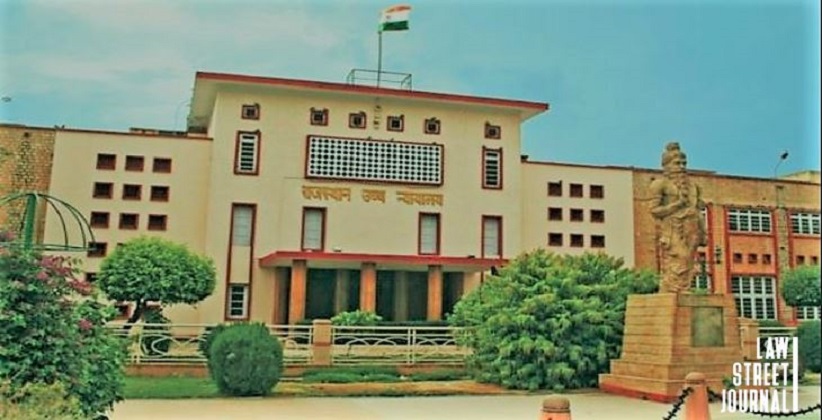
A learned Single Judge of the High Court allowed the petition by order dated November 5, 2024 and directed his release on furnishing a personal bond of ₹1,00,000 and two sureties of ₹50,000 each. Despite complying with these conditions, Daudayal had not been released by November 25, 2024. He accordingly filed a habeas corpus petition before the Division Bench, which by order dated December 6, 2024 directed his immediate release. The 24 days between the verification of sureties on November 13, 2024 and the Division Bench order formed the basis of his claim for compensation.
State’s Contentions
The State of Rajasthan opposed the claim for compensation on several grounds. It submitted that the Single Judge’s order releasing Daudayal on permanent parole was contrary to Rule 9 of the Rajasthan Parole Rules, which mandates that a prisoner must undergo three prior paroles before being considered for permanent parole. It further submitted that parole does not amount to a suspension of sentence, and that the cases relied upon by the appellant involving innocent persons, undertrials or acquitted persons were distinguishable on facts. The State also disclosed that it had been considering challenging the Single Judge’s order and that this was the reason the order releasing Daudayal on parole could not be communicated to the jail authorities in time.
Court’s Analysis: Illegal Detention and the Principle of ‘Obey First, Appeal Later’
The Court held that the State could not, at the stage of compensation proceedings, raise a question regarding the legality of the Single Judge’s parole order when it had never independently challenged that order. The principle of “obey first, appeal later” squarely applied, and mere contemplation of filing an appeal did not provide justification for non-compliance.
The Court defined illegal detention as “the deprivation of liberty by the State without lawful authority or in violation of provisions of the Constitution,” holding that it encompasses detention lacking a valid legal basis, detention pursuant to an expired or void authority, detention in violation of just, fair and reasonable procedure, and detention exercised arbitrarily or in bad faith. Once parole had been granted and sureties produced to the satisfaction of the court, the Court held that continued detention became illegal detention.
The Court surveyed the law on compensation as a public law remedy for violation of Article 21, tracing the line of authority from Rudul Sah v. State of Bihar (1983) 4 SCC 141 through Sebastian M. Hongray v. Union of India (1984) 3 SCC 82, Bhim Singh v. State of J & K (1985) 4 SCC 677, Nilabati Behera v. State of Orissa (1993) 2 SCC 746, Sohan Singh @ Bablu v. State of Madhya Pradesh (Special Leave to Appeal (Crl.) 11244/2025) and S. Nambi Narayanan v. Siby Mathews (2018) 10 SCC 804. The Court noted that monetary compensation under public law is a recognised remedy for infringement of the indefeasible right guaranteed under Article 21 and is based on strict liability for such contravention. It is awarded by way of exemplary damages against the wrongdoer for breach of public duty and is independent of any private law remedy in tort.
The Court further held that the fact that the appellant was a convict rather than an undertrial or innocent person did not diminish the weight of his rights on the scales of justice. It observed that the process of surety verification had already been completed and there was no explanation for the continued detention thereafter.
“Just because a person had been convicted does not mean that his rights weigh less on the scales of justice,” the Bench said.
Compensation Awarded
The Court awarded compensation of ₹11,00,000 (Rupees Eleven Lakhs) to be deposited directly into the bank account of the appellant. The appeal was allowed.
Case Details
- Case Title: Daudayal v. State of Rajasthan and Others
- Citation: 2026 INSC 599; Criminal Appeal arising out of SLP (Crl.) No. 5036 of 2025
- Court: Supreme Court of India
- Bench: Justice Sanjay Karol and Justice Augustine George Masih
- Date of Judgment: May 29, 2026