Supreme Court: The Supreme Court in 2025 delivered a wide range of significant judgments across Indian constitutional and statutory law, addressing questions that lie at the core of governance, individual rights, criminal justice, economic regulation, and social welfare. Several of these decisions generated sustained legal and public debate and played a defining role in shaping contemporary jurisprudence. The following is a carefully curated selection of some of the most discussed and impactful judgments of the year—rulings that one should not overlook and must be familiar with to grasp the evolving landscape of Indian constitutional and statutory law in 2025.
Gayatri Balasamy v. M/s ISG Novasoft Technologies Limited [2025 INSC 1057]
This landmark five-judge Constitution Bench verdict resolved a long-standing debate regarding the power of courts to modify arbitral awards under the Arbitration and Conciliation Act, 1996. By a 4:1 majority, the Court held that Indian courts possess a limited power under Sections 34 and 37 to modify an award rather than merely setting it aside. The majority reasoned that this power is inherent in the court’s authority and is necessary to prevent undue hardship, unnecessary delays, and excessive costs associated with restarting arbitration for minor errors. The Court clarified that this power includes the ability to “sever” non-arbitrable or invalid parts of an award while retaining the valid remainder. The Bench also affirmed that courts can modify post-award interest rates where justified. However, the majority cautioned that this is not an appellate power and should not be used to re-evaluate the merits of the case. Justice K.V. Viswanathan, in his dissent, argued that such a modification power is not provided by statute and could undermine the principle of minimal judicial interference, warning that it may hinder international enforcement given the UNCITRAL Model Law framework.
In Re: Assent, Withholding, or Reservation of Bills by the Governor and the President of India [2025 INSC 1333]
In a significant constitutional clarification, a five-judge Constitution Bench addressed the scope of powers exercised by Governors and the President under Articles 200 and 201 of the Constitution. The Presidential Reference arose following the Court’s earlier ruling in State of Tamil Nadu v. Governor, where a Division Bench had sought to impose timelines on Governors for granting assent to State Bills. The Constitution Bench set aside those judicially prescribed timelines, holding that imposing fixed deadlines would violate the separation of powers and intrude into executive functions. However, the Court observed that while the Governor’s actions are generally non-justiciable, a “limited mandamus” may be issued in cases of prolonged, unexplained, and indefinite delay. The Court clarified that a Governor has only three options when presented with a Bill: grant assent, return it for reconsideration with reasons, or reserve it for the President’s consideration. Indefinite inaction was held to be unconstitutional and destructive of federalism.
Sarla Gupta v. Enforcement Directorate [(2025) 7 SCC 626]
The Supreme Court significantly expanded the procedural rights of accused persons under the Prevention of Money Laundering Act, 2002 (PMLA). The Court held that an accused is entitled to a list of all statements, documents, and material objects collected during investigation, including those not relied upon by the Enforcement Directorate (ED). Given the reverse burden of proof under Section 24 of the PMLA, the defence must have knowledge of all material, including potentially exculpatory evidence, to ensure a fair trial under Article 21. While copies of unrelied documents are not required at the charge stage, a complete list must be provided to enable the accused to seek production under Section 91 CrPC (now Section 94 BNSS).
Enforcement Directorate v. Subhash Sharma [2025 INSC 141]
Reinforcing constitutional safeguards against illegal detention, the Supreme Court held that the mandate of Article 22(2) and Section 57 CrPC—requiring production before a Magistrate within 24 hours—applies strictly to PMLA proceedings. The Court ruled that the 24-hour period begins from the moment of actual physical custody and not from the time noted in the arrest memo. The arrest was declared illegal, and the Court held that once an arrest is unconstitutional, the accused must be released on bail irrespective of the “twin conditions” under Section 45 PMLA.
In Re: T.N. Godavarman Thirumulpad v. Union of India [WP (C) No. 202 of 1995]
A three-judge Bench delivered a far-reaching order interpreting the term “forest” under the Forest (Conservation) Act, 1980. The Court held that all areas recorded as forest in government records qualify as forest land irrespective of ownership or classification. The Bench reinforced the “public trust doctrine” and converted the proceedings into a continuing mandamus to ensure sustained environmental protection, including preservation of the Aravalli Hills.
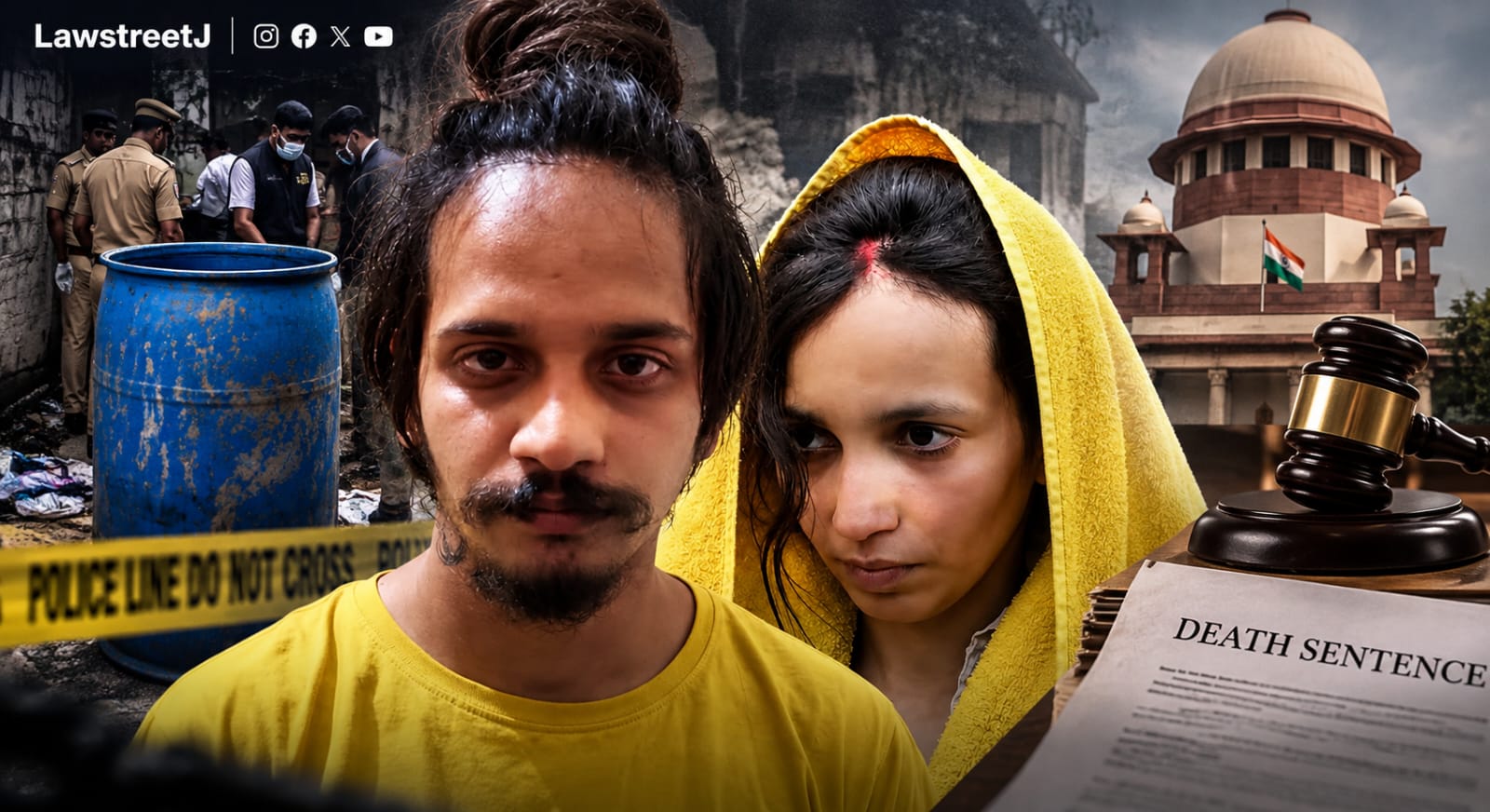
Surendra Koli v. State of Uttar Pradesh & Anr. [2025 INSC 1308]
In a high-profile criminal law development, the Supreme Court acquitted Surendra Koli in the Nithari serial killings case, setting aside multiple death sentences. Allowing the curative petition, the Court held that the prosecution had failed to establish guilt beyond reasonable doubt and reiterated that suspicion, however grave, cannot replace proof, especially in capital punishment cases.
All India Judges Association v. Union of India [2025 INSC 726]
The Supreme Court restored the mandatory requirement of three years’ Bar practice for entry-level judicial service examinations, reversing its 2002 decision. The Court noted that lack of courtroom experience was affecting the quality of justice delivery and clarified that the three-year period would be computed from provisional Bar Council enrollment.
In Re: Waqf (Amendment) Act, 2025 [2025 INSC 1116]
While declining to stay the entire Waqf (Amendment) Act, 2025, the Supreme Court stayed several provisions, including Section 3(r), which required proof of five years’ Islamic practice to create a waqf. The Court held the provision arbitrary and also restrained executive authorities from altering revenue records relating to waqf properties pending adjudication.
Madras Bar Association v. Union of India [2025 INSC 1330]
The Supreme Court struck down key provisions of the Tribunals Reforms Act, 2021, reiterating that executive dominance over tribunal appointments violates judicial independence. The Court ordered the constitution of a National Tribunals Commission and reiterated that prior MBA precedents continue to govern tribunal appointments.
In Re: Summoning Advocates Who Give Legal Opinion or Represent Parties [2025 INSC 1275]
The Supreme Court held that advocates cannot be summoned merely for rendering legal advice or representation. Such summons violate advocate-client privilege protected under Articles 19(1)(g), 21, and 22(1). Exceptions were narrowly carved out, subject to written reasons and prior senior-level approval.
Amlesh Kumar v. State of Bihar [2025 INSC 810]
This case addressed the intersection of investigative techniques and constitutional rights in relation to Narco Analysis tests. The Supreme Court reiterated that involuntary Narco Analysis violates the right against self-incrimination under Article 20(3) and the right to privacy under Article 21. However, the Court clarified that an accused may voluntarily seek such a test to establish innocence. Relying on Selvi v. State of Karnataka (2010), the Bench held that while results of a voluntary test may be admissible, they cannot form the sole basis of conviction. Any discovery of physical evidence pursuant to such a test would be admissible under Section 27 of the Evidence Act. The Court emphasised that the right to demand a Narco test is not absolute and must be assessed case by case.
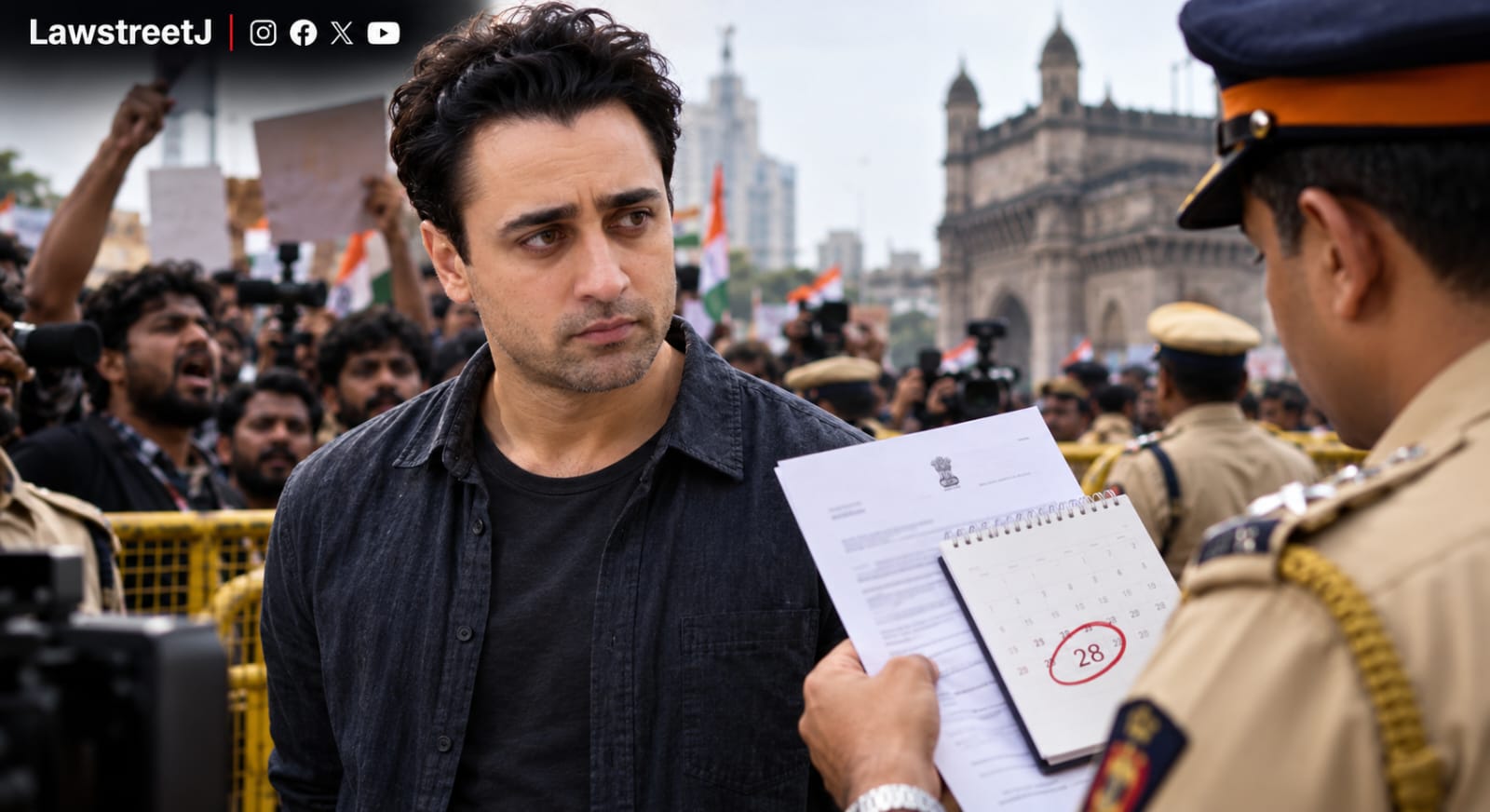
Imran Pratapgarhi v. State of Gujarat [2025 INSC 410]
The Supreme Court quashed an FIR registered against a Member of Parliament for reciting an Urdu poem, strongly reaffirming free speech protections under Article 19(1)(a). The Court held that the FIR was registered mechanically, without application of mind, and that the poem constituted artistic expression rather than hate speech. Criminal law, the Court cautioned, cannot be weaponised to silence dissent or creative expression.
Yogamaya M.G. v. Union of India [WP (C) No. 581 of 2024]
In a significant push towards gender equity in the legal profession, the Supreme Court directed the introduction of 30% reservation for women in State Bar Council elections. The Court proposed a hybrid model—20% elected seats and 10% co-opted seats—where elections were yet to commence. The reservation applies specifically to practising women advocates, ensuring meaningful participation in Bar governance.
M.C. Mehta v. Union of India [I.A. No. 208841 of 2025]
Addressing the year-round air pollution crisis in Delhi-NCR, the Supreme Court permitted regulated sale of NEERI-approved green firecrackers during Diwali, observing that complete bans had proven ineffective. The Court also issued wide-ranging directions concerning the Graded Response Action Plan (GRAP), waste management, relocation of toll booths, and utilisation of clean air funds, reiterating that environmental protection is an intrinsic part of the Right to Life under Article 21.
Kushal Kumar Agarwal v. Enforcement Directorate [2025 INSC 760]
Clarifying the procedural transition from the CrPC to the Bharatiya Nagarik Suraksha Sanhita (BNSS), the Supreme Court held that PMLA complaints filed after July 1, 2024 must comply with BNSS safeguards. Section 223 BNSS mandates a pre-cognisance hearing for the accused. The Court set aside a cognisance order passed without affording such hearing, holding that the omission rendered the order invalid.
Pradeep Nirankarnath Sharma v. Enforcement Directorate [2025 INSC 349]
The Supreme Court held that money laundering under the PMLA is a continuing offence, persisting as long as proceeds of crime are possessed, used, or projected as untainted. Rejecting the plea for discharge, the Court ruled that the timing of predicate offences is irrelevant where possession and concealment continue. The Court further clarified that the aggregate value of transactions must be considered for threshold purposes.
Rejanish K.V. v. K. Deepa [2025 INSC; 9 October 2025]
A five-judge Constitution Bench ruled that in-service judicial officers with at least seven years’ prior experience as advocates are eligible for direct recruitment as District Judges under the Bar quota. Setting aside Dheeraj Mor v. High Court of Delhi (2020), the Court held that Article 233(2) does not bar such appointments and that excluding service judges undermined judicial diversity and merit.
Mehnoor Fatima v. Vishveshka Infrastructure [2025 Property Law Judgment]
The Supreme Court reaffirmed the principle of nemo dat quod non habet, holding that registration of a sale deed does not confer ownership if the seller lacked valid title. Since the land in question had vested in the State decades earlier, the sale was void. The Court reiterated that registration cannot cure defects in title.
In Re: 2 Million Lives at Risk, Contamination in Jojari River, Rajasthan [2025 INSC 1341]
Treating industrial pollution of the Jojari River as a public health emergency, the Supreme Court held that unchecked contamination violated Article 21. The Court ordered immediate regulatory action, potential closure of polluting units, cleanup measures, and provision of safe drinking water and medical facilities to affected residents.
Urmila Dixit v. Sunil Sharan Dixit & Ors. [2025 INSC 20]
The Supreme Court emphasised a purposive interpretation of the Maintenance and Welfare of Parents and Senior Citizens Act, underscoring the State’s societal obligation to protect elderly citizens from neglect and exploitation. The Court reiterated that welfare of senior citizens is both a statutory and constitutional mandate.
S. Rajaseekaran v. Union of India & Ors. [WP (C) No. 295 of 2012]
Strengthening the Right to Health, the Supreme Court held that denial of medical treatment during the “golden hour” following accidents violates Article 21. The Court directed systemic coordination between authorities and hospitals to ensure timely emergency care, observing that the right to life is hollow without effective implementation.
Case Note: A v. I [Civil Appeal No. 9876 of 2025]
The Supreme Court clarified that irretrievable breakdown of marriage is not a statutory ground for divorce under the Hindu Marriage Act, 1955. Only the Supreme Court may invoke Article 142 to dissolve marriages on this ground. Other courts must strictly adhere to statutory provisions.
Mihir Rajesh Shah v. State of Maharashtra & Anr. [2025 INSC 1288]
The Court held that written grounds of arrest must be furnished to the accused at least two hours before production before a Magistrate, in a language they understand. Failure to do so renders the arrest and subsequent remand illegal, reinforcing Article 22 protections.
Union of India v. Kanhaiya Prasad [2025 INSC 210]
Setting aside a High Court bail order in a money-laundering case, the Supreme Court reiterated that Section 45 PMLA twin conditions are mandatory. Casual or cryptic bail orders ignoring statutory requirements were held legally unsustainable.
R. Rajendran v. Kamar Nisha & Ors. [2025 INSC 1304]
The Supreme Court reaffirmed the presumption of legitimacy under Section 112 of the Evidence Act and held that DNA tests cannot be ordered routinely. Such directions are permissible only in cases of eminent necessity and cannot be used for speculative inquiries.
Kapadam Sangalappa & Ors. v. Kamatam Sangalappa & Ors. [2025 INSC 1307]
Bringing closure to a nearly century-old private temple dispute, the Supreme Court held that execution proceedings must be based on proven disobedience of a decree and not on presumptions. The appeal was dismissed for lack of evidence of breach.
Rohan Vijay Nahar & Ors. v. State of Maharashtra & Ors. [2025 INSC 1296]
The Supreme Court reaffirmed that judicial discipline requires faithful adherence to binding precedents. Courts cannot superficially distinguish judgments to evade constitutional obligations under Articles 141 and 144.
Preetha Krishnan & Ors. v. United India Insurance Co. Ltd. & Ors. [2025 INSC 1293]
The Court ruled that the split multiplier method is impermissible under the Motor Vehicles Act. Compensation must be calculated based on income at the time of death, reaffirming Sarla Verma and Pranay Sethi principles.
Rahul Agarwal v. State of West Bengal & Anr. [2025 INSC 1223]
The Supreme Court held that Magistrates have the power to direct any person, including an accused, to provide voice samples. Such direction does not violate Article 20(3) and is now expressly recognised under Section 349 BNSS.
Foundation for Independent Journalism & Anr. v. Amita Singh [SLP (Criminal) Diary No. 47139 of 2025]
The Supreme Court orally observed that the time has come to decriminalise defamation while issuing notice in a challenge involving The Wire. The Court signalled concern over continued criminalisation of defamation and its impact on free speech.
Neeraj Kumar @ Neeraj Yadav v. State of U.P. & Ors. [2025 INSC 1386]
The Supreme Court clarified that a dying declaration does not lose evidentiary value merely due to lapse of time between recording and death. What matters is its nexus with the cause of death. The Court directed summoning of additional accused under Section 319 CrPC.
Mission Accessibility v. Union of India [2025 INSC 1376]
The Supreme Court issued comprehensive directions to UPSC to ensure substantive accessibility for persons with disabilities, holding that accessibility is a constitutional mandate under Articles 14 and 21 and not a matter of charity.