New Delhi: Two PILs before the Delhi High Court over the CJP protest crackdown revive an old legal question: does obedience to orders ever excuse the unjustified use of force, and where does Indian law draw that line?
Two PILs Filed as Delhi High Court Agrees to Urgent Hearing
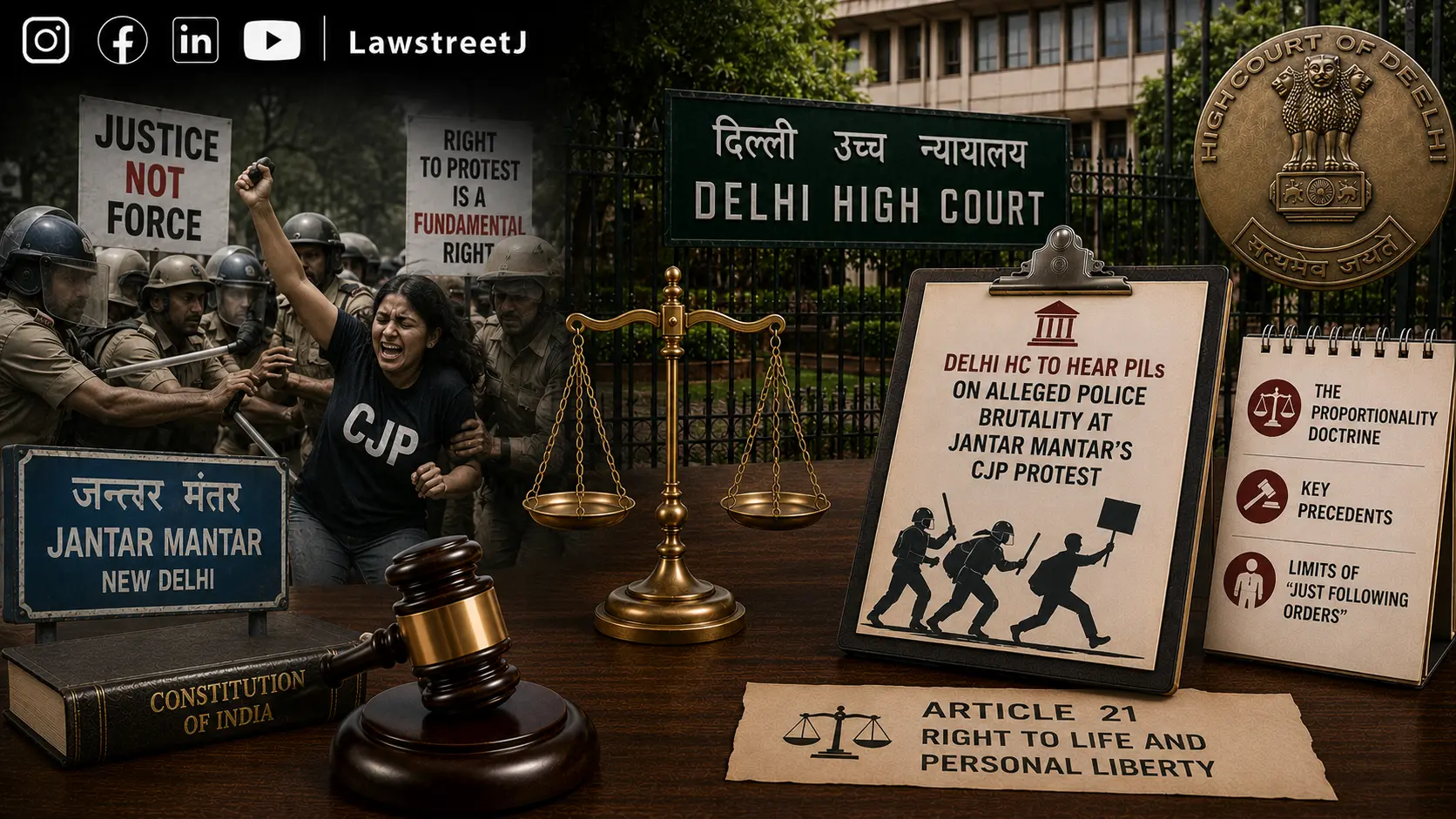
Two public interest litigation petitions have been filed before the Delhi High Court over police action against protesters gathered at Jantar Mantar and other parts of Central Delhi. The matter was mentioned on Wednesday before a Bench of Chief Justice Devendra Kumar Upadhyaya and Justice Tejas Karia, seeking urgent listing. A lawyer appearing for the petitioners told the Bench that the incident "has shaken the conscience of the nation." The Court agreed to hear the matter the same day.
A related mentioning had already been made a day earlier, on Tuesday, when the Chief Justice remarked that litigants should not "drag the court into all this," in response to a plea alleging excessive use of force by the police against the same set of protesters.
What Happened at Jantar Mantar
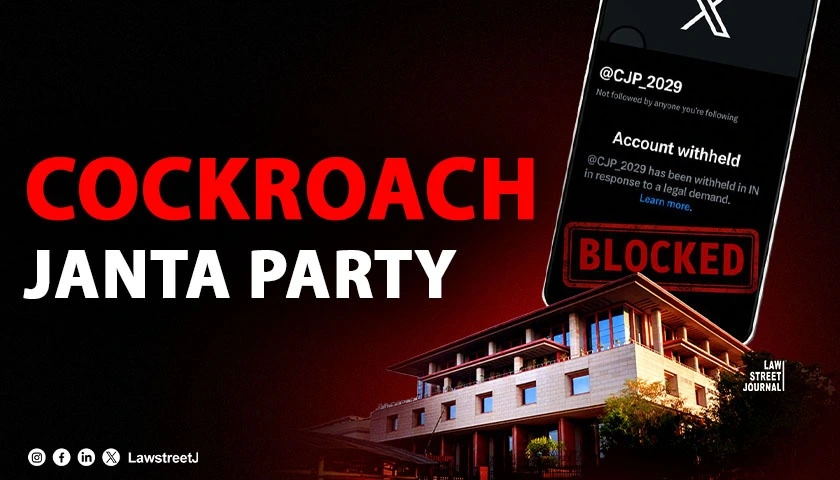
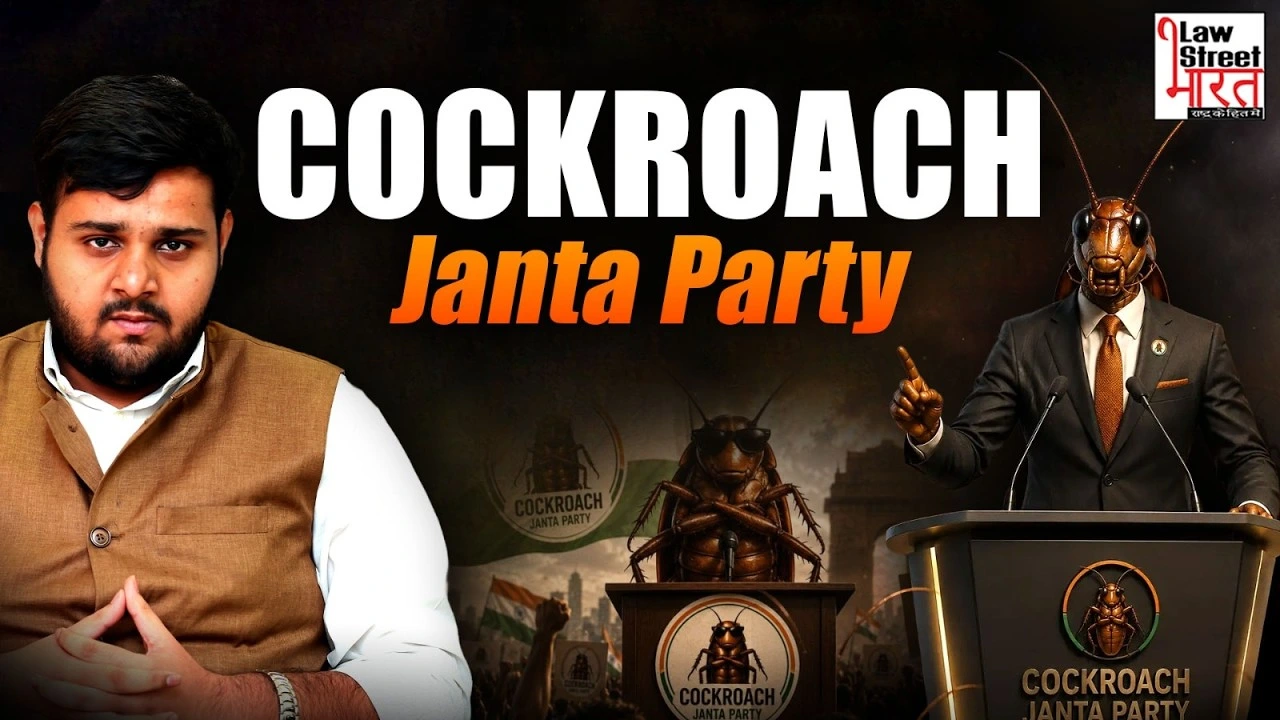
Students from across the country, along with activists of the Cockroach Janta Party (CJP), an online satirical collective, had been protesting at Jantar Mantar and adjoining parts of Central Delhi. Their demands centred on accountability for repeated examination paper leaks and the resignation of Union Education Minister Dharmendra Pradhan. The protesters had planned to march to Parliament House, a march the Delhi Police prevented. According to news reports, the police response involved a lathi charge and the use of tear gas, in which several protesters were injured. Separately, Congress leaders including Leader of Opposition Rahul Gandhi were detained while protesting outside the Prime Minister's residence, with Gandhi reported to have suffered minor injuries in the process.
The Constitutional Starting Point: A Qualified, Not Absolute, Right to Protest
Indian constitutional law has never treated the right to protest as unconditional, nor has it treated police power to disperse a crowd as unconditional either. Article 19(1)(b) guarantees the right to assemble peaceably and without arms, and Article 19(1)(a) protects the expression that goes with it. Both are subject to reasonable restrictions under Article 19(3), which permits regulation in the interest of public order. The tension the Delhi High Court is now being asked to resolve is a familiar one in Indian jurisprudence: at what point does a "reasonable restriction" imposed through police force stop being reasonable and start being a constitutional violation in itself.
The Nuremberg Principle: Why "We Were Only Following Orders" Has Never Been a Complete Defence
The petitioners' framing, that force used against protesters must be justifiable and not merely authorised, echoes a principle with much older and graver origins. Principle IV of the Nuremberg Principles, formulated by the International Law Commission in 1950 out of the Nuremberg Tribunal's charter and judgment, holds that the fact a person acted pursuant to an order of a government or a superior does not relieve that person of responsibility, provided a moral choice was in fact possible. The Nuremberg trials rejected the idea that a chain of command can convert an unjustifiable act into a lawful one merely because it was instructed from above.
It would be inaccurate, and unfair to the gravity of Nuremberg's subject matter, to equate a law-and-order operation at Jantar Mantar with the crimes tried at Nuremberg. But the underlying legal principle they share is narrower and more transferable than the historical context: authorisation to use force, whether it is a government order, a standing instruction, or a prohibitory order under law, is not itself a licence for the person applying that force to exceed what the situation justifies. Indian constitutional and police law has arrived at a structurally similar position through its own doctrine of proportionality: an order permitting police to disperse an assembly is not an order permitting police to use whatever force they choose while doing so. The individual officer's and the institution's accountability for the manner of execution survives the existence of a lawful instruction to act.
Case Law That Favours the Protesters' Position
Indian courts have repeatedly drawn the same line the petitioners are now asking the Delhi High Court to enforce. In Ramlila Maidan Incident, In re, (2012) 5 SCC 1, the Supreme Court examined the midnight police action against Baba Ramdev's supporters and held that any restriction on the right to protest, and any force used to enforce it, must be proportionate to the actual threat posed, and that the state has an affirmative duty to facilitate peaceful assembly rather than merely tolerate it. In Anita Thakur v. Government of J&K, 2016 SCC OnLine SC 814, the Supreme Court held that while a violent or unruly crowd may justify reasonable police force, it becomes "a more serious problem" when police "cross the limit" and continue using force even after a situation is under control, and it awarded compensation to the petitioners on that basis. In Himat Lal K. Shah v. Commissioner of Police, AIR 1973 SC 87, the Court recognised the right to hold public meetings on streets and public places as part of the freedom of assembly, subject only to reasonable regulation, not prohibition. Most directly relevant to this dispute, Mazdoor Kisan Shakti Sangathan v. Union of India, AIR 2018 SC 3476, dealt specifically with restrictions on protest at Jantar Mantar itself, and the Supreme Court held that the right to peaceful assembly, though subject to reasonable restriction, cannot be curtailed through blanket or disproportionate measures.
Case Law the Delhi Police and the State Are Likely to Rely On
The State is unlikely to be without precedent of its own. In Babulal Parate v. State of Maharashtra, AIR 1961 SC 884, the Supreme Court upheld the constitutional validity of prohibitory orders of the kind used to control large public gatherings, recognising the need for swift preventive action in urgent situations. In Madhu Limaye v. Sub-Divisional Magistrate, Monghyr, AIR 1971 SC 2486, the Court similarly upheld the state's power to impose such restrictions where there is a genuine apprehension of danger to public order, while cautioning that the power must be exercised on real, not imagined, urgency. The Anita Thakur judgment itself, despite ruling substantially in the protesters' favour, also recorded that the situation had escalated after some protesters turned violent and pelted stones, a finding the police are likely to draw on to argue that force, even if regrettable, was not unprovoked. Read together, these precedents give the police a genuine argument that reasonable force to disperse an assembly that turns disorderly is not per se unconstitutional, and that the real dispute before the Delhi High Court will turn on facts, principally, whether the force used at Jantar Mantar was proportionate to an actual threat or was applied after the situation was already under control.
What the PILs Are Likely to Seek
Based on the pattern of similar petitions following past instances of alleged police excess, the PILs before the Delhi High Court are likely to seek an independent inquiry into the police action, medical treatment and compensation for injured protesters, and accountability against officers found to have used disproportionate force, along with guidelines to prevent recurrence. The Bench of Chief Justice Upadhyaya and Justice Karia has agreed to hear the matter on an urgent basis; the Court's directions on maintainability, interim relief, and the scope of inquiry will determine how far the case travels beyond this preliminary stage.
Case and PIL Details
- Matter mentioned before: Bench of Chief Justice Devendra Kumar Upadhyaya and Justice Tejas Karia, Delhi High Court
- Nature of proceedings: Two public interest litigation petitions concerning police action against protesters at Jantar Mantar and other parts of Central Delhi
- Related prior mentioning: Plea alleging excessive use of force by Delhi Police against CJP protesters, mentioned before the same Bench a day earlier