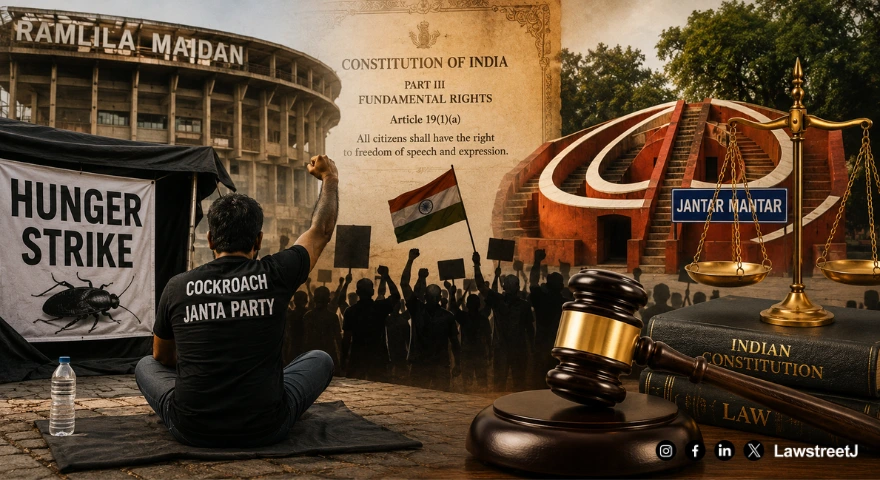
New Delhi: The sit-in at Jantar Mantar led by education reformer Sonam Wangchuk, now in its third week, has moved beyond a political controversy over the National Eligibility cum Entrance Test paper leak into a live constitutional question. As Wangchuk's indefinite fast crosses the twentieth day with doctors warning of possible organ damage, the Delhi High Court has been called upon to decide how far the state may go to preserve a protester's life without extinguishing the protest itself. The episode has drawn fresh attention to the jurisprudence on the right to protest as an incident of fundamental freedoms under the Constitution, and to the unsettled question of whether a hunger striker may lawfully be force-fed.
The Protest and Its Origins
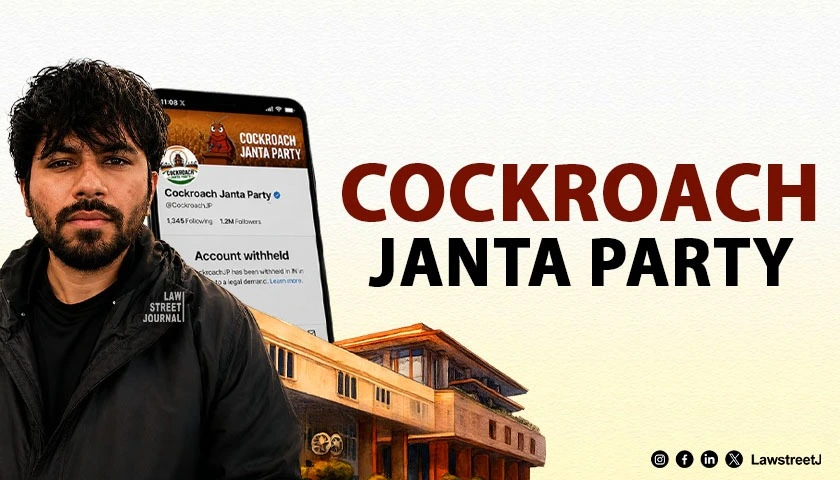
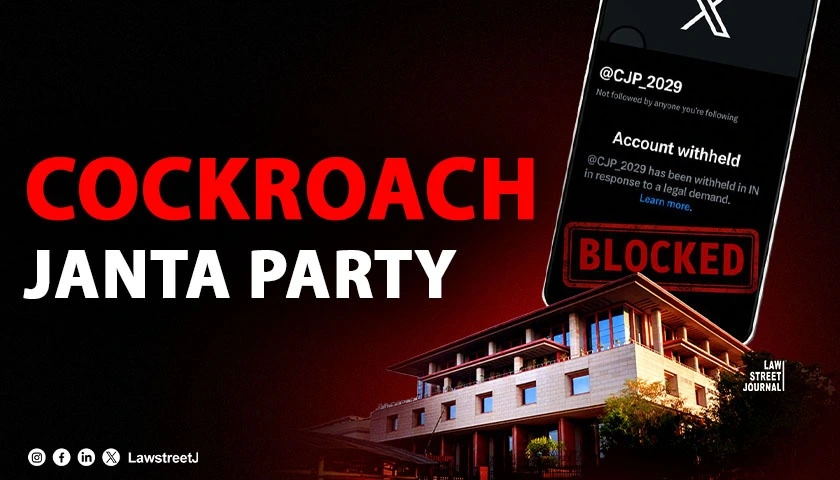
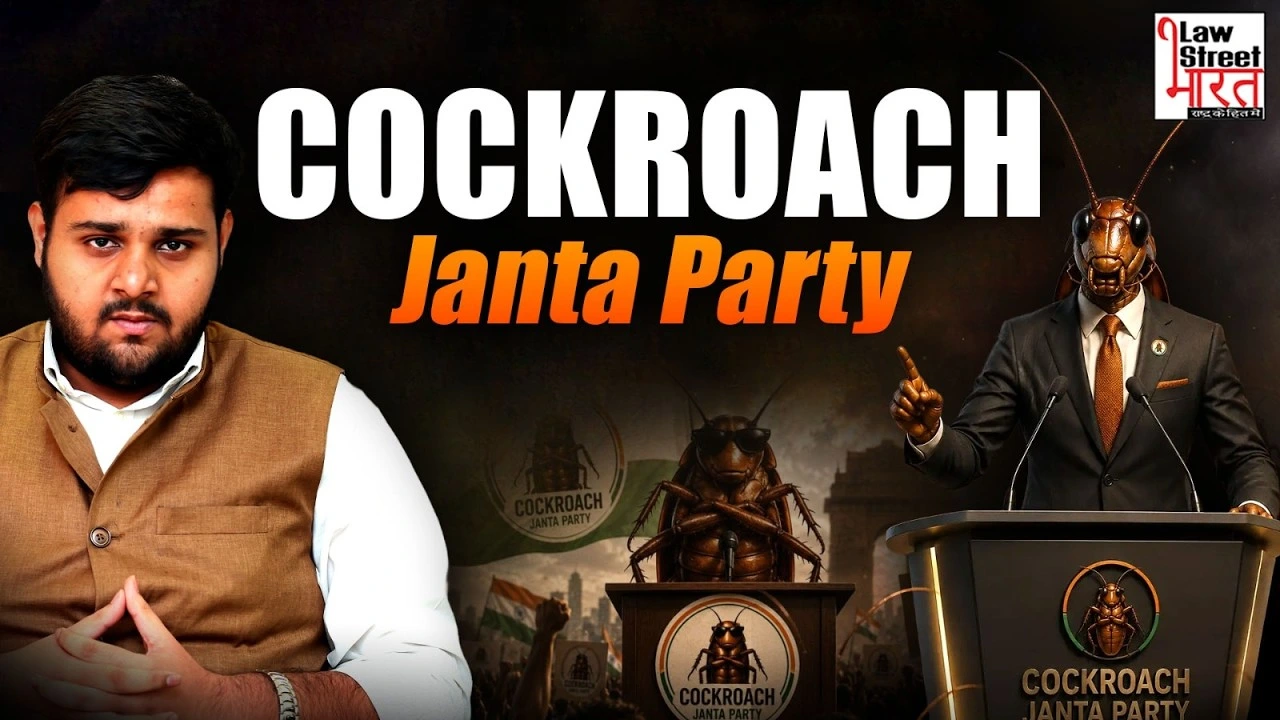
The Cockroach Janta Party began as a satirical online movement in May, formed in response to remarks widely attributed to Chief Justice of India Surya Kant during a court hearing, in which the country's unemployed youth were reportedly described in dismissive terms. What started as social media mockery translated into a physical demonstration last month, when supporters of the party launched a sit-in at Jantar Mantar, the only site in Delhi officially designated for public protest.
The agitation gained a sharper edge after the cancellation of a key medical entrance examination following a paper leak, a development that affected lakhs of aspiring students across the country. Wangchuk joined the sit-in in solidarity, beginning an indefinite hunger strike on June 28 to press for the resignation of Union Education Minister Dharmendra Pradhan. By July 16, the fast had entered its nineteenth day, with Wangchuk reported to have lost close to 8.5 kilograms, prompting a Public Interest Litigation before the Delhi High Court seeking urgent medical intervention, including force-feeding if necessary.
The Right to Protest as a Fundamental Right
The Constitution of India does not use the word "protest," yet the courts have consistently read the right to assemble peaceably and to express dissent into Articles 19(1)(a) and 19(1)(b), subject only to the reasonable restrictions permitted under Articles 19(2) and 19(3).
In Himat Lal K. Shah v. Commissioner of Police, Ahmedabad (1973) 1 SCC 227, the Supreme Court held that the right to hold public meetings on public streets and spaces is part of the fundamental freedom of assembly, and that the state cannot impose a blanket prohibition on such gatherings, though it may regulate the time, place and manner of assembly in the interest of public order.
This principle was reaffirmed and substantially developed in In Re: Ramlila Maidan Incident v. Home Secretary, Union of India (2012) 5 SCC 1, arising directly out of the midnight police action against Baba Ramdev's anti-corruption fast at Ramlila Maidan in 2011. The Court, taking suo motu cognisance of the crackdown, held that peaceful protest and dissent form the bedrock of a democratic society and that the state is under a constitutional obligation to facilitate, not suppress, such expression. The bench observed that the freedom to assemble peacefully and hold demonstrations is a facet of the right to freedom of speech and expression, and the state must exhaust every peaceful means of persuasion before resorting to force. Significantly, the judgment recorded with approval the manner in which the government of the day had engaged with Ramdev through dialogue, ministerial visits and correspondence, treating that engagement as the constitutionally appropriate response to a hunger strike, rather than coercive eviction.
The Court returned to the theme in Mazdoor Kisan Shakti Sangathan v. Union of India (2018) 17 SCC 324, striking down blanket restrictions on protests at Jantar Mantar and Boat Club and holding that the right to protest peacefully is an essential part of the democratic process, which cannot be curtailed merely on the ground of administrative convenience.
More recently, in Anuradha Bhasin v. Union of India (2020) 3 SCC 637, the Supreme Court, while dealing with restrictions imposed in Jammu and Kashmir, held that the freedom of speech and expression and the freedom to practise any profession over the internet enjoy constitutional protection under Article 19(1)(a) and 19(1)(g), and that any restriction on these freedoms, including the freedom to assemble and dissent, must satisfy the tests of necessity and proportionality.
Read together, this line of authority establishes that the sit-in at Jantar Mantar, however inconvenient to the government of the day, falls squarely within the protective ambit of Article 19, and that the appropriate constitutional response to a hunger strike undertaken in the course of such a protest is dialogue and medical care, not suppression.
The Force-Feeding Question
The Public Interest Litigation before the Delhi High Court sought a direction that Wangchuk be taken to a government hospital and administered nutrients through force-feeding. The plea warned that the government was least concerned and insensitive about the situation and that his life could be at serious risk within forty-eight hours absent intervention.
The Division Bench of Chief Justice D.K. Upadhyaya and Justice Tejas Karia, hearing the matter on July 16, declined to go so far. The Bench directed that Wangchuk be examined daily by government doctors, with medical intervention to follow if warranted, but stopped short of ordering that he be force-fed against his will. The Court observed that every life is precious and that the state machinery must make every effort to preserve it, while recording the assurance of Solicitor General Tushar Mehta that daily medical monitoring was already underway.
This calibrated approach mirrors the Supreme Court's handling of Punjab farmer leader Jagjit Singh Dallewal's indefinite fast in 2024, when a bench headed by Justice Surya Kant held that protecting a hunger striker's life is the state's bounden duty, while simultaneously making clear that the striker ought not be compelled to abandon the fast unless doing so became absolutely necessary to save his life.
The legal architecture around force-feeding has shifted materially since the era of Manipuri activist Irom Sharmila, who was kept alive for nearly sixteen years through repeated arrest, hospitalisation and nasogastric force-feeding while protesting the Armed Forces (Special Powers) Act. That regime operated at a time when attempted suicide remained a criminal offence under Section 309 of the Indian Penal Code. With the Bharatiya Nyaya Sanhita having done away with the criminalisation of attempted suicide, and with the courts having increasingly emphasised personal autonomy over one's own body, the legal premise that once justified coercive force-feeding, namely the prevention of a criminal act, no longer holds in the same form.
This shift in judicial thinking on bodily autonomy traces its roots to Maneka Gandhi v. Union of India (1978) 1 SCC 248, in which the Supreme Court expanded the content of Article 21 to hold that the right to life and personal liberty is not confined to mere animal existence but extends to the right to live with dignity, and that any procedure depriving a person of that right must be fair, just and reasonable. The dignity-based reading of Article 21 was carried further in Common Cause v. Union of India (2018) 5 SCC 1, where a Constitution Bench recognised the right of a competent adult to make decisions concerning his own body, including the right to refuse medical treatment, as a facet of the right to live and die with dignity. While the Court in Gian Kaur v. State of Punjab (1996) 2 SCC 648 had earlier held that the right to life under Article 21 does not include the right to die, subsequent jurisprudence has increasingly recognised that bodily autonomy and the right to refuse unwanted medical intervention occupy an important, if carefully bounded, place within Article 21.
Where the Law Currently Stands
Taken together, the case law leaves the state with a narrow and carefully constructed obligation. The government must not treat a hunger strike as a law and order problem to be broken by force. It must instead engage with the protester through dialogue, as the Union government did with Ramdev in 2011, and it must ensure continuous medical monitoring and timely intervention to prevent loss of life, as the Delhi High Court has now directed in Wangchuk's case. What the courts have consistently declined to sanction, at least as a first resort, is the forcible feeding of a competent adult against his stated wishes, a position that finds resonance in the constitutional value placed on personal autonomy and dignity under Article 21.
As Wangchuk's fast enters its twenty-first day and organisers plan a march to Parliament, the Delhi High Court's order stands as a reaffirmation that the right to protest, including through the extreme method of a hunger strike, remains firmly protected under India's constitutional scheme, so long as the protester's life is not deliberately allowed to be lost, and so long as the state's first response is persuasion rather than coercion.
Case Details
Case: Rakesh Kumar Saini v. Union of India & Ors. (PIL seeking medical intervention and force-feeding directions in respect of Sonam Wangchuk's hunger strike) Court: High Court of Delhi Bench: Chief Justice D.K. Upadhyaya and Justice Tejas Karia Date of Order: July 16, 2026 Key Precedents Relied Upon in Analysis: Himat Lal K. Shah v. Commissioner of Police (1973) 1 SCC 227; In Re: Ramlila Maidan Incident (2012) 5 SCC 1; Mazdoor Kisan Shakti Sangathan v. Union of India (2018) 17 SCC 324; Anuradha Bhasin v. Union of India (2020) 3 SCC 637; Maneka Gandhi v. Union of India (1978) 1 SCC 248; Common Cause v. Union of India (2018) 5 SCC 1; Gian Kaur v. State of Punjab (1996) 2 SCC 648