



New Delhi: The Employees’ Pension Scheme (EPS-95), managed by the Employees’ Provident Fund Organisation (EPFO), was introduced in 1995 to provide retirement income security for organized sector workers. In 2014, the government fixed the minimum pension at ₹1,000 per month—a figure that has remained unchanged for over a decade.
The Parliamentary Standing Committee on Labour, Textiles and Skill Development, in its 15th Report on Demands for Grants (2026–27), noted that ₹1,000 is insufficient to cover basic living expenses such as food, healthcare, and housing. The committee emphasized that inflation and rising costs have eroded the value of pensions, leaving retirees financially vulnerable.
Pensioners’ Mobilization and Constitutional Dimensions:
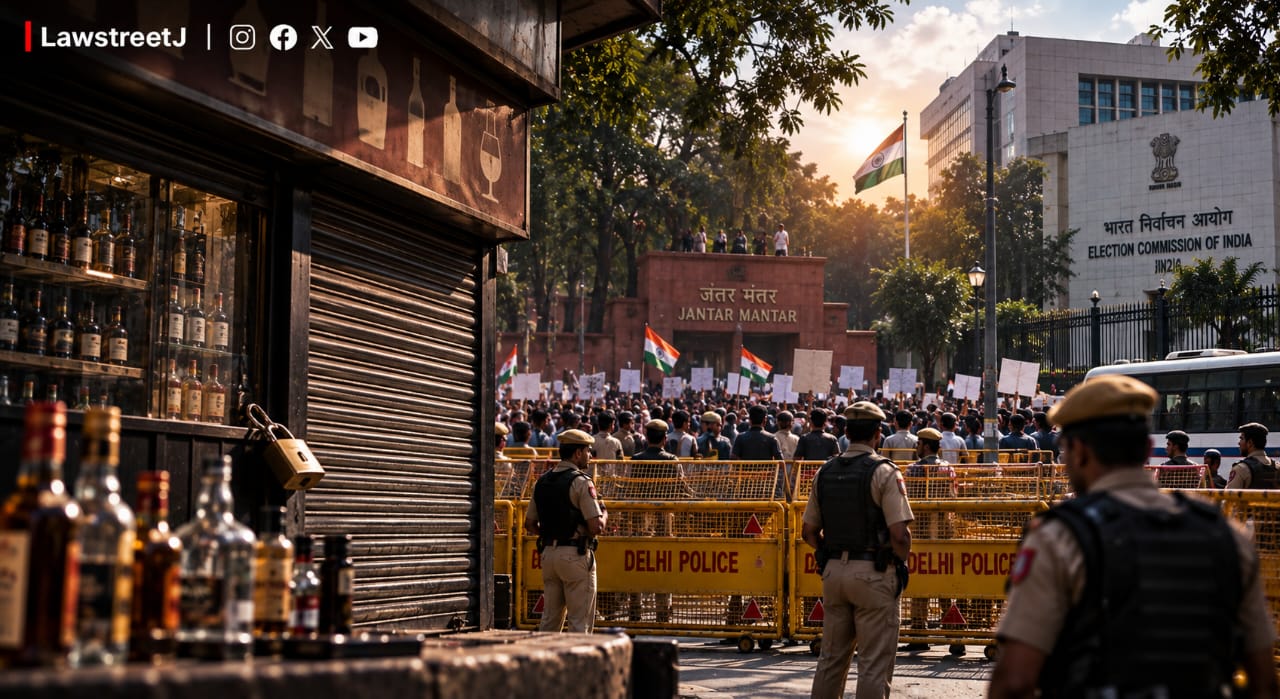
The issue gained urgency following nationwide protests by pensioners, including a three-day demonstration at Jantar Mantar in New Delhi beginning March 9, 2026. Pensioners under EPS-95 demanded that the minimum pension be raised to ₹7,500 per month, citing the inadequacy of ₹1,000 to “make both ends meet.”
Pensioners’ associations argued that the current pension violates the principle of social security enshrined in Article 41 of the Constitution of India, which obligates the State to provide public assistance in cases of old age. They also pointed to Article 21, which guarantees the right to life with dignity, stressing that subsistence-level pensions undermine this right.
Internationally, International Labour Organization (ILO) conventions emphasize adequate retirement benefits to ensure dignity in old age. Pensioners highlighted that India’s current minimum pension falls short of these standards.
Legal, Fiscal, and Policy Implications:
The committee’s recommendation carries significant legal and policy implications:
- Compliance with Constitutional Mandates: The panel underscored that pensions must align with the constitutional guarantee of dignity under Article 21.
- Labour Welfare Legislation: EPS-95, part of the Employees’ Provident Funds and Miscellaneous Provisions Act, 1952, must evolve to reflect current socio-economic realities.
- Fiscal Responsibility: Raising pensions to ₹7,500 would require substantial financial outlays. The committee urged the Union and State Governments to establish mechanisms for monitoring compliance and ensuring timely disbursement, while balancing fiscal sustainability.
- Judicial Precedents: Courts have previously recognized pensions as deferred wages, reinforcing the State’s obligation to ensure adequacy.
The committee also recommended expanding social security coverage to contractual and gig workers, reflecting the changing nature of India’s workforce. The Ministry of Labour and Employment is expected to review the recommendations and consult stakeholders, including pensioners’ associations, trade unions, and financial experts.
Experts suggest that a phased approach may be adopted, with incremental increases in pension levels linked to inflation indices. Additionally, reforms in EPFO’s investment strategies could help generate higher returns, supporting enhanced pension payouts.
Policymakers face the dual challenge of ensuring social justice for retirees while maintaining fiscal discipline. The parliamentary panel’s recommendation marks a pivotal moment in India’s social security discourse. By declaring ₹1,000 “inadequate” and urging a revision to a “dignified level,” the committee has acknowledged the pressing need to safeguard retirees against economic hardship.
Pensioners’ demand for ₹7,500 per month reflects the realities of rising living costs, and the government’s response will be closely watched as a test of its commitment to labour welfare and constitutional guarantees.

![Snatching job in public employment takes away employees means of livelihood; violates Article 21: Karnataka HC [Read Judgment]](/secure/uploads/2024/01/lj_6875_033cb47e-3a11-4e93-afef-9934c7d11614.jpg)

![Rajasthan HC directs police to consider protection for couple in live-in relationship outside marriage [Read Order]](/secure/uploads/2024/08/lj_9448_Live-In_relation_protection.webp)







SUSHIL KUMAR DAS Jun 11, 2026
PRESENT BJP GOVT IS ONLY FOR INDUSTRIALIST BENEFITS. EVEN ATAL BIHARI BAJPAYEE PAYES ATTENTION ON LABOUR BENEFITS AND INCREASE PENSION 1000 . THIS GOVT TAKES 10 YEARS TO DISCUSSED ON IT . IF ANY INDUSTRIALST BENEFIT IT COULD BE WITHIN 10 WEEKS TO FINALISED . SEE ON PREMIUM MINES AND VALUE ADDITION ON MINERALS . IF PRMIUM SYSTEM DECLARE WHY NOT FOR ALL MINES EXECEPT " MINES ATTACHED TO PLANT " ( ) ALL MINERALS TO BE UNDER STATE PSU CONTROL . THEN ONLY STEEL ,CEMENT RATE WILL BE IN CONTROL . ALL MINES IRESPECTIVE OF LEESE AVAILABLE MUST BE PREMIUM PAID MINES . ALL MINERALS ARE GOVT PROPERTIES ,WE CAN GIVE 2-3 YEARS AND TAKE BACK ALL MINES OF GOA,ODISHA AND KARNATAKA TO MAKE PREMIUM MINES AND STEEL ETC WILL BE UNIFORM FOR PROJECT CONTROL .