38.6c New Delhi, India, Friday, April 24, 2026
Top Stories Supreme Court
Political NEWS Legislative Corner Celebstreet International Videos
Subscribe Contact Us
close
Legislative Corner

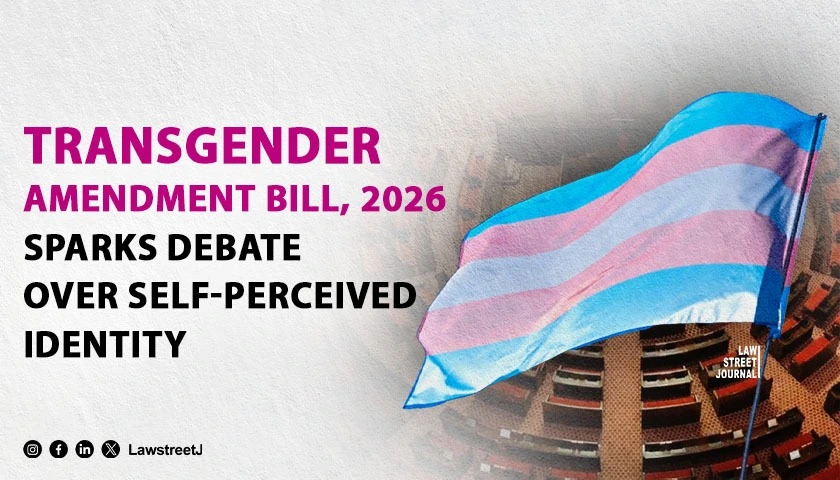
Transgender Persons (Protection of Rights) Amendment Bill, 2026 Introduced in Lok Sabha; Raises Concerns Over Removal of Self-Perceived Gender Identity

By Tushit Pandey      14 March, 2026 02:06 PM      0 Comments
Transgender Persons Protection of Rights Amendment Bill 2026 Introduced in Lok Sabha Raises Concerns Over Removal of Self Perceived Gender Identity

New Delhi: The Supreme Court’s landmark judgment in NALSA v. Union of India (2014) marked a watershed moment in Indian constitutional law. The Court recognised transgender persons as a “third gender” and affirmed their right to self-determination of gender identity under Articles 14, 19, and 21 of the Constitution. The ruling mandated governments to extend equal protection, dignity, and welfare measures to transgender citizens.

In response, Parliament enacted the Transgender Persons (Protection of Rights) Act, 2019, which prohibits discrimination in education, employment, healthcare, and access to public services. Crucially, the Act incorporated the principle of self-perceived gender identity, aligning statutory law with constitutional precedent.

The 2026 Amendment: Key Provisions

Introduced by Union Minister Dr. Virendra Kumar in the Lok Sabha on March 13, 2026, the Transgender Persons (Protection of Rights) Amendment Bill, 2026 proposes several changes:

  • Redefinition of “Transgender Person”: The Bill narrows the definition, emphasising biological and socio-cultural markers rather than self-identification.
  • Omission of Self-Perceived Identity: The amendment removes explicit recognition of self-perceived gender identity and requires individuals to undergo a screening process for legal recognition.
  • Stricter Penal Provisions: It introduces graded punishments for offences such as forced conversion into transgender identity through mutilation or coercion.
  • Welfare Scheme Clarification: The government argues that clearer definitions will ensure better targeting of welfare benefits.

Constitutional and Legal Concerns

Legal experts have highlighted potential conflicts with constitutional guarantees:

  • Article 14 (Equality): Narrowing recognition may exclude non-binary and gender-fluid persons.
  • Article 19 (Expression): Gender identity is an intrinsic aspect of personal autonomy and expression.
  • Article 21 (Dignity and Liberty): The NALSA judgment explicitly linked self-determination of gender identity to dignity and personal liberty.

By omitting the recognition of self-perceived gender identity, the Bill risks contradicting binding Supreme Court precedent, raising the likelihood of judicial review. During parliamentary debates, government representatives argued that the amendment would “broaden protections” by clarifying eligibility and preventing misuse of welfare schemes.

However, opposition members and activists have raised several concerns:

  • Exclusion Risks: Narrow definitions may leave out individuals who do not conform to traditional gender categories.
  • Bureaucratic Barriers: Screening processes could reintroduce gatekeeping mechanisms, undermining dignity and autonomy.
  • Demand for Consultation: Transgender groups have urged the government to hold wider consultations before the Bill’s passage.

Community leaders emphasise that the Bill could reverse the progress made since the NALSA judgment in 2014, particularly in affirming the right to self-determination of gender identity.

Globally, recognition of self-perceived gender identity is increasingly regarded as a standard of human rights law. Countries such as Argentina, Ireland, and Malta allow legal recognition based solely on self-identification, without medical or bureaucratic gatekeeping. India’s proposed amendment would mark a departure from this trend and could potentially affect its standing in international human rights forums.

The Transgender Persons (Protection of Rights) Amendment Bill, 2026 represents a critical juncture in India’s legal framework governing gender identity. While the government frames the proposed changes as necessary for clarity and effective welfare delivery, the removal of self-perceived gender identity raises significant constitutional concerns and appears to conflict with the principles affirmed in the NALSA judgment. As Parliament debates the Bill, its eventual passage will determine whether India continues to uphold the principle of self-determination or moves toward a more regulated model of gender recognition.




Share this article:

About:

Tushit is a political science scholar with a strong academic foundation and a growing interest in re...Read more


Leave a feedback about this
Related Posts
View All

Another CBI Officer Investigating Rakesh Asthana Moves SC Against Transfer, Makes Startling Revelations Another CBI Officer Investigating Rakesh Asthana Moves SC Against Transfer, Makes Startling Revelations

After A.K. Bassi, another CBI officer who was investigating corruption allegations against Special Director Rakesh Asthana moved the Supreme Court.

Ayodhya verdict: SC rules in favour of Ram Lalla, Sunni Waqf Board gets alternate land Ayodhya verdict: SC rules in favour of Ram Lalla, Sunni Waqf Board gets alternate land

SC bench led by CJI Ranjan Gogoi has allotted the dispute site to Ram Janmabhoomi Nyas, while directing the government to allot an alternate 5 acre land within Ayodhya to Sunni Waqf Board to build a mosque.

Supreme Court: Money Spent On Judiciary Less Than 1% In All States Except Delhi Supreme Court: Money Spent On Judiciary Less Than 1% In All States Except Delhi

The court guided all states to document their response to the commission's report within four weeks. If any of the states fail to file a response, it will be presumed that they have no objections to the recommendations made by the commission, the court said.

Supreme Court Top Panel Names Chief Justices for Bombay, Orissa and Meghalaya High Courts Supreme Court Top Panel Names Chief Justices for Bombay, Orissa and Meghalaya High Courts

On April 18, 2020, the Supreme Court Collegium recommended new Chief Justices for three High Courts. Justice Dipankar Datta was proposed as Chief Justice of the Bombay High Court, succeeding Justice B.P. Dharmadhikari. Justice Biswanath Somadder was nominated as Chief Justice of Meghalaya High Court, while Justice Mohammad Rafiq was recommended for transfer as Chief Justice of Orissa High Court.

TRENDING NEWS

united-kingdom-passes-landmark-tobacco-ban-for-those-born-after-2008
Trending International
United Kingdom Passes Landmark Tobacco Ban for Those Born After 2008

UK passes landmark Tobacco & Vapes Bill banning tobacco sales for those born after 2008, introducing a rolling age restriction to create a smoke-free generation.

23 April, 2026 05:11 PM
iraq-syria-border-crossing-reopens-after-nearly-13-years-a-gateway-reborn
Trending International
Iraq–Syria Border Crossing Reopens After Nearly 13 Years: A Gateway Reborn

Iraq–Syria Rabia–Yarubiyah crossing reopens after 13 years, restoring trade, transit, and ties, marking a key step in regional recovery and economic revival.

23 April, 2026 05:31 PM

TOP STORIES

cci-dismisses-complaint-against-adani-group-in-12-gw-solar-project-case-finds-no-prima-facie-bid-rigging-or-abuse-of-dominance
Trending Business
CCI Dismisses Complaint Against Adani Group in ₹12 GW Solar Project Case, Finds No Prima Facie Bid Rigging or Abuse of Dominance [Read Order]

Competition Commission of India dismisses allegations of bid rigging and abuse of dominance against Adani Group in 12 GW solar project case.

18 April, 2026 02:10 PM
every-sinner-has-a-future-karnataka-hc-reduces-auto-rickshaw-drivers-jail-term-for-robbing-lone-woman-passenger
Trending Judiciary
‘Every Sinner Has a Future’: Karnataka HC Reduces Auto-Rickshaw Driver’s Jail Term for Robbing Lone Woman Passenger [Read Order]

Karnataka HC upholds conviction but reduces sentence of auto driver, directs ₹4 lakh compensation to victim in robbery case.

18 April, 2026 02:20 PM
screening-of-film-dhurandar-cannot-be-stalled-merely-because-a-section-of-society-has-a-different-view-madras-hc-dismisses-pil-seeking-ban-during-tamil-nadu-elections
Trending CelebStreet
Screening of Film Dhurandar Cannot Be Stalled Merely Because a Section of Society Has a Different View: Madras HC Dismisses PIL Seeking Ban During Tamil Nadu Elections [Read Order]

Madras High Court dismisses PIL against Dhurandar: The Revenge, ruling certified films cannot be stalled due to public dissent during elections.

18 April, 2026 03:26 PM
mc-mehta-case-supreme-court-approves-hike-in-environment-compensation-charge-for-commercial-vehicles-entering-delhi-orders-5-annual-revision
Trending Judiciary
MC Mehta Case: Supreme Court Approves Hike in Environment Compensation Charge for Commercial Vehicles Entering Delhi, Orders 5% Annual Revision [Read Order]

Supreme Court approves ECC hike for commercial vehicles entering Delhi, mandates 5% annual increase from April 1, 2026, based on CAQM recommendations.

18 April, 2026 05:12 PM

ADVERTISEMENT


Join Group

Signup for Our Newsletter

Get Exclusive access to members only content by email