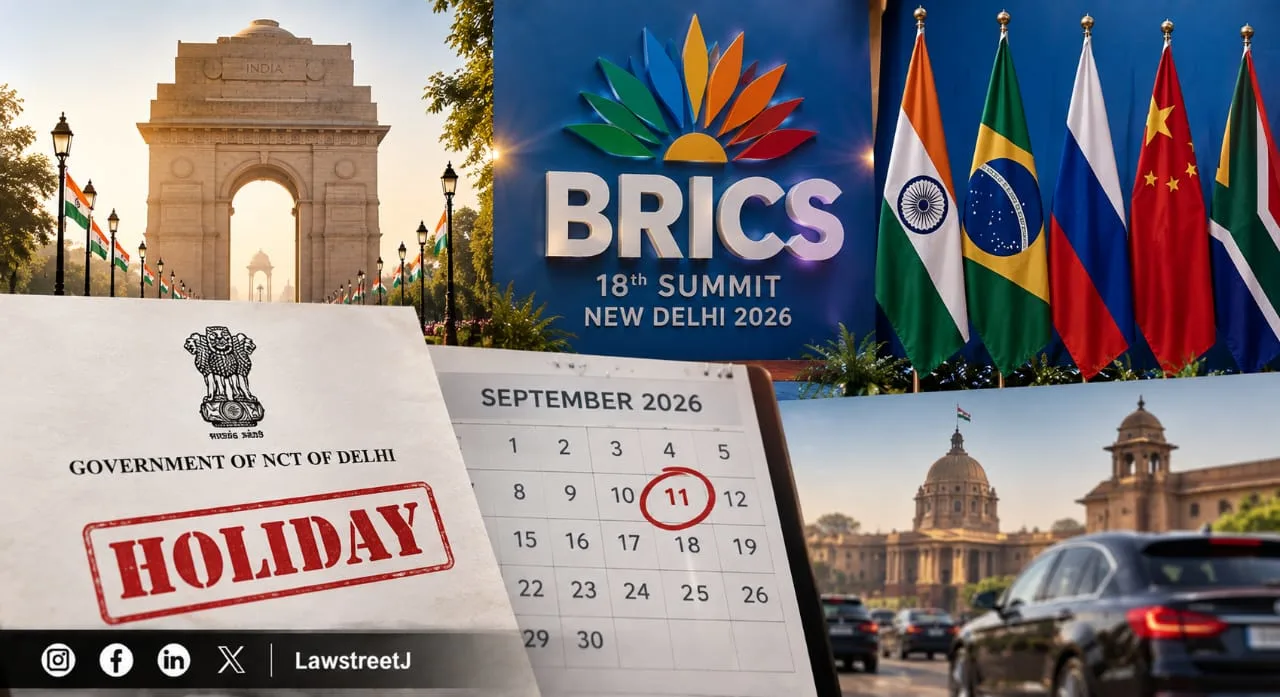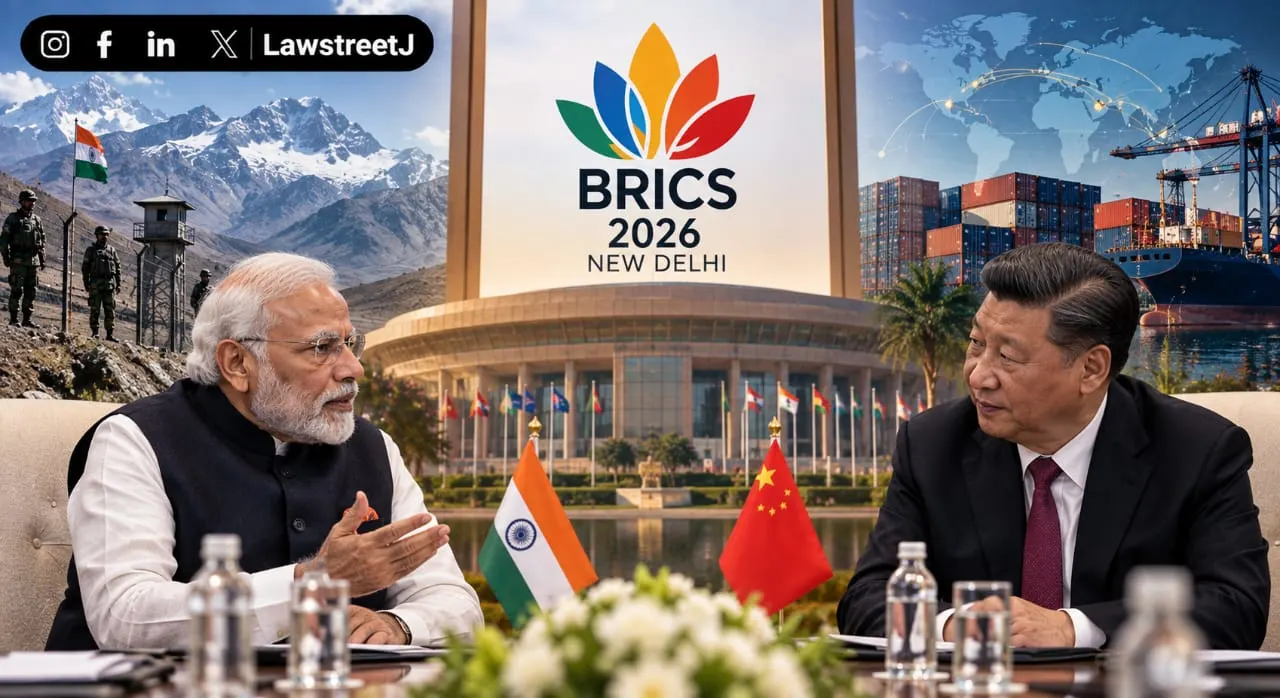
NEW DELHI: Prime Minister Narendra Modi and Chinese President Xi Jinping are set to hold bilateral talks on Saturday on the sidelines of the 18th BRICS Leaders’ Summit in New Delhi, as India and China continue efforts to stabilise relations following years of tensions along the Line of Actual Control (LAC).
Xi arrived in New Delhi on September 12 for the BRICS summit, marking his first visit to India since October 2019. The meeting with Modi is scheduled during the summit and will be the third consecutive year in which the two leaders have held face-to-face discussions, following their meetings in Kazan in October 2024 and Tianjin in August 2025. The proposed bilateral comes as both governments have taken steps to restore high-level engagement after the 2020 Galwan Valley clash. The two sides have also resumed several forms of economic and people-to-people engagement, although differences over the boundary, trade and broader strategic issues remain.
Xi’s First India Visit Since 2019
Xi’s visit to New Delhi is taking place at the invitation of Prime Minister Modi for the 18th BRICS Leaders’ Summit, which India is hosting on September 12 and 13. The Chinese President last visited India in October 2019 for an informal summit with Modi at Mamallapuram in Tamil Nadu. His latest visit comes nearly seven years later and follows a period in which India-China relations were severely affected by the 2020 military confrontation in eastern Ladakh.

Before Xi’s arrival, Chinese Ambassador to India Xu Feihong said the two countries were arranging a bilateral meeting between the leaders. He said it would be the third consecutive year in which Modi and Xi had met, referring to their discussions in Kazan and Tianjin. China's Foreign Ministry has also said Beijing wants to strengthen communication and cooperation with India while properly handling differences between the two countries. Chinese Foreign Ministry spokesperson Mao Ning said the two countries should approach their relationship from a strategic and long-term perspective.
The bilateral meeting is expected to provide an opportunity for the two leaders to review the progress made in stabilising relations and discuss issues that remain unresolved.
Border Disengagement Changed the Course of Relations
The most significant development in the recent India-China relationship came on October 21, 2024, when the two countries reached an agreement on patrolling arrangements along the LAC in the Depsang and Demchok areas of eastern Ladakh. The Indian government subsequently stated that the agreement resulted in disengagement from all the friction points that had emerged during the 2020 standoff. Patrolling and, where applicable, grazing were to resume according to long-standing practices followed before the deterioration in relations.
The 2020 confrontation had resulted in the deaths of 20 Indian soldiers and four Chinese soldiers in the Galwan Valley. It led to a prolonged military standoff and a sharp deterioration in political, economic and people-to-people relations between the two countries. The 2024 disengagement agreement helped create conditions for the resumption of high-level political engagement. Modi and Xi subsequently met in Kazan in October 2024 and again in Tianjin in August 2025. Their meetings have been followed by measures aimed at gradually restoring direct flights, business travel and other exchanges.
The broader boundary dispute, however, remains unresolved. Military deployments continue along the disputed Himalayan frontier, and both countries continue to address boundary-related issues through diplomatic and military mechanisms.
Trade Deficit Remains a Major Economic Issue
Trade is another major issue in the India-China relationship. Official Indian data show that bilateral goods trade reached $151.10 billion in the financial year 2025-26, compared with $127.71 billion in 2024-25. India exported goods worth $19.47 billion to China during 2025-26, while imports from China stood at $131.63 billion. This resulted in a trade deficit of $112.16 billion, the largest deficit India records with any single country.
The composition of trade has also remained a concern for New Delhi. Indian exports to China include commodities such as iron ore, light naphtha, p-xylene, shrimp and castor oil. Chinese exports to India include machinery, electronics, computers, integrated circuits, telecommunications equipment, lithium-ion products and fertilisers. India has continued to raise concerns over market access and the composition of bilateral trade. The issue is particularly relevant as the two governments seek to improve economic relations without setting aside their respective security and regulatory concerns.
The Modi-Xi meeting therefore comes at a stage of cautious engagement rather than a formal resolution of all outstanding disputes. The 2024 border agreement and subsequent leader-level meetings have reduced some of the immediate tensions, while the boundary question, trade imbalance and strategic differences remain part of the bilateral relationship.
Against this backdrop, the scheduled Modi-Xi talks at the BRICS summit will be closely watched for their discussion of border stability, economic relations and the broader direction of India-China ties. The meeting also comes as India hosts an expanded BRICS grouping in New Delhi, with Chinese President Xi Jinping and Russian President Vladimir Putin among the participating leaders.