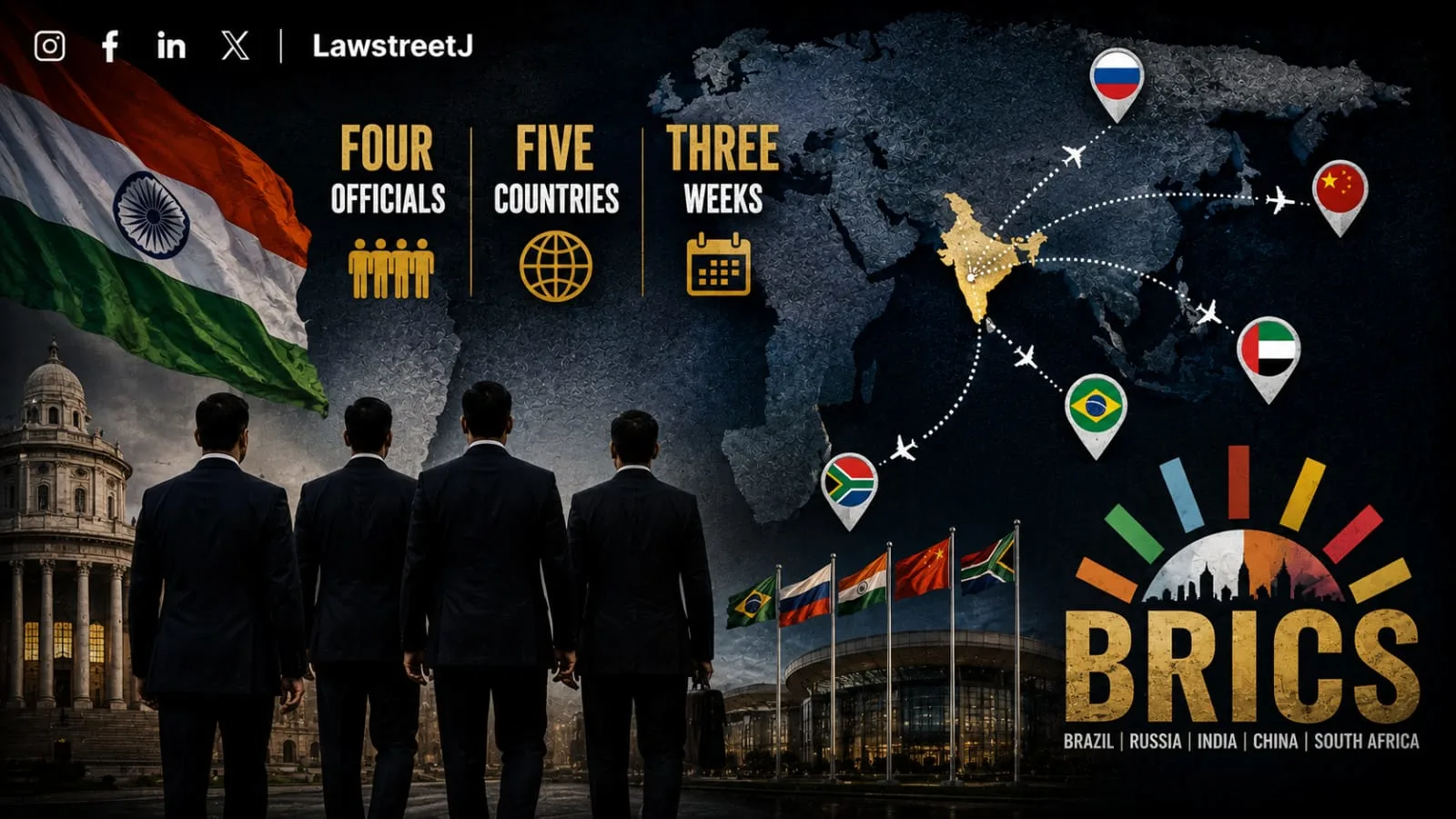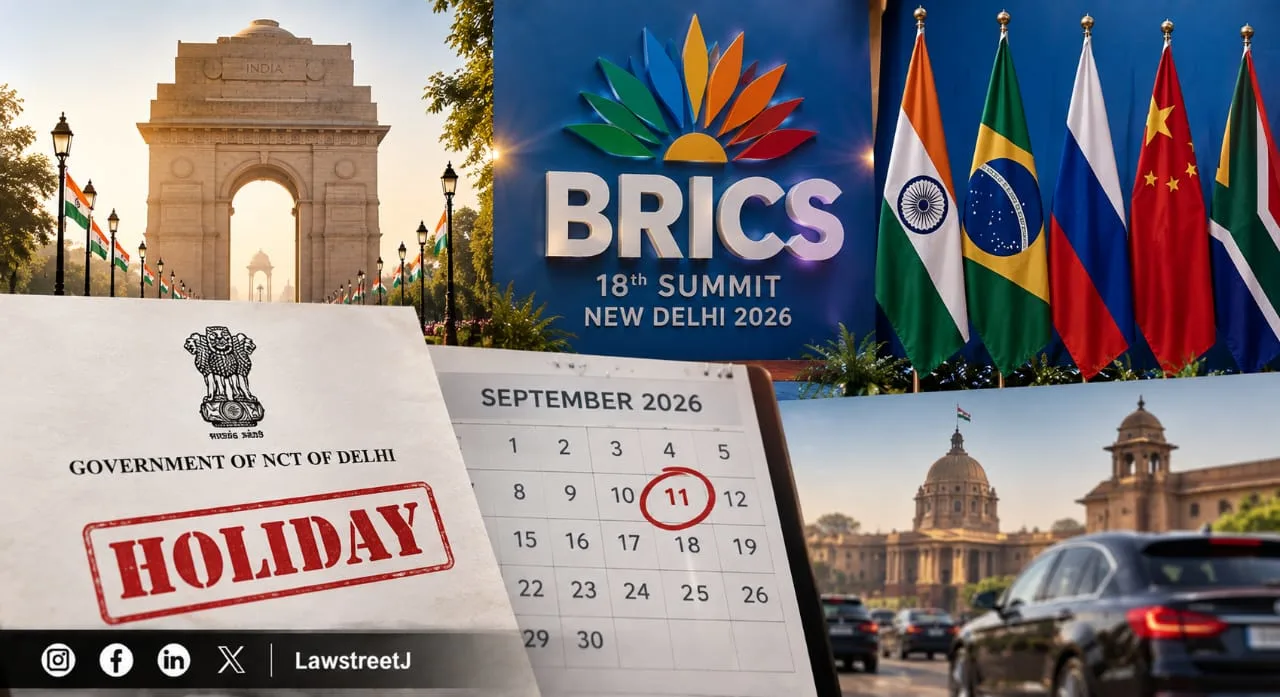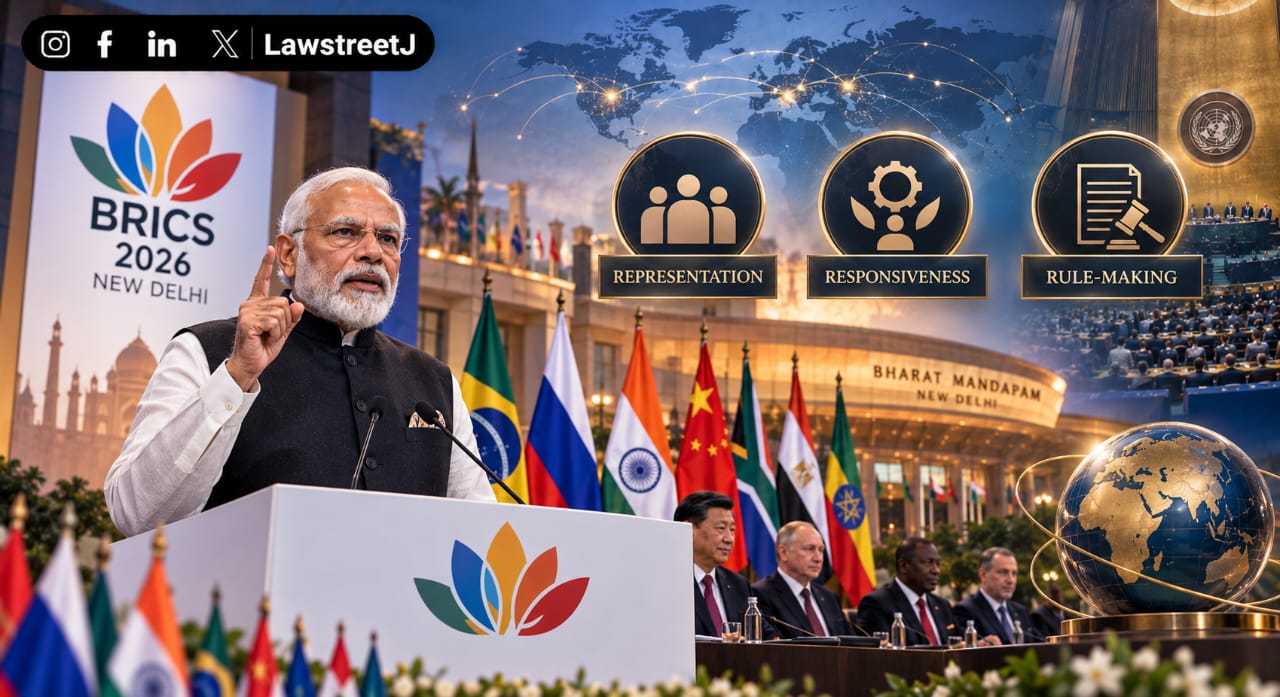
New Delhi - Prime Minister Narendra Modi called on BRICS member nations to pursue a fundamental reform of global governance structures during his opening address at the 18th BRICS Summit held at Bharat Mandapam in New Delhi on Saturday, September 12, 2026. Speaking immediately after formally declaring the summit open under India's chairmanship, Modi urged fellow leaders to help transform the Global South from what he described as a "rule-taker" into a "rule-shaper" in international decision-making.
Modi opened his remarks by welcoming the assembled leaders to India. "I am delighted to welcome you all to India. India's chairship is based on a people-centric and humanity-first approach. Resilience, innovation, cooperation and sustainability have been our priority," he said, adding that special emphasis had been placed on connecting BRICS with the general public over the course of India's chairmanship. He noted that more than 350 meetings had been organised under this vision, with member country delegations welcomed across nearly 30 Indian cities during the year, and thanked fellow leaders for what he called the success of India's presidency.
Turning to the substance of his address, Modi told the gathering that countries of the Global South remain among the most affected by global crises while continuing to be excluded from the forums where major decisions are made. "Today, the Global South stands in the front row of global crises but in the back row of decision-making," he said.
He called on BRICS nations to help convert what he termed a "pyramid of privilege" into a "platform of partnership." "We need to change this 'pyramid of privilege' to 'platform of partnership', where each country has a voice, a stake and decisions are human-centric," Modi said, laying the groundwork for the specific reforms he went on to outline.
Three-Point Roadmap: Representation, Responsiveness and Rule-Making
Modi then set out what he described as the three central aspects of any credible roadmap for global governance reform: Representation, Responsiveness, and Rule-making. "In formulating this roadmap, we must focus on three key aspects: Representation, Responsiveness, and Rule-making," he told the session.
On representation, Modi was direct about the urgency he attached to reform of the United Nations Security Council. "Regarding representation, I would like to state that reform of the UN Security Council can no longer be postponed. Negotiations on this matter must be linked to a definite timeframe and clear outcomes," he said. The statement called specifically for text-based negotiations on Security Council reform to carry a defined timeline and measurable outcomes, rather than continuing without a fixed endpoint, as such discussions have for years at the UN General Assembly.
Beyond the Security Council, Modi also pressed for changes within international financial institutions. He said that voting power, leadership positions and policy priorities at these institutions should be realigned to reflect current economic realities rather than the arrangements set when the institutions were originally established. He argued that countries driving global economic growth today should also play an appropriate role in shaping the policies and priorities of the institutions that govern that growth.
On the third element of his roadmap, rule-making, Modi's concluding remarks noted that BRICS member countries had underscored the need for the Global South to have meaningful participation in framing the rules that will govern emerging technologies. This reflects a concern, shared among several developing economies at the summit, that the frameworks now being developed to govern new and fast-evolving technologies could be shaped without adequate input from countries outside the current centres of technological power.
Continuity With India's Earlier Positions at BRICS and Beyond
Modi's call for reform builds on positions India has raised at previous BRICS summits. At the BRICS Summit in Rio de Janeiro in July 2025, Modi had similarly called for comprehensive reform of what he described as twentieth-century institutions, including the UN Security Council, the International Monetary Fund, the World Bank and the World Trade Organization, arguing that these bodies lacked the capacity to address the challenges of the twenty-first century. He had also urged higher priority for the Global South in global policymaking at that summit, stating that the interests of developing nations were not given due weight in matters of development, resource distribution and security.
India's push for what it has termed "reformed multilateralism" at BRICS platforms dates back further still, to the BRICS Summit held in Johannesburg in July 2018, which also marked the tenth anniversary of the grouping. At that summit, Modi had first articulated this vision, underlining that BRICS an acronym originally representing Brazil, Russia, India, China and South Africa, had come into existence specifically because the existing multilateral order was seen as inadequate by the five founding economies.
With the adoption of the New Delhi Declaration and the conclusion of Modi's address on September 12, the 18th BRICS Summit proceeded toward its second and final day of scheduled sessions in the Indian capital.