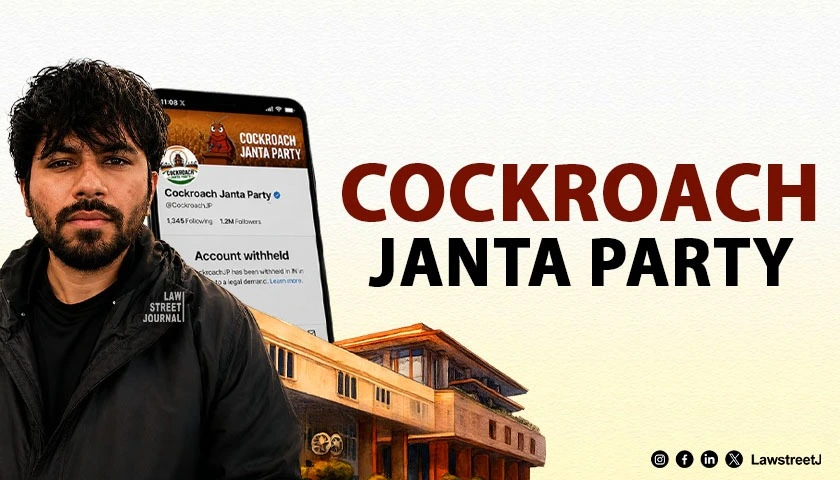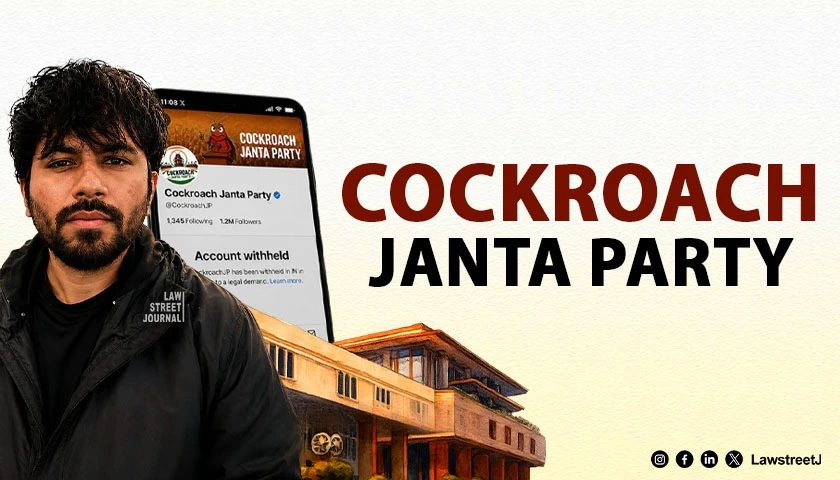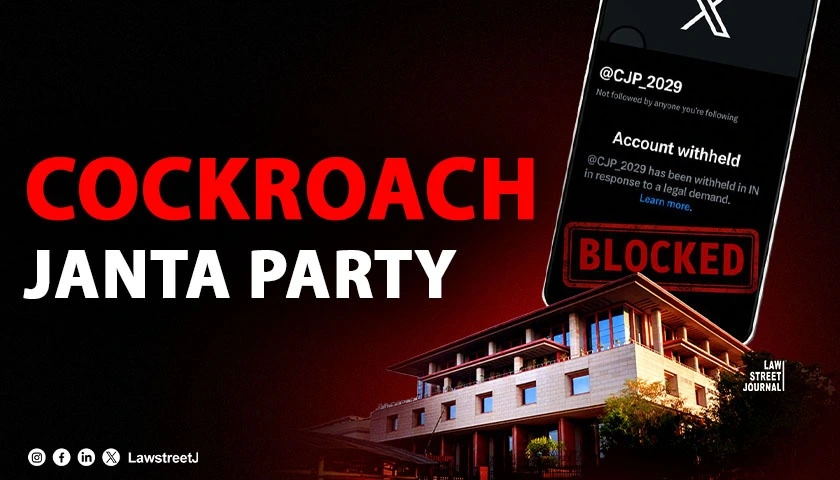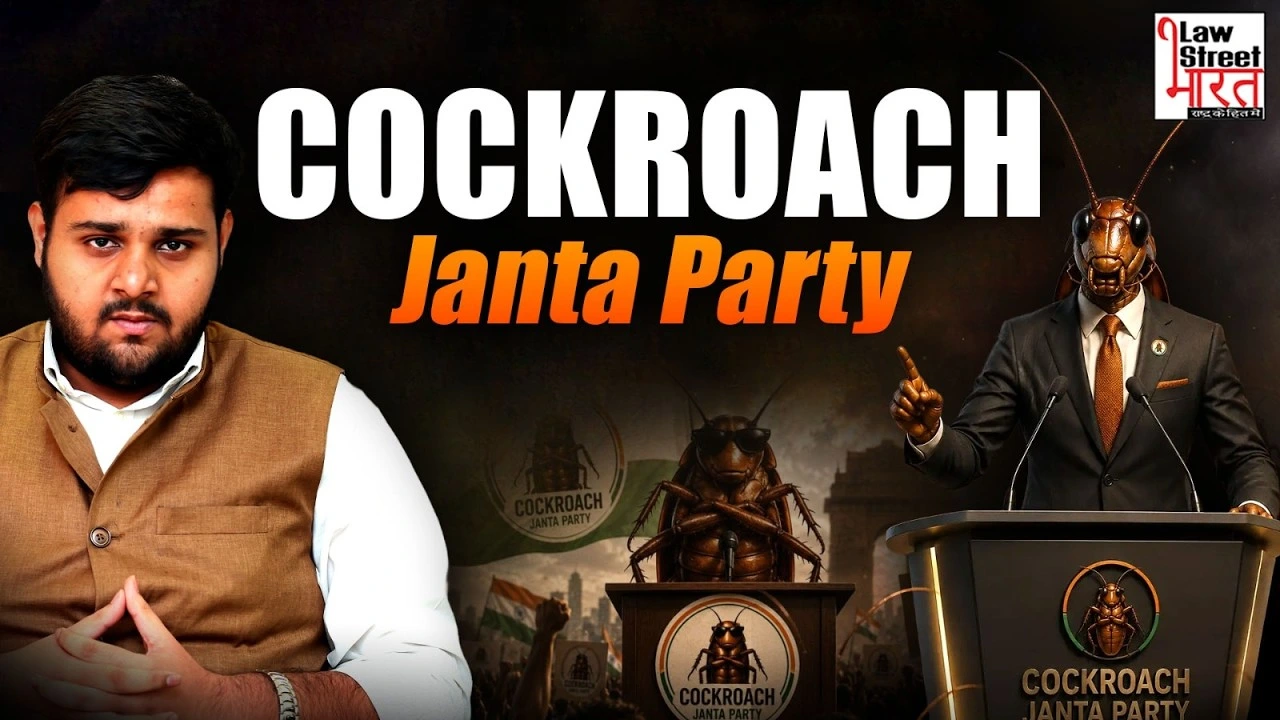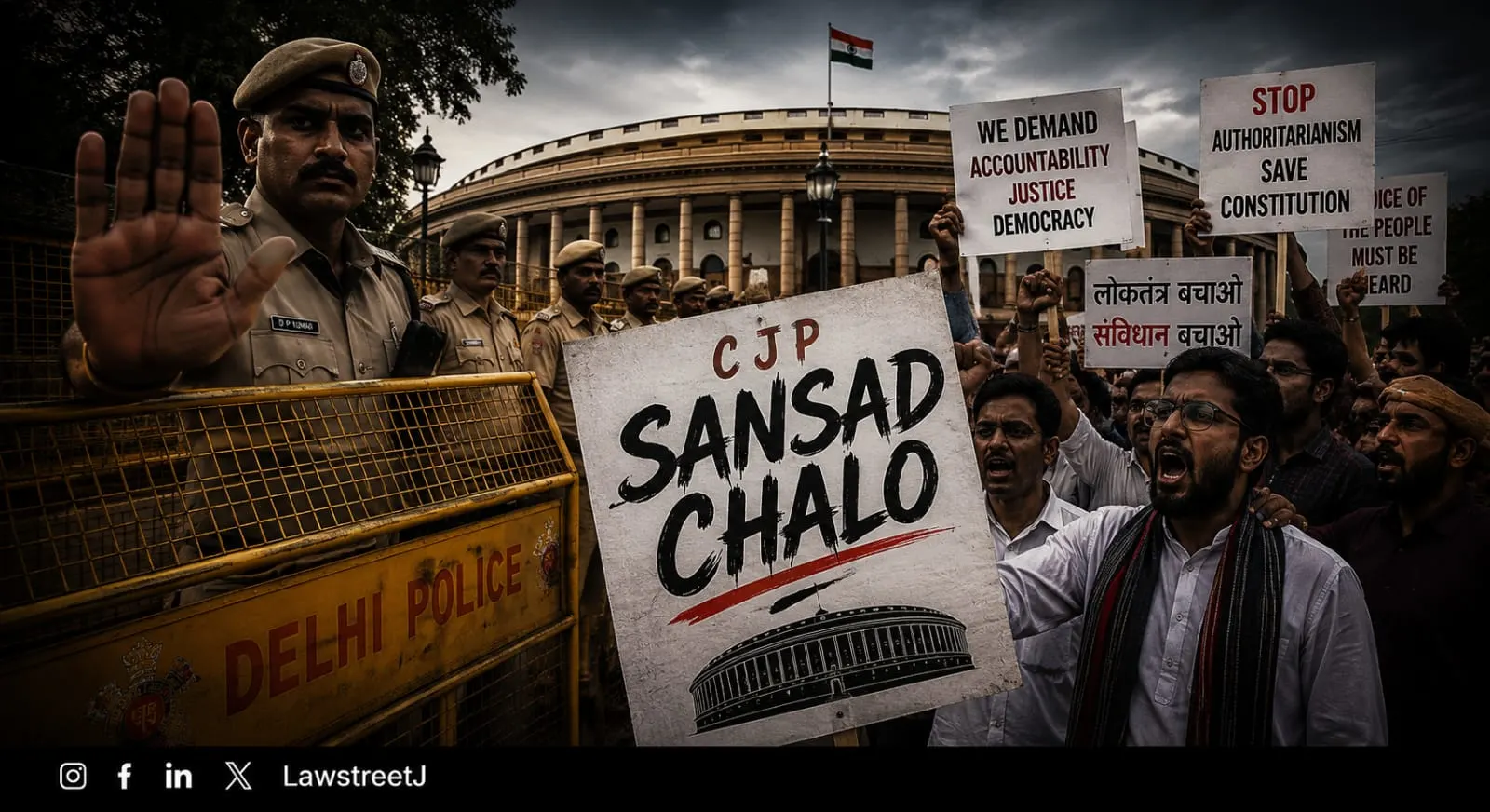

New Delhi: The Cockroach Janata Party's planned "Sansad Chalo" march to Parliament on the opening day of the Monsoon Session, July 20, 2026 has been declared illegal by Delhi Police, with officers warning that anyone attempting to march toward Parliament could face immediate detention. The announcement arrives even as Sonam Wangchuk, the Ladakh activist and education reformer whose 21-day hunger strike over NEET-UG irregularities is the engine of the protest, posted a handwritten note from his hospital bed at Safdarjung Hospital urging supporters to gather and march regardless.
Delhi Police declared the Cockroach Janata Party's scheduled July 20 "Sansad Chalo" march illegal, warning of detentions if protesters march toward Parliament. Wangchuk was forcibly shifted from Jantar Mantar to Safdarjung Hospital by police early Saturday following his 21-day hunger strike over NEET-UG irregularities.
The confrontation has produced a direct and unresolved collision between a protest movement that has attracted growing national attention and a police administration that insists, on procedural and security grounds, that the march has no legal standing. Whether it proceeds and what happens if it does will unfold on Monday morning.
What Is the Cockroach Janata Party and What Does It Want
The Cockroach Janata Party, abbreviated CJP is a youth-led political movement that emerged directly from the student protests over India's national examination system. The demonstration is led by the Cockroach Janta Party, a youth-led movement calling for the resignation of India's Education Minister Dharmendra Pradhan. The group argues that the minister should take moral responsibility for the alleged irregularities surrounding NEET-UG. Although the Indian government conducted a re-test for NEET-UG on June 21, organisers say their campaign is no longer limited to a single examination.
Sonam Wangchuk has been on an indefinite hunger strike in New Delhi since June 28, lending support to a student-led protest over alleged irregularities in India's National Eligibility cum Entrance Test Undergraduate, or NEET-UG, and other public examinations. The protest, centred at Jantar Mantar, has continued for weeks despite extreme summer temperatures, with demonstrators demanding accountability over the alleged examination paper leak and broader reforms to India's examination system.
The NEET-UG controversy has been one of India's most significant domestic political controversies of 2026, involving allegations that question papers for the national medical entrance examination were leaked before the test date, compromising the results of hundreds of thousands of students who had spent years preparing for the examination. The National Testing Agency conducted a retest on June 21, but CJP and associated student groups maintain that the retest does not address the broader accountability failures they have identified.
Sonam Wangchuk: From Jantar Mantar to Safdarjung Hospital
Wangchuk, the Ladakh-based engineer and education reformer, began his hunger strike at Jantar Mantar on June 28, the 21-day mark of which brings us to July 19. His decision to join the CJP protest added significant national visibility to a movement that had previously been primarily student-driven.
Activist Sonam Wangchuk was admitted to Delhi's Safdarjung Hospital on Saturday for medical evaluation. The admission came even as support mounted for the Cockroach Janata Party's planned "Sansad Chalo" march to Parliament on July 20.
Deputy Commissioner of Police Sachin Sharma stated that Wangchuk was moved in accordance with Delhi High Court orders and expert medical advice. The Delhi High Court had directed authorities to closely monitor his health after concerns about the physical toll of a 21-day hunger strike were raised before the court.
Wangchuk remains conscious and haemodynamically stable. His pulse, blood pressure and oxygen saturation are currently within normal limits. However, he is exhibiting signs of deterioration that medical staff are monitoring closely. Doctors continue round-the-clock observation, with an AIIMS doctor joining the treating team. Efforts are ongoing to persuade him to accept treatment to prevent further deterioration.
Despite being hospitalised, Wangchuk posted a handwritten note from Safdarjung Hospital on Sunday calling for the march to proceed. He described his removal from the protest site as "illegal detention" and urged supporters to gather at Jantar Mantar on July 20 before making for Parliament.
Why Delhi Police Say the March Is Illegal
Delhi Police's position on the "Sansad Chalo" march rests on two distinct grounds.
The first concerns the Jantar Mantar protest itself. Police say the party had only signed undertakings for a one-day demonstration and then extended the agitation without clearance. "CJP spokesperson Abhijeet Dipke has never informed us or applied for a permission for the Sansad Chalo march. It's a completely illegal protest because they only had permission for one day. We even made them sign undertakings. Now, they have extended it without any permission."
The second concerns the march toward Parliament specifically. Delhi Police said it will not allow the CJP's proposed "Sansad Chalo" march on Monday, describing the ongoing protest at Jantar Mantar as an "illegal" demonstration and stating that no fresh permission had been sought. They warned of detentions if a large gathering pushed toward Parliament, adding that they would stop the march to prevent traffic congestion and public safety risks in the high-security Parliament zone.
The timing is significant. The Monsoon Session of Parliament begins on July 20, the same day as the planned march. The area around Parliament Street, Raisina Hill, and the approaches to Sansad Marg are subject to Section 144 CrPC, now Section 163 of the Bharatiya Nagarik Suraksha Sanhita 2023, prohibiting assembly of five or more persons during the Parliament session. Any march toward Parliament during the session without specific police permission is automatically subject to those prohibitions.
Delhi Police has stepped up security around Jantar Mantar. More than 100 police personnel and Rapid Action Force teams have been deployed, while around 200 officers are expected to remain on duty over the weekend. Additional police and paramilitary forces will be stationed on Monday, along with extra police vans.
What CJP Says: "They Know Very Well"
CJP spokesperson Vaishnavi Gaur rejected the police's version. "We had intimated them about the march way back. They know very well about the march and our plans. In any case, they won't allow us," Gaur said, adding that the intimation had been given in person and not in writing.
The CJP's position, that verbal intimation constitutes adequate notice is legally weaker than the police's position that a written application for permission is required. Under the Delhi Police Act and the standard procedure governing protests in the capital, organisers of marches toward Parliament or other sensitive government buildings are required to submit a written application specifying the route, estimated numbers, and organising responsible persons, and to receive written police permission before proceeding. Verbal communication, however early or clearly conveyed, does not satisfy this requirement.
However, the CJP's separate argument, that the police would not have granted permission even if applied for, is not legally immaterial. Courts examining whether protest prohibitions violate the fundamental right to peaceful assembly under Article 19(1)(b) of the Constitution have consistently held that the denial of permission for a protest must be based on specific, documented grounds of threat to public order, not on the general sensitivity of the location or the political inconvenience of the moment. Whether a blanket prohibition on any march toward Parliament during a Monsoon Session satisfies that standard is a constitutional question that courts have addressed with some nuance.
The Broader Legal Framework: Article 19 and Its Limits
The right to peaceful assembly is guaranteed under Article 19(1)(b) of the Indian Constitution, but it is not absolute. Article 19(3) permits the state to impose "reasonable restrictions" on the right to assembly "in the interests of the sovereignty and integrity of India or public order." The word "reasonable" is the operative constitutional constraint, restrictions must be proportionate, non-arbitrary, and narrowly tailored to the specific public order concern identified.
The Supreme Court has repeatedly held that the mere possibility of disruption is not sufficient to justify denial of permission for a public march, there must be specific, credible intelligence of actual public order threat. At the same time, the Court has also recognised that proximity to Parliament, the presence of VVIP security arrangements, and the logistical realities of central Delhi during a session of Parliament are factors that can justify route restrictions and timing limitations, even if they cannot justify an absolute prohibition on assembly.
CJP leaders have announced they will proceed with the march despite the police warning. If they do so, the immediate legal consequence is the possibility of arrest under Section 188 of the BNS, disobedience to order duly promulgated by a public servant or preventive detention under Section 151 of the BNSS, which allows police to detain persons whose actions are likely to cause affray or breach of peace, without a warrant. Both are bailable offences, meaning those detained would be entitled to bail as a matter of right.
What happens on the streets of central Delhi on the morning of July 20 and what happens thereafter in the courts, is the next chapter in a protest movement that has already survived 21 days of hunger strike, a forcible hospitalisation, and a declaration of illegality. Whether the "Sansad Chalo" march reaches Parliament's gates or is stopped en route will depend not only on the legal framework but on the choices made by thousands of young people who have been told they have no right to march and who have decided to march anyway.