INTRODUCTION
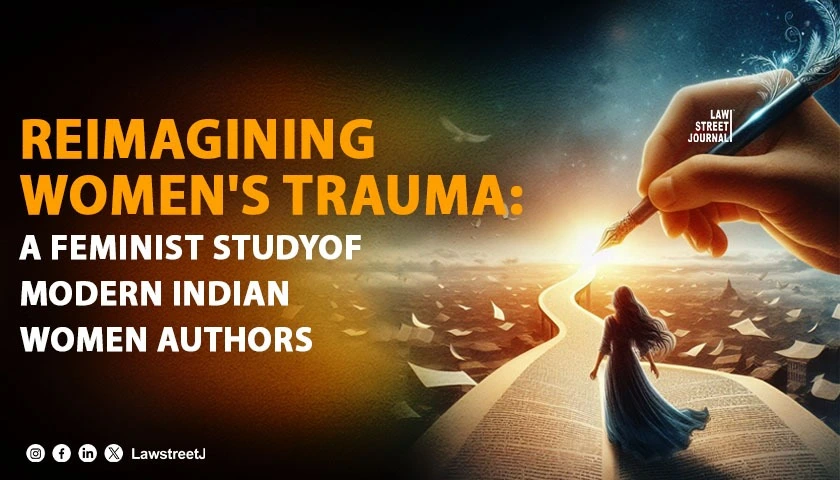
This study examines-how contemporary literature reimagines women’s trauma beyond passive suffering, reconstructing it as a site of resistance, agency, and identity formation while also engaging with evolving legal frameworks that address gendered violence. Historically, literary depictions often portrayed women’s trauma as inevitable or morally instructive, reflecting patriarchal structures embedded in both culture and law. However, modern narratives foreground voice, memory, and testimony, aligning with legal developments that recognize trauma as a violation of dignity, autonomy, and constitutional rights. The guiding research question is: How do contemporary narratives transform women’s trauma into expressions of resilience while intersecting with legal understandings of justice and rights?
METHODS
The study employs qualitative textual analysis informed by feminist criticism, trauma theory, and socio- legal interpretation. Theoretical insights from Cathy Caruth and Judith Herman are combined with a legal reading of Indian constitutional protections and gender justice jurisprudence. Select legal provisions such as Article 14 (equality before law), Article 15 (prohibition of discrimination), and Article 21 (right to life and dignity) are used to contextualize literary representations of trauma. Additionally, statutes addressing gender-based violence— including the Protection of Women from Domestic Violence Act, 2005 and Section 376 of the Indian Penal Code —are examined as frameworks that redefine trauma within legal discourse.
RESULTS
The analysis reveals that contemporary trauma narratives parallel legal shifts that recognize psychological harm and dignity-based violations. Literary texts increasingly depict trauma not only as physical suffering but as emotional and structural violence, echoing judicial interpretations that broaden the scope of women’s rights. Narrative strategies such as fragmented memory and testimonial voice mirror survivor-centered legal approaches, while storytelling functions as a form of symbolic justice when institutional remedies are absent or delayed. This convergence demonstrates how literature and law both move toward validating lived experiences of trauma.
DISCUSSION
The-findings suggest that reimagining women’s trauma creates a productive dialogue between literature and law. Contemporary narratives challenge earlier frameworks that normalized suffering, instead foregrounding dignity, agency, and restorative justice. Legal reforms and progressive judicial interpretations reinforce this shift by acknowledging trauma as a violation of fundamental rights rather than a private or moral issue. From a jurisprudential perspective, literary trauma narratives humanize legal discourse, emphasizing empathy and survivor-centered justice. This interdisciplinary intersection makes the study particularly relevant for law-oriented publication platforms seeking cultural insights into gender justice.
ABSTRACT
This-paper reimagines women’s trauma through an interdisciplinary lens that integrates literary analysis with legal discourse. It argues that contemporary narratives transform trauma from passive suffering into a dynamic site of resistance, voice, and rights-based articulation. Drawing upon feminist and trauma theory alongside constitutional and statutory frameworks, the study highlights how representations of trauma align with evolving legal understandings of dignity and gender justice. While earlier depictions often reinforced patriarchal structures, modern narratives foreground testimony and agency, paralleling legal developments that recognize psychological harm and structural violence.
Through close reading and socio-legal interpretation, the study identifies shared patterns between literary and legal narratives: the shift from silence to articulation, recognition of emotional trauma, and emphasis on survivor-centered justice. Indian constitutional guarantees of equality and dignity, along with gender-specific legislation, provide a framework for understanding trauma as a rights violation rather than a private experience. Literature complements this framework by humanizing legal discourse and foregrounding lived realities often absent in formal judgments.
Ultimately, the paper argues that integrating literary and legal perspectives enriches both fields. Reimagined trauma narratives not only challenge reductive victimhood but also contribute to evolving conversations on justice, dignity, and reform. Such interdisciplinary engagement positions women’s trauma as a critical site where storytelling and law converge, making the study suitable for academic, socio-legal, and law-oriented publication platforms.
INTRODUCTION (Legal Research Style)
Women’s trauma is not only a psychological or social issue; it is also deeply connected with questions of justice, rights, and legal protection. Across different societies, women have experienced various forms of violence, discrimination, and social marginalization. For a long time, these experiences were often ignored or silenced, both socially and institutionally. Because of this, the role of law becomes extremely important in recognizing such trauma and ensuring that women’s rights and dignity are protected. In the Indian context, the Constitution provides a strong foundation for the protection of women’s rights. Article 14 guarantees equality before the law, while Article 15 prohibits discrimination on the basis of sex. Similarly, Article 21 ensures the right to life and personal liberty, which has been interpreted by the courts to include the right to live with dignity. These constitutional provisions establish that the protection of women from violence and injustice is not merely a social concern but also a legal obligation.
Despite the presence of these constitutional guarantees, the reality is that many women still face significant challenges when seeking justice. Laws such as the Protection of Women from Domestic Violence Act, 2005, Section 376 of the Indian Penal Code dealing with rape, and the Sexual Harassment of Women at Workplace Act, 2013 were enacted to address gender-based violence. However, survivors often encounter social stigma, lack of awareness, and procedural difficulties within the legal system. These barriers show that the existence of laws alone is not enough; effective implementation and social change are equally necessary. At the same time, literature plays an important role in bringing women’s experiences of trauma into public discussion. Literary narratives often reveal the emotional and psychological impact of violence that legal language alone may not fully capture. Through
stories, memories, and personal voices, literature highlights the lived realities of women who struggle against injustice. Therefore, this study attempts to examine women’s trauma from both literary and legal perspectives. By connecting trauma narratives with constitutional values and legal protections, the paper seeks to understand how women’s experiences can inform discussions about justice, dignity, and accountability in society. In doing so, it also highlights the importance of bridging the gap between legal frameworks and the lived realities of women.
THEORETICAL FRAMEWORK (Legal Perspective)
Understanding women’s trauma within a legal framework requires an interdisciplinary approach that connects law, gender studies, and social justice. Trauma experienced by women is often not only the result of individual acts of violence but also a consequence of structural inequalities embedded in social and legal institutions. Therefore, legal theory plays an important role in explaining how law recognizes, interprets, and responds to women’s experiences of harm.
Feminist Legal Theory
Feminist legal theory provides one of the most significant frameworks for analysing women’s trauma within the legal system. This theory argues that traditional legal structures have historically been shaped by patriarchal norms, which often overlook or marginalize women’s experiences. According to feminist scholars, many legal definitions of violence and harm were originally constructed from male perspectives, which resulted in the underrepresentation of women’s voices in legal discourse.
Feminist legal theory seeks to challenge these limitations by emphasizing the need to interpret laws through the lived experiences of women. It highlights that gender-based violence, domestic abuse, sexual harassment, and other forms of harm cannot be understood only as isolated criminal acts; they must also be seen as outcomes of unequal power relations within society.
From this perspective, the law should not only punish offenders but also acknowledge the psychological and social dimensions of trauma experienced by survivors. Feminist legal scholars therefore advocate reforms that make legal processes more sensitive to survivors’ experiences, including victim-centred procedures, protection mechanisms, and recognition of emotional harm.
Constitutional Framework and Women’s Rights
In the Indian legal system, the Constitution serves as the primary foundation for protecting women’s dignity and equality. The theoretical understanding of women’s trauma within law is closely linked to constitutional principles of equality, non- discrimination, and personal liberty.
Article 14 of the Constitution guarantees equality before the law and equal protection of laws. This provision establishes that women must receive the same legal protection and access to justice as men. Article 15 further strengthens this principle by prohibiting discrimination on the grounds of sex. Importantly, Article 15(3) allows the state to make special provisions for women and children. This constitutional recognition acknowledges that women often face structural disadvantages and may require additional legal protections.
Article 21, which guarantees the right to life and personal liberty, has been interpreted broadly by the judiciary to include the right to live with dignity, bodily integrity, and mental well-being. Judicial interpretations of Article 21 have played a significant role in recognizing that violence against women is not merely a criminal issue but a violation of fundamental human rights.
Through these constitutional principles, the Indian legal framework attempts to address the social and psychological consequences of gender-based violence. Legal Recognition of Gender-Based Violence Another important theoretical component of this study is the legal recognition of gender-based violence. Over time, Indian law has developed several statutes aimed at protecting women from different forms of abuse and discrimination.
The Protection of Women from Domestic Violence Act, 2005 represents a significant shift in legal thinking because it recognizes not only physical violence but also emotional, verbal, and economic abuse within domestic relationships. This broader understanding of harm reflects the recognition that trauma can occur in multiple forms.
Similarly, criminal provisions under the Indian Penal Code, particularly Section 376 dealing with sexual assault, aim to punish acts of sexual violence and provide justice to survivors. Legal reforms following major incidents of gender-based violence have also expanded definitions of sexual offences and strengthened protections for women.
The Sexual Harassment of Women at Workplace (Prevention, Prohibition and Redressal) Act, 2013 further acknowledges that women’s safety must be protected in professional environments. This law emerged from judicial recognition that harassment at the workplace violates women’s fundamental rights to equality and dignity.
These legal developments demonstrate the evolving recognition of women’s trauma within statutory law.
SOCIO-LEGAL PERSPECTIVE
A socio-legal perspective is essential for understanding the gap between legal provisions and the lived realities of women. While laws may exist to protect women, their effectiveness often depends on factors such as social awareness, institutional responsiveness, and access to justice.Many survivors face challenges such as fear of social stigma, lack of legal knowledge, lengthy judicial procedures, and institutional insensitivity. These factors can discourage women from reporting violence or pursuing legal remedies.Therefore, socio-legal scholarship emphasizes the importance of examining how laws function in practice rather than only in theory. It encourages researchers to consider the relationship between legal institutions, cultural norms, and social power structures.
Trauma, Justice, and Legal Reform
The final theoretical dimension of this study focuses on the relationship between trauma and justice. Legal systems traditionally focus on punishment and procedural fairness, but trauma-informed approaches emphasize the need to consider the emotional and psychological experiences of survivors.Trauma-informed legal practices encourage courts and institutions to adopt more empathetic procedures that reduce re-victimization during legal processes. This includes survivor-centred investigations, confidentiality protections, and psychological support. By incorporating traumasensitive approaches, legal institutions can move beyond purely punitive frameworks and contribute to more meaningful forms of justice and healing for survivors.
RESISTANCE AND RESTORATION
Women’s trauma is often accompanied by silence, marginalization, and systemic injustice. However, trauma narratives also reveal thwomen are not merely passive victims of violence. Many women resist oppressive structures and attempt to reclaim their agency, dignity, and voice. The ideas of resistance and restoration therefore become central to understanding how women respond to traumawithin both social and legal contexts.
Resistance can take multiple forms. In many cases, resistance begins with the act of speaking about trauma. When women narrate their experiences of violence or injustice, they challenge the culture of silence that often surrounds gender-based harm. Such narratives disrupt patriarchal structures that attempt to suppress women’s voices and experiences. Literature plays an important role in representing this resistance by portraying women who question social norms, challenge abusive power relations, and assert their identities.
From a legal perspective, resistance is also visible in the ways women use the law as a tool to demand justice and accountability. Legmechanisms such as reporting violence, filing complaints, or pursuing legal action against perpetrators represent acts of resistance against systemic injustice. Laws addressing domestic violence, sexual harassment, and sexual assault provide institutional frameworks through which women can challenge the structures that enable abuse. By invoking legal rights guaranteed under constitutional provisions such as equality, dignity, and personal liberty, women transform personal suffering into a broader demand for justice.
However, resistance alone does not guarantee justice. The process of restoration is equally significant. Restoration refers to the attempt to rebuild dignity, security, and psychological well-being after experiences of trauma. While legal punishment of offenders may provide a sense of justice, restoration also requires social recognition of harm, emotional healing, and institutional support for survivors.
Legal systems increasingly recognize the importance of restorative approaches in addressing gender-based trauma. These approachefocus not only on punishing the offender but also on supporting the survivor through compensation, protection, counselling, and rehabilitation. Such measures acknowledge that trauma affects both the physical and psychological dimensions of a person’s life.
In literary representations, restoration is often portrayed as a gradual and complex process. Women characters may find strength through solidarity, self-expression, or reclaiming control over their narratives. These depictions highlight that recovery from trauma is not simply about forgetting the past but about transforming pain into resilience and empowerment.
Ultimately, the concepts of resistance and restoration reveal that women’s trauma cannot be understood solely in terms of victimhood. Instead, these concepts emphasize women’s agency, resilience, and capacity to challenge injustice. By connecting legal frameworks with narrative representations of trauma, it becomes possible to understand how justice, healing, and empowerment can emerge from experiences of suffer.
Conclusion
The examination of women’s trauma through both legal and literary perspectives reveals that trauma is not merely an individual experience but a complex social and institutional issue. Women’s experiences of violence, discrimination, and marginalization are often shaped by deeply embedded patriarchal structures that influence both social attitudes and legal responses. Understanding trauma therefore requires looking beyond isolated incidents and recognizing the broader systems of power that contribute to women’s suffering.
Legal frameworks play an important role in acknowledging and addressing gender-based violence. Constitutional principles such as equality, dignity, and personal liberty establish the foundation for protecting women’s rights. Statutory provisions addressing domestic violence, sexual assault, and workplace harassment represent significant efforts to ensure justice and accountability. However, the persistence of social stigma, procedural barriers, and institutional limitations demonstrates that the existence of laws alone cannot fully eliminate gender-based trauma. Effective implementation, institutional sensitivity, and broader social awareness remain essential for achieving meaningful justice.
At the same time, literary narratives provide valuable insight into the emotional and psychological dimensions of trauma that legal discourse may not always capture. Through storytelling, literature exposes the lived realities of women who experience violence and injustice, giving voice to experiences that are often marginalized within formal legal frameworks. These narratives challenge silence, encourage empathy, and contribute to a deeper understanding of how trauma shapes identity, memory, and agency.
The concepts of resistance and restoration further highlight that women are not merely passive victims of trauma. Many women transform their experiences of suffering into acts of resistance by speaking out, challenging oppressive structures, and asserting their rights. Legal mechanisms, when effectively implemented, can support this resistance by providing institutional pathways for justice and accountability. Restoration, however, requires more than legal punishment; it involves rebuilding dignity, ensuring psychological healing, and creating social conditions that support survivors.
Ultimately, the intersection of law, literature, and trauma studies provides a more comprehensive understanding of women’s experiences. Law offers the framework for justice, while literature reveals the human realities behind legal cases. When these perspectives are considered together, they highlight the need for a legal system that is not only effective but also empathetic and responsive to the lived experiences of women.
Reimagining women’s trauma therefore becomes an important step toward social and legal transformation. By recognizing women’s voices, strengthening legal protections, and promoting greater awareness of gender-based violence, societies can move toward a more just and equitable framework where dignity, equality, and justice are truly upheld.
AUTHORS
Madhvi Mishra (A0706123046)
B.A. English (Hons.), Amity Institute of English Studies and Research, Amity
University, Noida, India Corresponding Author: Madhvi Mishra
[The views and opinions expressed in this article are solely those of the author and are intended for academic and research purposes. The publication of this work on LawStreet Journal is for informational and scholarly discussion only. LawStreet Journal does not necessarily endorse or assume responsibility for the interpretations, opinions, or conclusions expressed by the author. References to legal provisions and judicial developments are used for academic analysis and should not be construed as legal advice.]
![[Domestic Violence] Maintenance order does not amount to protection order" holds Karnataka HC [Read Order]](/secure/uploads/2023/12/lj_8411_Maintenance_protection_order.jpg)
![Delhi High Court upholds maintenance order under Domestic Violence Act [Read Judgment]](/secure/uploads/2024/09/lj_1158_WhatsApp_Image_2024-09-16_at_11.08.15_AM.webp)
![High Court of J&K and Ladakh clarifies dress code rules for Advocates, dismisses domestic violence petition [Read Order]](/secure/uploads/2024/12/lj_1748_Women_lawyers_cant_appear_before_court_with_face_covered.jpg)
![Personal presence not required in Domestic Violence cases: SC [Read Judgment]](/secure/uploads/2025/02/lj_6691_Personal_presence.webp)