Every morning, before most of Delhi is awake, thousands of men and women gather at labour chowks across the city, hoping to be picked for a day’s work. Vendors load their carts. Auto-rickshaw and e-rickshaw drivers set out early. Domestic workers catch the first bus. For each of them, the day’s earnings are the day’s meals. This editorial is written with them in mind.
It must be said at the outset that the right to protest is precious. Public meetings, padyatras, satyagrahas and peaceful agitations have shaped India since the freedom struggle, and no one should wish to take that right away. But the satyagraha of that era rested on self-restraint: the protester accepted hardship himself; he did not pass it on to others. The question worth asking today, calmly and without taking sides, is where peaceful persuasion ends and unlawful pressure begins. For the working poor, it comes down to something simpler: when a protest shuts down a road or a market, who pays the price? Very often, it is the person who earns by the day. The answer matters as much to those who take to the streets as to the far larger number who do not.
THOSE WHO ARE NOT ON THE STAGE
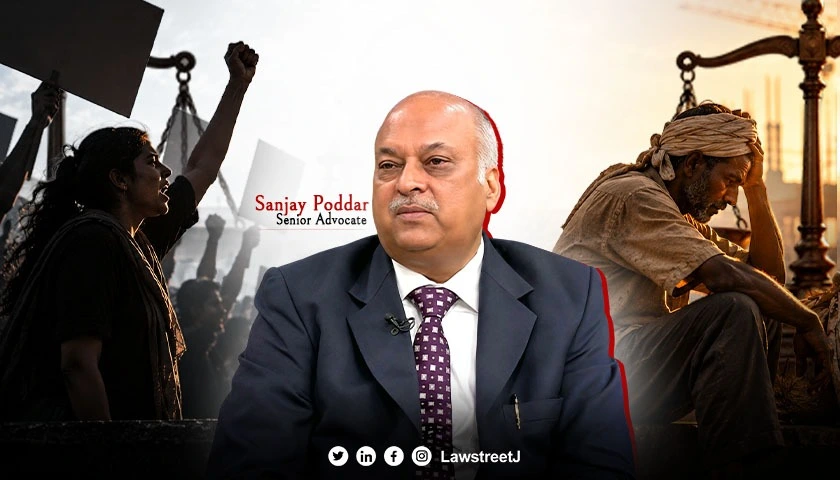
Every large agitation in the capital has an audience that rarely appears in the photographs: the labourer who cannot reach the work site; the vendor whose vegetables or flowers spoil unsold; the rickshaw driver stuck on a blocked road; the small shopkeeper who keeps his shutter down; the domestic worker whose day’s pay is cut; the patient whose ambulance is caught in a diversion; and the student who misses an examination.
For a salaried person, a lost day is an inconvenience. For a daily wager, it is a missed meal, an unpaid instalment or one more loan from the moneylender. Nobody compensates this loss. Usually, nobody even counts it.
These citizens do not hold press conferences. They have no stage and no microphone. Their only way of expressing themselves is to go to work. Their silence should not be mistaken for agreement. A democracy that hears only those who can gather in thousands, and not those who cannot afford to lose a single day, is hearing only part of its people.
“Their silence should not be mistaken for agreement.”
WHAT THE CONSTITUTION SAYS
The Constitution gives every citizen the freedom of speech and the right to assemble peacefully and without arms (Article 19(1)(a) and (b)). The State may place reasonable limits on these rights, in the interest of the sovereignty and integrity of India and of public order (Article 19(2) and (3)). The same Article 19 also gives every other citizen the right to move freely and to carry on a trade or occupation. In Olga Tellis v. Bombay Municipal Corporation, (1985) 3 SCC 545, the Supreme Court held that the right to life under Article 21 includes the right to a livelihood. Article 51A, in turn, asks each of us to promote harmony, to protect public property and to stay away from violence.
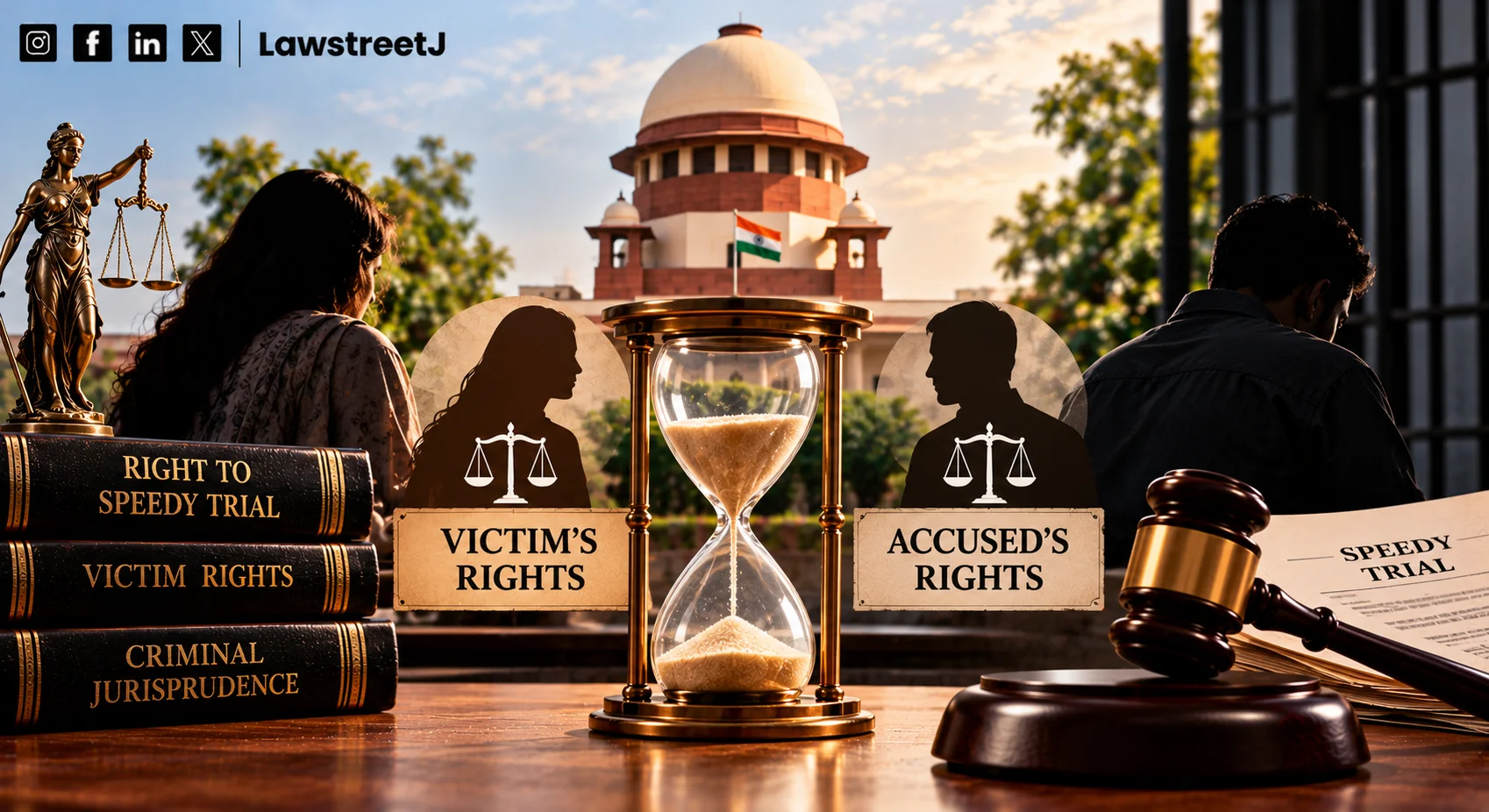
Put simply, the protester’s right and the labourer’s right are both constitutional rights. Neither cancels the other. Rights and duties are written into the same document, and the task is to make room for both.
WHAT THE COURTS HAVE SAID
The Supreme Court has said this plainly. While dismissing the review petitions arising from the Shaheen Bagh judgment, a Bench of three Judges observed in Kaniz Fatima v. Commissioner of Police (9 February 2021):
“...the Constitutional scheme comes with a right to protest and express dissent but with an obligation to have certain duties. The right to protest cannot be anytime and everywhere. There may be some spontaneous protests but in case of prolonged dissent or protest, there cannot be continued occupation of public place affecting rights of others.”
Other judgments point the same way. In Himat Lal K. Shah v. Commissioner of Police, (1973) 1 SCC 227, the Court held that the use of public streets for meetings may be regulated but not arbitrarily denied. In In re Ramlila Maidan, (2012) 5 SCC 1, it said that limits on assembly must be reasonable and proportionate. In Mazdoor Kisan Shakti Sangathan v. Union of India, (2018) 17 SCC 324, concerning Jantar Mantar and the Boat Club, it called for a balance between the rights of protesters and those of local residents. In Amit Sahni v. Commissioner of Police, (2020) 10 SCC 439, it held that public roads cannot be occupied indefinitely. And in Communist Party of India (M) v. Bharat Kumar, (1998) 1 SCC 201, it upheld the view that a forced bandh, which compels others to stop work, violates the rights of those who do not wish to join it.
The message is consistent: there is no unlimited right to block a public place, and no unlimited power to stop people from assembling.
WITHOUT THEIR CONSENT
Most protests are undertaken to raise grievances that are genuine and legitimate, and those grievances deserve to be heard. But in pressing their own rights, protesters too often lose sight of the equally legitimate rights that the same Constitution guarantees to everyone else: the right to move freely, to work and to earn a living. Worse, those rights are set aside without the consent of the people who hold them. The labourer stranded at a blocked crossing was never asked whether he wished to support the cause. He is simply made to pay for it.
“What the law does not permit directly, it should not permit indirectly.”
How can this be justified in the modern age? A citizen today has many ways to be heard: representations to the authorities, petitions to the courts, public hearings and consultations, the press, television, social media and online petitions, designated protest sites and, finally, the ballot. When so many platforms are open, it is hard to justify a method that works only by stopping others from going about their lives.
The Supreme Court has already answered a closely related question. In Communist Party of India (M) v. Bharat Kumar, it upheld the Kerala High Court’s view that a bandh, which compels people to stay away from work, is unconstitutional, because the call of one group cannot override the fundamental rights of citizens who do not wish to join it. The same reasoning applies by analogy. If no one can lawfully force a citizen to stop work by calling a bandh, how can a protest do the same thing indirectly, by blocking the road he must take or the market where he must sell? A citizen who is made to lose a day’s wage in this way is, in effect, made a participant in a protest he never chose to join, and made to suffer for it. What the law does not permit directly, it should not permit indirectly.
PROTEST THAT RESPECTS THE WORKER
None of this is an argument against protest. Opposition, even strong and sustained opposition, is the lifeblood of a parliamentary democracy, and no government’s majority entitles it to silence its critics. By the same measure, the freedom to protest does not place any group above the law. The concern arises only when a protest moves from persuading people to compelling them, through blockades, forced closure of shops, threats or violence.
The familiar slogan that justice will be won “from the streets” is, read generously, simply a call to assemble and persuade, and India’s democratic tradition makes generous room for that. A protest may ask for a law to be repealed, a minister to resign or a policy to be reconsidered, and it often moves public opinion. What it should not do is use the hardship of uninvolved citizens as a means of pressure. Public support gives a movement political strength; it does not give it a parallel authority to decide disputes or to set aside constitutional processes. Grievances against a law are finally settled by Parliament, the courts and the voters.
Responsible protest is not hard to recognise. It gives notice in advance. It uses a designated venue. It keeps to its time. It leaves a lane open for ambulances, school buses and workers. It does not force shops or markets to close. And it ends when its message has been delivered. Such protest strengthens democracy. Protest called too often, or only for the sake of visibility, risks weakening the very cause it seeks to serve.
Many movements say they speak for the common man. The least the common man may ask in return is that he not be made to pay for the cause out of his own day’s wages.
FAIR RULES, APPLIED EQUALLY
Delhi carries a special responsibility. It is the seat of the nation’s institutions and the natural stage for national causes. It is also home and workplace to millions of ordinary people. Protests must remain visible and meaningful; residents and workers must still be able to reach their homes, hospitals and places of work. The continuing debate over protest sites such as Jantar Mantar shows how difficult, and how necessary, this balance is. Neither administrative convenience nor political discomfort can justify shutting protest out altogether; nor can the public be asked to bear repeated and unchecked disruption.
The way forward lies in clear, published rules on protest sites, permissions, timings and emergency access, applied in the same way to everyone, whatever their politics, with reasoned decisions and a fair chance to challenge them. Authorities should record their own restrictions and police action with the same care they bring to recording the conduct of protesters. Organisers, for their part, should accept a matching discipline, including responsibility for losses caused when the conditions of their permission are broken. Selective enforcement harms freedom; arbitrary exceptions harm public order.
It is also fair to ask whether the frequency of protest calls in the capital has begun to outrun any honest assessment of their cost to the city and its working people. Where several events show repeated, documented violations by the same identifiable organisers, such as prolonged blockades without permission, breach of lawful conditions, threats, or obstruction of access to essential services, they may fairly be looked at together. The questions asked should be concrete and fair. Who called the event? How long did it last? What obstruction actually took place, and was it caused by the protesters, by the policing arrangements, or by both? Who bore the cost, and was it foreseeable? Were any violations actually established, and were they repeated? Supporting a cause, sharing an ideology or joining more than one protest is not unlawful in itself. Any such review will be credible only if it records the peaceful gatherings alongside the troubled ones.
THE TRICOLOUR BELONGS TO ALL
The National Flag belongs to every citizen, not to any one camp. Carrying it with respect at a protest is protected by the Constitution, as the Supreme Court recognised in Union of India v. Naveen Jindal, (2004) 2 SCC 510, and its presence never makes a protest suspect. Equally, the Flag cannot make lawful what is otherwise unlawful. Where there is evidence that it is being used as a shield against lawful accountability, that conduct may fairly be examined. But it would be just as wrong to describe fair action against a proven unlawful act as an insult to the Flag merely because the Flag was carried at the scene. The Prevention of Insults to National Honour Act, 1971 deals with specific acts of disrespect, not with every illegality committed near the Flag. It deserves to be kept above the dispute, by protesters and authorities alike.
THE LARGER INTEREST
Delhi is not only a city; it is the face of the Republic to its own people and to the world. When its main roads, markets and transport links are repeatedly brought to a halt, the cost spreads well beyond one neighbourhood. Trade slows, supplies are delayed and essential services come under strain, and the confidence of those who work, trade and invest in the capital is shaken. In the end, these losses fall on the same working families whose welfare every movement says it champions.
National interest, rightly understood, is not a label for silencing critics. It is the sum of the interests of all citizens: those who protest, those who disagree with the government, and those who simply wish to work in peace. A movement that truly serves the nation will weigh this before it calls people out, and will choose means that persuade the country rather than paralyse it.
THE BALANCE TO BE KEPT
A mature democracy avoids two mistakes: treating every agitation as beyond question, and branding every inconvenient agitation as anti-national. Both mistake rhetoric for legal principle. The task before the State, the Bar and civil society alike is to protect peaceful persuasion, to identify genuine coercion, and to hold responsible only those whose unlawful acts are established by evidence.
The Constitution gives every citizen the right to be heard. It gives no one a veto over the rights of everyone else. That includes the vendor, the labourer and the shopkeeper, whose voice is measured not in slogans but in a day’s honest work. Democracy is not preserved by silencing the street, nor by handing its institutions over to it. It endures when dissent stays free and responsible, power stays accountable, the livelihood of the fellow citizen is respected, and the law applies equally to all.
Disclaimer: The views expressed in this article are the personal views of the author and do not necessarily reflect the views of any organisation, institution or client with which he is associated. The article is meant for general information and public discussion only and is not legal advice. It does not refer to, or comment on, any particular individual, organisation or pending proceeding. Readers should take specific legal advice before acting on any matter discussed here.