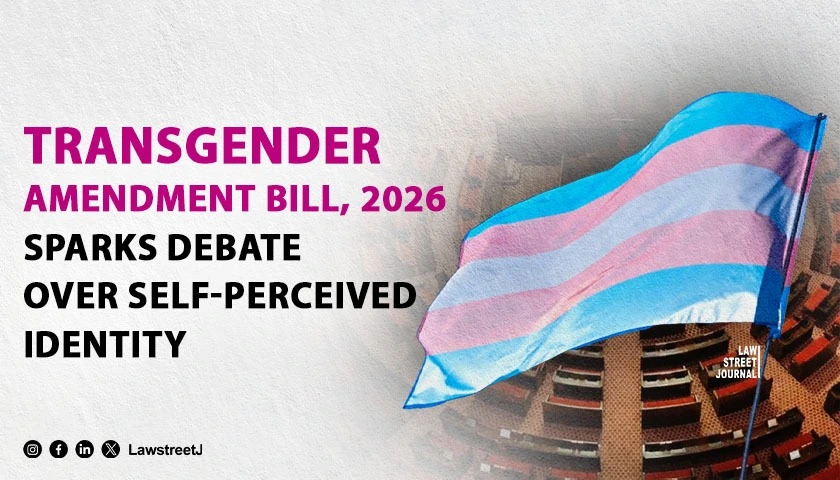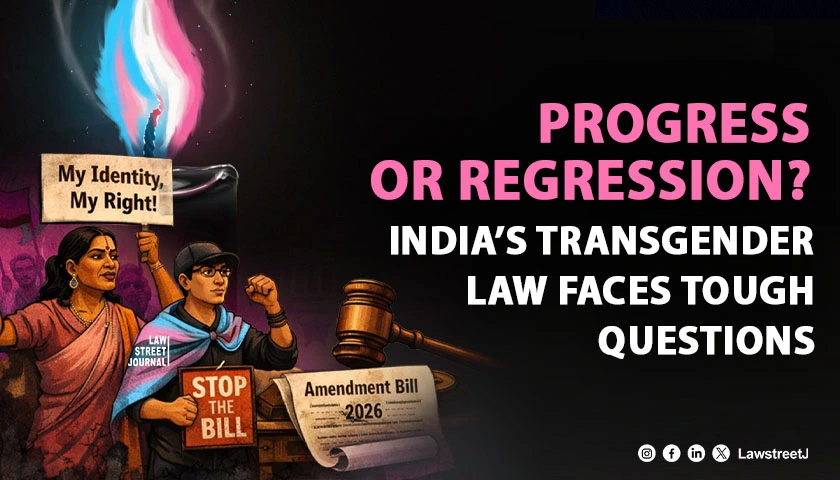
On 25 March 2026, the Rajya Sabha passed the amendment to the Transgender Persons (Protection of Rights) Act, 2019, a development that has triggered intense debate across India. Human rights activists, lawyers, and LGBTQ+ groups have raised serious concerns about whether this amendment strengthens protections or quietly undermines the hard-earned rights of transgender persons. At the heart of the debate lies a fundamental question: Is India moving forward, or slipping back to a pre-2014 era of limited recognition and exclusion?
To understand the gravity of the issue, it is essential to revisit the landmark judgment of National Legal Services Authority v. Union of India (NALSA). Before this historic decision, the Indian state largely recognized only two genders—male and female—rendering transgender persons invisible in legal and administrative frameworks. In NALSA, the petitioners argued for three key principles: legal recognition based on self-identification, protection of fundamental rights under Articles 14, 19(1)(a), and 21, and the need for social inclusion in areas like education, employment, and healthcare.
The Supreme Court accepted these arguments and delivered a transformative judgment. It recognized transgender persons as a “third gender,” affirmed that they are entitled to the same fundamental rights as others, and most importantly, upheld the right to self-identify one’s gender without external validation. This principle of self-identification became the cornerstone of transgender rights in India.
Following the NALSA judgment, the Transgender Persons (Protection of Rights) Act, 2019 was enacted to operationalize these constitutional guarantees. Although the 2019 Act was criticized for certain shortcomings, it retained the principle of self-identification. Under this framework, individuals could apply to a District Magistrate for a transgender identity certificate without undergoing medical examination. As a result, over 32,000 identity cards have been issued, marking a significant step toward legal recognition and inclusion.
However, the 2026 amendment introduces several controversial changes that appear to dilute this progressive framework.
One of the most concerning aspects is the narrowing of the definition of “transgender person.” The 2019 Act adopted an inclusive approach, recognizing trans men, trans women, intersex persons, and non-binary identities. In contrast, the amended law reportedly limits recognition primarily to specific socio-cultural identities such as hijras and kinnars. This shift risks excluding a large segment of the transgender community, particularly those who do not identify within traditional frameworks.
Even more troubling is the apparent removal of the principle of self-identification. The amendment introduces a requirement for certification by a medical board, led by a Chief Medical Officer, which must examine and recommend individuals before they can obtain legal recognition. This marks a significant departure from the NALSA judgment and the 2019 Act.
This new requirement introduces what activists describe as “clinical gatekeeping.” Instead of allowing individuals to assert their identity, it places that power in the hands of medical professionals and bureaucratic authorities. This raises critical concerns about dignity, autonomy, and privacy. Why should an adult be required to prove their gender identity before a panel of doctors and officials? Such a process not only undermines personal liberty but also risks exposing individuals to discrimination and humiliation, especially in a society where transphobia remains prevalent.
The bureaucratic complexity of the new system further compounds the problem. The involvement of high-ranking officials from states and Union Territories, at the level of directors, makes the process inaccessible for many, particularly those living in rural or economically disadvantaged conditions. For a marginalized individual struggling for daily survival, navigating such a system could become nearly impossible.
At the same time, the amendment does introduce certain positive provisions. It creates a new legal category for individuals who are forcibly subjected to gender transformation through surgery or hormones. It also significantly enhances penalties for crimes against transgender persons. For example, forcing a child into gender transition can attract life imprisonment and a fine, while compelling individuals into begging or servitude carries severe punishments.
While these provisions aim to address exploitation and abuse, they raise practical concerns. Criminalizing begging without providing viable alternatives such as education, employment, and social security may inadvertently worsen the conditions of transgender persons, many of whom rely on traditional means of livelihood due to systemic exclusion.
The broader concern is that the amendment may restrict the pathways available for legal recognition. Transgender individuals may now have to either undergo scrutiny by a medical board or align themselves with traditional socio-cultural systems like the guru-chela structure. Both options can limit personal autonomy and freedom of choice.
This issue is not merely about one community; it reflects the broader commitment of a democratic society to individual rights and freedoms. If the state assumes the authority to determine a person’s gender identity, it sets a precedent that could extend to other aspects of personal life. The right to identity is deeply intertwined with dignity, privacy, and autonomy—values protected under the Constitution.
India’s progressive stance on LGBTQ+ rights has been reinforced by another landmark judgment, Navtej Singh Johar v. Union of India, which decriminalized consensual same-sex relations and emphasized constitutional morality over social prejudice. Together, NALSA and Navtej Singh Johar positioned India as a nation striving toward inclusivity and equality.
The 2026 amendment, however, risks undermining this progress. By prioritizing medical validation over self-identification, it appears to elevate biological determinism above lived experience and personal identity. Such an approach may conflict with the spirit of constitutional rights and judicial precedents.
Going forward, a balanced and rights-based approach is essential. First, the principle of self-identification must be restored, in line with the NALSA judgment. Second, there should be a focus on sensitization rather than medicalization. Training healthcare professionals, administrators, and law enforcement agencies to understand and respect transgender identities is crucial.
Third, economic empowerment must be prioritized. Without access to education, employment, and social security, legal recognition alone cannot ensure dignity. Fourth, the legal definition of transgender persons should remain broad and inclusive, reflecting the diversity within the community.
A serious concern arises as the transgender community was not meaningfully consulted, and even recognized representative bodies were reportedly excluded from the decision-making process and the Transgender Amendment Bill, 2026 has been widely criticized for diluting a rights-based approach premised on self-identification and dignity, and instead introducing a control-driven framework reliant on medical verification and bureaucratic processes.
Ultimately, equality is non-negotiable. The true measure of a democracy lies in how it treats its most marginalized citizens. Transgender rights are not a fringe issue; they are a test of India’s commitment to constitutional values.
While the 2026 amendment introduces certain protective measures, its potential to erode fundamental rights cannot be ignored. India stands at a critical juncture. The path it chooses will determine whether it continues to lead as a progressive democracy or retreats into a framework of exclusion and control.
Author-
Dr Rupali Debbarma - Assistant Professor, Department of Law, Gauhati University
Co-Author
MD INJAMUL HAQUE - LL.M 3rd semester Student, Department of Law, Gauhati University
Disclaimer: The views expressed in this article are solely those of the author and do not necessarily reflect the views or opinions of LawStreet Journal or its editorial board.

![Madras HC Seeks Explanation From Centre On Exclusion Of Transgender Persons From Adoption Under CARA Guidelines [Read Order]](/secure/uploads/2025/11/lj_9166_Madras_HC_Seeks_Explanation.webp)