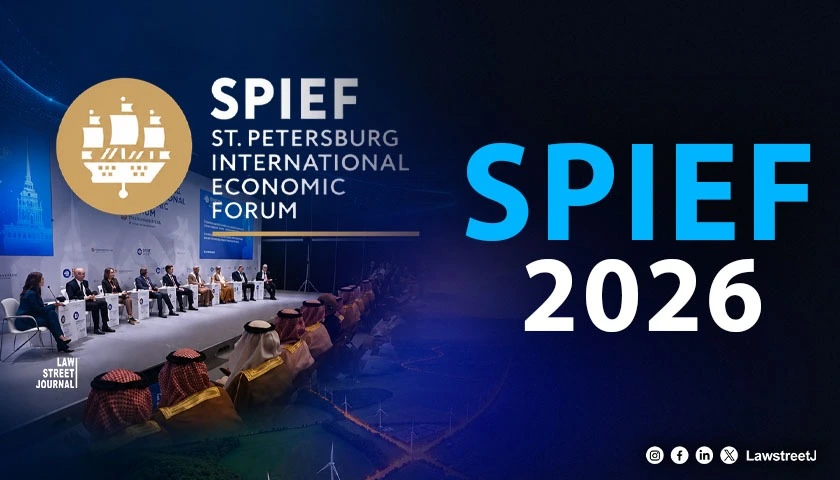
St. Petersburg. At the St. Petersburg International Economic Forum (SPIEF) 2026, the session “Global Energy Systems: How the Global Energy Sector Responds to Challenges and Risks” brought together leading global energy policymakers and industry representatives to examine the growing pressures on the world’s energy architecture.
Among the key participants were Russian Deputy Prime Minister Alexander Novak and Saudi Energy Minister Prince Abdulaziz bin Salman Al Saud, along with senior officials and experts from major energy-producing nations.
Global Energy Under Structural Pressure
The discussions underlined that the global energy system in 2026 is operating under unprecedented strain, driven by geopolitical fragmentation, supply-chain vulnerabilities, rising demand, and the complexity of managing simultaneous energy transition pathways.
Russian Deputy Prime Minister Alexander Novak emphasized the structural importance of hydrocarbons in the global energy mix, stating that “despite rapid growth in renewables, traditional energy sources continue to play a decisive role in ensuring global stability and economic development.” He further noted that energy systems must be designed around “real-world demand patterns rather than assumptions of rapid substitution.”
Novak also highlighted that volatility in key producing regions continues to affect global markets, adding that “energy security and economic security are now inseparable dimensions of national policy.”
Saudi Perspective: Stability, Investment, and Transition Balance
Saudi Energy Minister Prince Abdulaziz bin Salman Al Saud stressed the importance of maintaining balance in global energy policy during periods of transition. He noted that “the world cannot afford to treat energy security and energy transition as competing agendas; both must advance together in a realistic and coordinated manner.”
He further emphasized that long-term market stability requires continued investment across all energy sources, including hydrocarbons, renewables, and emerging technologies, warning that underinvestment in any segment could create structural imbalances in global supply.
Geopolitical Risk and Market Fragility
Speakers collectively pointed to heightened risks stemming from geopolitical instability and disruptions in key maritime corridors, particularly in the Middle East. The Strait of Hormuz and other critical supply routes were cited as examples of how localized tensions can rapidly translate into global price volatility.
The consensus among participants was that supply-chain resilience, diversification of energy sources, and infrastructure security have become central pillars of energy policy worldwide.
Energy Transition and Security: A Dual Imperative
A recurring theme throughout the session was that energy transition is no longer viewed as separate from energy security. Instead, both are now considered interdependent objectives.
Countries are simultaneously increasing investments in renewable energy, nuclear power, hydrogen systems, and energy storage technologies, while maintaining long-term commitments to oil and gas production to ensure system stability during transition phases.
Energy Beyond Environment: Industrial and Strategic Dimension
Experts at SPIEF 2026 emphasized that energy policy is increasingly shaped by industrial competitiveness and national security considerations, not only environmental goals. Governments are prioritizing domestic production capabilities, technological leadership in energy systems, and control over strategic resources.
Structural Uncertainty in Global Energy Systems
According to the World Energy Council’s 2026 outlook, uncertainty remains the defining feature of the global energy landscape. Geopolitical fragmentation, climate risks, and macroeconomic competition are unfolding simultaneously with technological transformation.
As a result, resilience and diversification have emerged as dominant policy frameworks guiding national energy strategies.
Future Energy Architecture
The session concluded that the future global energy system will depend less on individual resources and more on system-wide capabilities, including:
- Supply chain reliability
- Technological innovation
- Cross-border cooperation
- Crisis adaptability and resilience
Balancing affordability, sustainability, and security was identified as the central policy challenge of the coming decade.
Rajeshwar Kant Dubey
Pursuing PhD Russian and Central Asian Studies
JNU