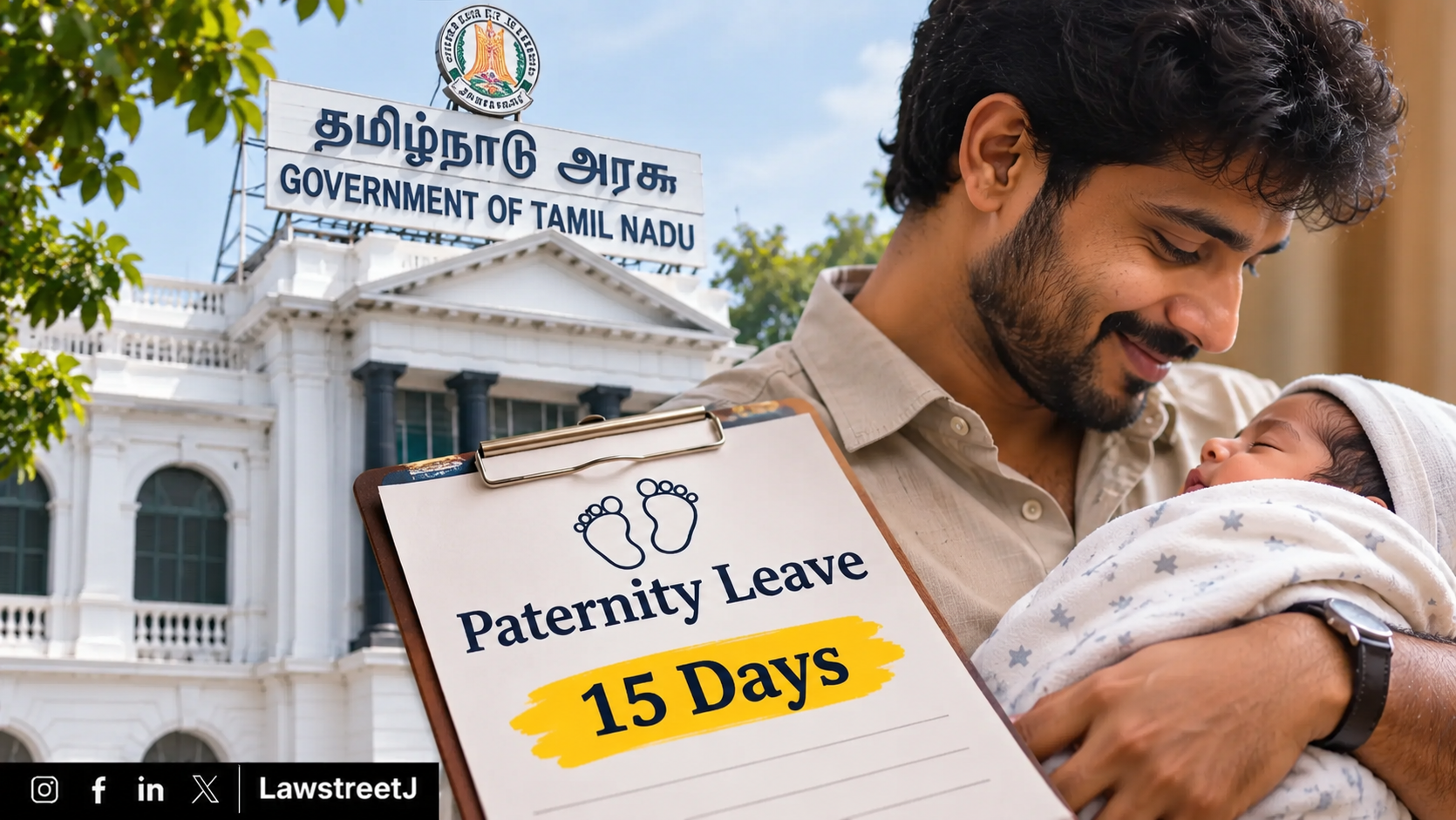
TAMIL NADU: Tamil Nadu has announced 15 days of paternity leave for married male employees working in the state government, marking a significant step towards recognising fathers' role in childcare and supporting families during the early months of parenthood.
The announcement was made by Chief Minister C. Joseph Vijay on November 26, 2026. Under the new provision, eligible employees will be able to take leave either 15 days before the expected birth of their child or within six months after the child's birth. The decision brings greater attention to the importance of shared parenting responsibilities and the need for workplace policies that support both mothers and fathers.
A New Step Towards Shared Parenting
The Tamil Nadu government said the decision was taken after receiving representations from male government employees seeking a formal provision for paternity leave.
Explaining the rationale behind the announcement, the government highlighted that the period surrounding childbirth is crucial for both the mother and the newborn. A father's presence during this time can provide essential physical and emotional support to the mother while allowing him to participate more actively in caring for the child.
The move also recognises that childcare is not solely a mother's responsibility. From accompanying a spouse during medical appointments to helping with the newborn's daily needs, fathers play an important role in ensuring that families receive adequate support during this transition.
When Can Employees Avail the 15 Days of Leave?
Under the newly announced provision, married male employees working in the Tamil Nadu government can utilise the 15 days of paternity leave within a specified period.
The leave can be availed:
- Before childbirth: Up to 15 days before the expected date of delivery.
- After childbirth: At any time within six months from the date of the child's birth.
This arrangement provides employees with some flexibility to decide when their presence would be most beneficial to their families. The announcement, however, does not extend the benefit to private-sector employees. The provision specifically concerns eligible married male employees of the Tamil Nadu state government.
Tamil Nadu already provides 365 days of maternity leave to its female government employees. The introduction of paternity leave adds a separate provision for fathers, acknowledging their contribution to early childcare. The move also reflects a broader conversation around parental responsibilities in India, where childcare has traditionally been viewed largely as the mother's responsibility.
Several other states have introduced paternity leave provisions for government employees, although the duration and eligibility conditions differ. Odisha, for instance, provides 15 days of paternity leave, while West Bengal has a provision of up to 30 days of paternity-cum-childcare leave for eligible male employees.
Why This Decision Matters Beyond Government Offices
The significance of the announcement goes beyond the 15 days of leave.
For many working families, the arrival of a child brings new responsibilities, financial pressures and adjustments to everyday life. While mothers undergo the physical demands of childbirth and recovery, fathers often continue working under existing workplace arrangements, leaving families with limited time to manage the transition together.
A formal paternity leave policy can help address this gap by giving fathers an opportunity to be present during one of the most important periods in family life. It also sends a message to workplaces that a father's involvement in raising a child deserves institutional recognition rather than being treated merely as a personal responsibility.
Although 15 days may be a relatively short period compared with maternity leave, the decision marks an important policy development for Tamil Nadu's government workforce.
A Policy That Could Encourage Wider Change
Chief Minister C. Joseph Vijay's announcement could also encourage discussions about parental leave policies in other states and employment sectors. India's evolving workforce requires policies that recognise the changing nature of families and the importance of balancing professional commitments with personal responsibilities.
However, the immediate benefit remains limited to Tamil Nadu government employees. Whether similar provisions will eventually be considered for private-sector workers and other categories of employees remains to be seen.
For now, the announcement represents a meaningful step towards recognising fathers as active participants in childcare and acknowledging that supporting a newborn is a shared family responsibility.