New Delhi: The Rajya Sabha on Wednesday passed the Supreme Court (Number of Judges) Amendment Bill, 2026 by a voice vote after a nearly two-hour debate. The legislation increases the sanctioned strength of the Supreme Court from 34 to 38 judges, replacing an Ordinance promulgated in May. While the government described the move as necessary to tackle mounting judicial pendency, the debate also witnessed concerns over diversity and representation in the higher judiciary.
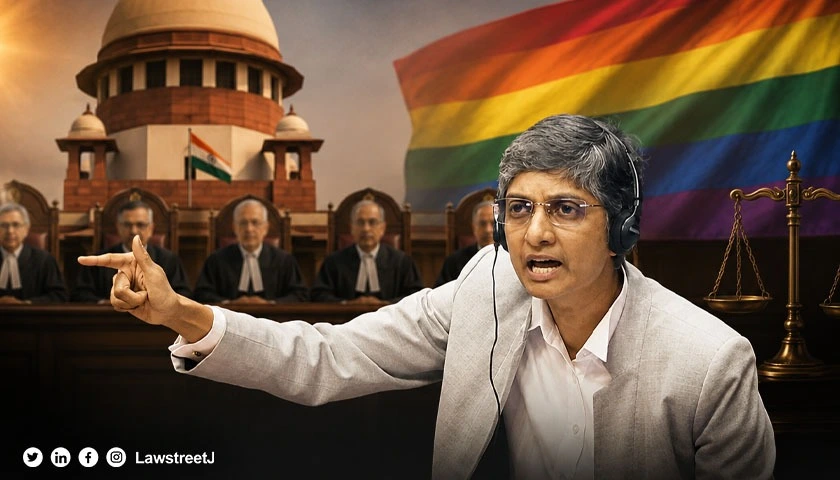
During the debate preceding the Bill's passage, Dr. Menaka Guruswamy, Senior Advocate and Member of Parliament, criticised the government's decision to expand the Supreme Court through an Ordinance, arguing that the judiciary's structural challenges could not be addressed merely by increasing the number of judges.
Speaking on the Bill, Dr. Guruswamy stated that "the problems of the judiciary are not going to be solved by passing through ordinance and increase of four more judges in the Supreme Court." and also argued that the larger concerns lay in the manner of judicial appointments and the lack of diversity within the higher judiciary.
Expanding on her criticism, Dr. Guruswamy contended that "the Central Government will not appoint women to the judiciary, they will not appoint lower caste to the judiciary, they will not appoint religious minorities to the judiciary, they will not appoint gay people to the judiciary, you only appoint judges who you think have your ideology."
In support of these remarks, figures relating to judicial vacancies and representation were also cited, stating that "there are 30% vacancies in all the High Courts... women are 14% of all High Court judges." Dr. Guruswamy further asserted that Scheduled Castes, Scheduled Tribes, and women together constitute less than 20% of the judiciary, and claimed that between 2018 and 2026, the government had appointed 3% Scheduled Caste judges, 2% Scheduled Tribe judges, and 12% OBC judges.
During the course of her speech, Dr. Guruswamy also referred to protests by students in the national capital, prompting interruptions from the Chair. The Deputy Chairman clarified that remarks not connected to the Bill would not form part of the record and asked her to confine her speech to the legislation. Responding to the intervention, Dr. Guruswamy maintained that "it is not about four more judges you solve issues when you work with the Constitution," and called for the Home Minister to be present in the House before the Chair proceeded to call the next speaker.
The Bill was subsequently passed by the Rajya Sabha by a voice vote, increasing the sanctioned strength of the Supreme Court from 34 to 38 judges.


![Delhi Court Grants Permission to Evict AAP MP Raghav Chadha from Type 7 Government Bungalow [Read Order]](/secure/uploads/2023/10/lj_2396_AAP_MP_Raghav_Chadha_to_lose_govt_bungalow.jpg)