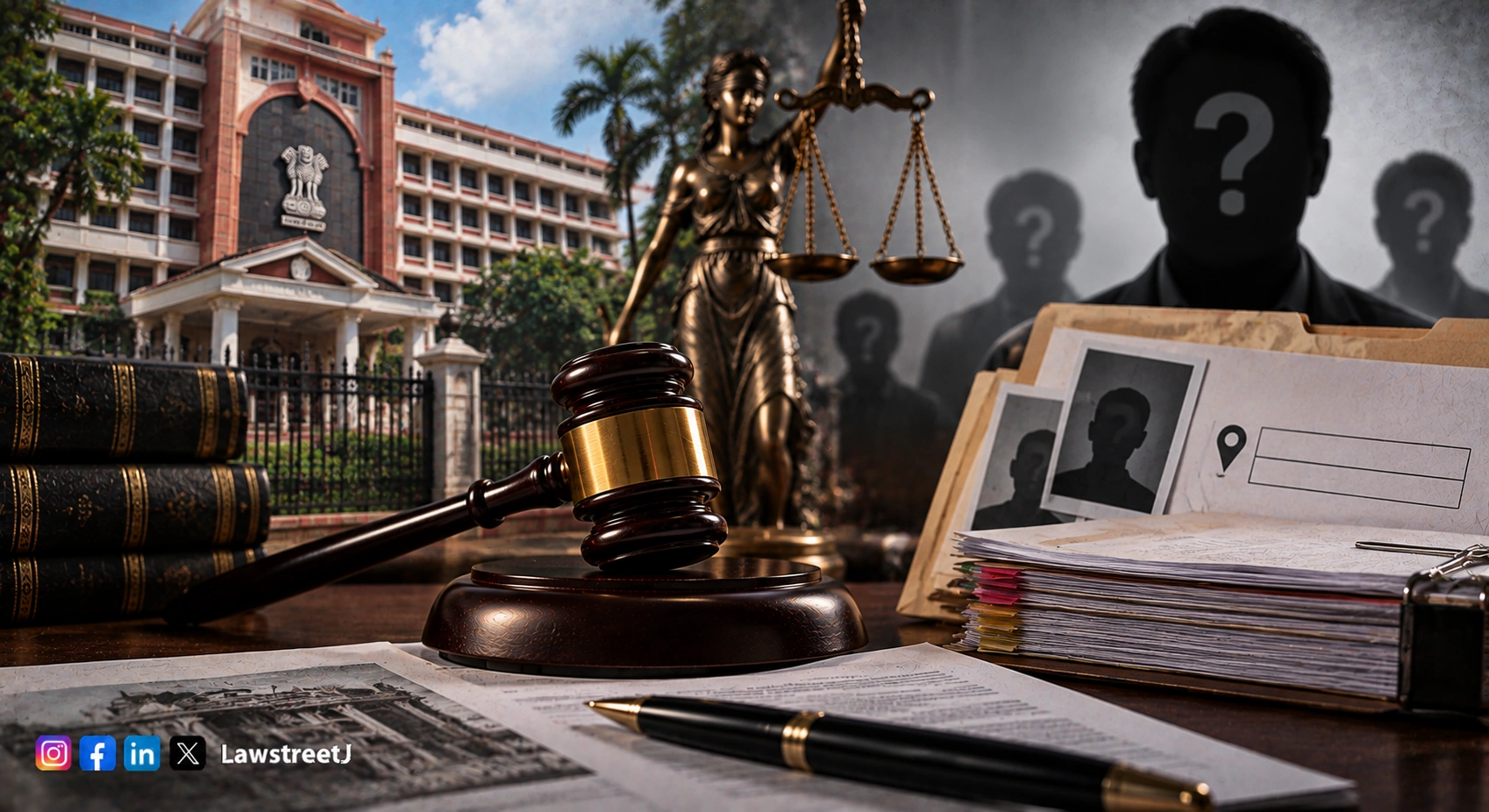
Ernakulam: The Kerala High Court has set aside an order of the Principal Munsiff Court, Ernakulam, refusing to number a suit for injunction because the plaintiff could not furnish the address of an unidentified reviewer, holding that insisting on compliance with Order VI Rule 14A of the Code of Civil Procedure in 'John Doe' proceedings defeats the very purpose of that jurisdiction.
Justice Easwaran S. was hearing an original petition under Article 227 of the Constitution filed by M/s. Cubes Entertainments, producer of the film 'Kattalan', challenging the trial court's refusal to number its suit against Big Tree Entertainment Private Limited, which operates the ticketing and review platform BookMyShow, and an unidentified reviewer arrayed as 'John Doe/Ashok Kumar'. The suit sought removal of a review posted on the platform by the unknown defendant, whose identity the plaintiff could not ascertain since the platform masked the reviewer's details.
The Munsiff Court had declined to number the suit on the ground that the plaint did not comply with Order VI Rule 14A of the CPC, which requires every pleading to be accompanied by a statement of the address of the parties for service of notice, and had rejected the plaintiff's application seeking exemption from that requirement along with Order VII Rule 1(c).
Tracing the origin of 'John Doe' proceedings in India to the Delhi High Court's decision in Taj Television v. Rajan Mandal, which restrained unlicensed cable operators from illegally broadcasting the 2002 FIFA World Cup, and its subsequent expansion in ESPN Software India Pvt Ltd v. Tudu Enterprises and UTV Software Communications Ltd v. 1337X.To, the court held that this form of litigation is expanding rapidly and that courts must adopt a progressive approach rather than allowing themselves to be tied down by procedural requirements.
The court held that the trial court's insistence on a physical address for the unidentified second defendant created "a procedural paradox" that defeats the purpose of John Doe jurisprudence, since it is inherently impossible to furnish the address of a person whose very identity is unknown and masked by the platform. It observed that procedural rules under the CPC are the handmaidens of justice and should not be used as technical obstructions to deny substantive relief, and suggested that the trial court could instead have obtained an undertaking from the plaintiff to implead the actual person once his identity was revealed.
Finding that the trial court had failed to appreciate the plaintiff's requirement and the urgency of the suit, and had not considered the conflict between Order VI Rule 14A and the John Doe exemption in its correct perspective, the court held that its supervisory jurisdiction under Article 227 was required to be invoked to correct the procedural infirmity and render substantive justice.
The original petition was accordingly allowed, the impugned order was set aside, and the Principal Munsiff Court, Ernakulam, was directed to number the suit on production of a certified copy of the judgment and proceed to consider the pending interlocutory application forthwith.
Appearances:
For the Petitioner: Shri T. Sukesh Roy and Smt. A.R. Divya, Advocates.
Case Title: M/s. Cubes Entertainments vs. Big Tree Entertainment Private Limited and Another, OP(C) No.2655 of 2026



![Kerala HC Quashes 498A Dowry Harassment Case Against Live-In Partner, Citing Lack of Relative Status [Read Order]](/secure/uploads/2023/08/lj_5693_1057c042-1e57-4e27-8c9e-25af0ec38ec4.jpg)
![Watching porn on mobile: Kerala HC highlights importance of mother cooked meals, outdoor sports [Read Order]](/secure/uploads/2023/09/lj_9155_Parental_supervision_of_mobile_phone_usage.jpg)
![Lakshadweep MP Mohammed Faizal Disqualified from Lok Sabha After Conviction Suspension Plea Rejected by Kerala High Court [Read Notice]](/secure/uploads/2023/10/lj_9640_87b5fd97-0e05-4ff8-9a99-3be1e4446192.jpg)