New Delhi: The Supreme Court has held that an umpire acted in excess of jurisdiction in awarding sums beyond the Rs 2 crore claim that the claimant itself had quantified when it nominated its arbitrator. It set aside a Calcutta High Court Division Bench judgment that had restored the Umpire’s award of Rs 11,69,62,910 with 15% interest, restored the Single Judge’s order restricting the award to Rs 2 crore, and treated the Rs 4 crore already paid and withdrawn as full and final satisfaction.
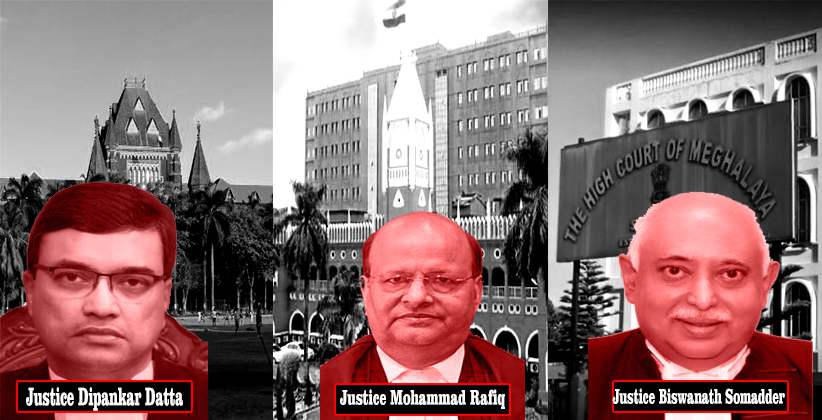
A Bench of Justice Dipankar Datta and Justice Satish Chandra Sharma, in a judgment by Justice Datta, was hearing appeals by Neycer (India) Ltd., formerly Neiveli Ceramics and Refractories Ltd., against GMB Ceramics Ltd., arising from objections under Sections 30 and 33 of the Arbitration Act, 1940 to the Umpire’s award of 23.06.1999. The claimant’s statement of claim of 1990, claiming Rs 8.82 crore, was amended to aggregate Rs 17.16 crore under six Schedules. The Single Judge had restricted the award to Rs 2 crore, comprising Schedules ‘A’ and ‘D’ and part of ‘E’.
On the scope of the reference, the Court said that an umpire is a creature of the contract and the reference, and that an error within jurisdiction is different from an error in excess of jurisdiction, relying on Sudarsan Trading Co. v. State of Kerala, Associated Engineering Co. v. Government of A.P., and Bharat Coking Coal Ltd. v. Annapurna Construction. It held that the Division Bench erred in treating the question as one of “plausible reading” of documents on merits, and that an umpire “cannot confer jurisdiction upon himself by misconstruing the terms of the reference”.
Examining the pre-reference correspondence, the Court noted that GMB had repeatedly quantified its overrun claim at Rs 2 crore in telexes of August and September 1989, and wrote on 06.10.1989 that “the matter boils down to our claim for overrun amount only”. Its telex of 19.10.1989 nominating its arbitrator described the reference as one for a claim of “over Rs. 2 crores” for all its losses. A later letter of 24.10.1989, which only reserved rights on other claims, could not unilaterally enlarge the reference. The Court distinguished Juggilal Kamlapat and State of Orissa v. Asis Ranjan Mohanty, and rejected the Division Bench’s subsidiary reasons. Neycer’s invocation letter was a notice calling on GMB to nominate its arbitrator, and as Neycer objected to claims beyond Rs 2 crore from the start, contesting them on merits was no waiver or acquiescence.
On Schedule ‘C’, a claim of Rs 3.5 crore for damages for being prevented from using the ‘GMB-NEYCER’ brand name, the Umpire had awarded Rs 2,03,43,000 based on one advertising agency estimate of 1990, which no one from the agency proved. The Court held the Single Judge rightly set it aside as speculative, perverse and based on no evidence, since by 1999 the five-year period had expired and GMB’s own audited accounts showed actual advertising spending of only Rs 35,31,794. It noted that the Umpire used a “diametrically opposite yardstick” from that he adopted in rejecting another Schedule on anticipated expenditure.
On Clause 20, which says the consultants “shall endeavour to commission the plant within 18 calendar months” of the sanction of the term loan, the Court found substantial force in Neycer’s contention that it could not be made an underwriter of GMB’s profits and loan interest for five years. On the Umpire’s own finding, the delay was seven months, and the claim even covered a period in which GMB’s plant remained closed for labour problems and power disconnection. Neycer’s broader arguments, that it had no enforceable obligation, were held to invite re-appreciation of evidence. The Court held that the claims under the different Schedules are distinct and severable, relying on Upper Ganges Valley Electricity Supply Co. v. U.P. Electricity Board, so that the valid portion could be upheld after severing the invalid excess.
Citing the interim orders of 22.11.2018 and 07.01.2019, the Court noted that Neycer had deposited Rs 2 crore as principal and Rs 2 crore as interest, which GMB withdrew in January 2019. Both companies having undergone industrial sickness over nearly four decades, it held:
“The said payment of Rs.4,00,00,000/- already received by GMB shall be treated as full and final satisfaction of the award as modified by the Single Judge (both towards principal and interest), and no further amount shall be recoverable by either party from the other under the award.”
The impugned judgment was set aside, the Single Judge’s judgment of 14.10.2015 was restored, and the undertaking furnished by GMB was discharged. The appeals were disposed of, with parties bearing their own costs.
Appearances:
For the Appellant (Neycer): Mr. Amit Sibal and Mr. Sanjiv Sen, Senior Advocates.
For the Respondent (GMB Ceramics): Mr. Siddharth Bhatnagar, Senior Advocate.
Case Title: Neycer (India) Ltd. vs. GMB Ceramics Ltd., Civil Appeal Nos. 5937-5938 of 2021, 2026 INSC 1251