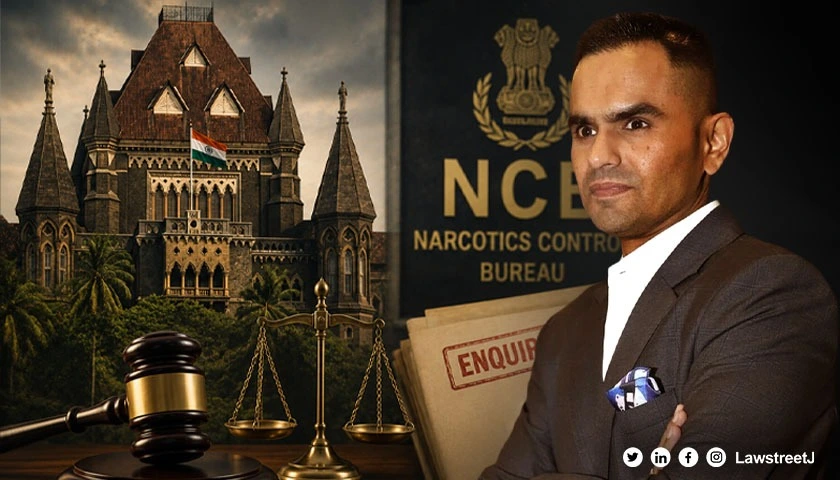
Mumbai: The Bombay High Court on Thursday questioned the Narcotics Control Bureau (NCB) over the repeated initiation of enquiries against its former Mumbai Zonal Director, Sameer Dnyandev Wankhede, while hearing his challenge to multiple preliminary enquiry notices allegedly issued on the basis of anonymous complaints.
A Division Bench comprising Justice A.S. Gadkari and Justice Kamal Khata heard Writ Petition (Criminal) (ST) No. 6890 of 2024 and admitted the matter for final hearing. The Court also granted interim protection to Wankhede pending adjudication of the petition.
According to Wankhede, the writ petition challenges multiple preliminary enquiry notices issued by the NCB, contending that they were initiated on the basis of anonymous complaints and are arbitrary, mala fide and legally unsustainable.
During the hearing, the Bench questioned the basis on which the NCB initiated proceedings against one of its own officers. The Court asked how an investigating officer could be subjected to repeated enquiries merely on the basis of allegations made by an accused person and anonymous complaints, particularly where such action could undermine the functioning of law enforcement agencies.
The Bench also sought to know whether the allegations relied upon by the NCB had been made at the time of the accused person's arrest or during the course of the investigation. It questioned why such allegations surfaced only at a later stage and why they were entertained after a considerable lapse of time.
The Court further observed that if allegations made by accused persons against investigating officers are routinely acted upon by the department, it could create difficulties in the administration of criminal justice. It remarked that such a course could demoralise officers discharging their official duties and set an undesirable precedent by allowing accused persons to target investigating officers for performing their statutory functions.
The Bench also questioned the NCB regarding the repeated initiation of proceedings against Wankhede despite the rules governing anonymous complaints and expressed dissatisfaction over the manner in which the agency had proceeded against its former officer.
According to Wankhede, the Court observed during the hearing that the repeated enquiries amounted to harassment and questioned the justification for subjecting him to successive proceedings on the basis of such complaints.
After hearing the parties, the High Court admitted the writ petition for final hearing and granted interim relief in favour of Wankhede, protecting him from further action pending disposal of the petition.
Wankhede has maintained that the preliminary enquiry notices constitute an abuse of the administrative process and has sought their quashing before the High Court.



![Husband Can Also Claim Alimony/Maintenance From Wife: Bombay High Court Orders Woman To Pay Alimony To Ex-Husband [Read Order]](/secure/uploads/2022/04/lj_2823_Divorce.jpg)



.jpeg)