New Delhi: The Supreme Court has set aside the concurrent findings of the Railway Claims Tribunal and the Madhya Pradesh High Court denying compensation to a widow, holding that the mere non-recovery of her deceased husband's train ticket could not defeat her claim that he was a bona fide passenger, and awarding her Rs.8,00,000 for his death.
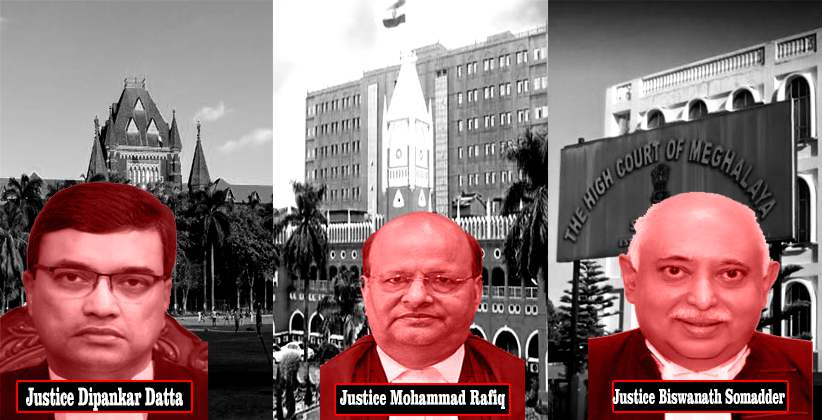
A Bench of Justices Sanjay Karol and Nongmeikapam Kotiswar Singh was hearing a civil appeal filed by Lata against Union of India, arising out of the death of her husband, Chandrakant Thakkar, who fell from Train No.12834 Ahmedabad-Howrah Mail on 28th November 2015 while travelling from Raipur to Ahmedabad, and died instantaneously of his injuries.
The appellant's claim under the Railway Claims Tribunal Act, 1987 for Rs.4,00,000 with 18% interest had been rejected by the Tribunal on the ground that her husband's status as a bona fide passenger could not be established, since his ticket said to have been in his misplaced luggage was never recovered, and his wallet, recovered by the police, contained no ticket. The High Court had affirmed this finding, additionally noting an inconsistency between the appellant's cross-examination testimony and her pleaded case regarding the date of the deceased's journey.
Examining Sections 123, 124 and 124A of the Railways Act, 1989, the Court explained that Section 124A, inserted in 1994, created a "no-fault" liability for "untoward incidents," including a passenger's accidental fall from a running train, and was intended to provide expeditious, no-fault compensation to victims without requiring proof of negligence.
Tracing the line of precedent on interpretation of welfare legislation, the Court held that "the beneficial legislations are to receive purposive and liberal construction in furtherance of the intentions of the Legislature, as can be discerned, instead of a literal or restrictive approach being adopted."
On the question of proof, the Court relied on its earlier decisions in Union of India v. Rina Devi and Doli Rani Saha v. Union of India, reiterating that the absence of a ticket on the body of the deceased does not by itself negate bona fide passenger status, and that the claimant's initial burden can be discharged through an affidavit, after which the burden shifts to the Railways.
The Court quoted the settled position from Rina Devi: "mere absence of ticket with such injured or deceased will not negative the claim that he was a bona fide passenger. Initial burden will be on the claimant which can be discharged by filing an affidavit of the relevant facts and burden will then shift on the Railways."
The Court also undertook a detailed review of the Indian Railway Commercial Manual and the Operating Manual for Indian Railways, noting the duties cast on Guards, Ticket Collectors and Travelling Ticket Examiners to check tickets at multiple stages of a journey and to prevent overcrowding and ticketless travel. Referring to a table of recent incidents of commuters falling from overcrowded trains across the country, the Court observed that had these procedures been followed, there would have been records of the deceased's ticket being checked, obviating the need for his family to litigate up to the Supreme Court.
"It would be entirely unfair to cast sole responsibility upon the Railways. The passengers themselves have an equal responsibility," the Court observed, while also suggesting that the term "second class passenger" in the Manuals be replaced with a reference to the coach rather than the passenger, as being more consistent with the spirit of the Constitution.
Applying the standard of preponderance of probabilities rather than proof beyond reasonable doubt, the Court found that the appellant had discharged her initial burden through her affidavit stating that her husband held a valid ticket which was misplaced along with his travel bag, and that there was no dispute that he was travelling on the train or that he died as a result of falling from it.
Holding that the courts below had erred in declining compensation, the Court allowed the appeal, set aside the judgments of the High Court and the Railway Claims Tribunal, and awarded Rs.8,00,000 as compensation in terms of the Railway Accidents and Untoward Incidents (Compensation) Rules, 1990, as amended and enhanced in 2016. The Union of India was directed to pay the amount within four weeks of furnishing of bank details, failing which it would carry 8% interest from the date of filing of the claim petition.
Case Title: Lata vs. Union of India & Anr.(Special Leave Petition (Civil) No. 30726 of 2025)