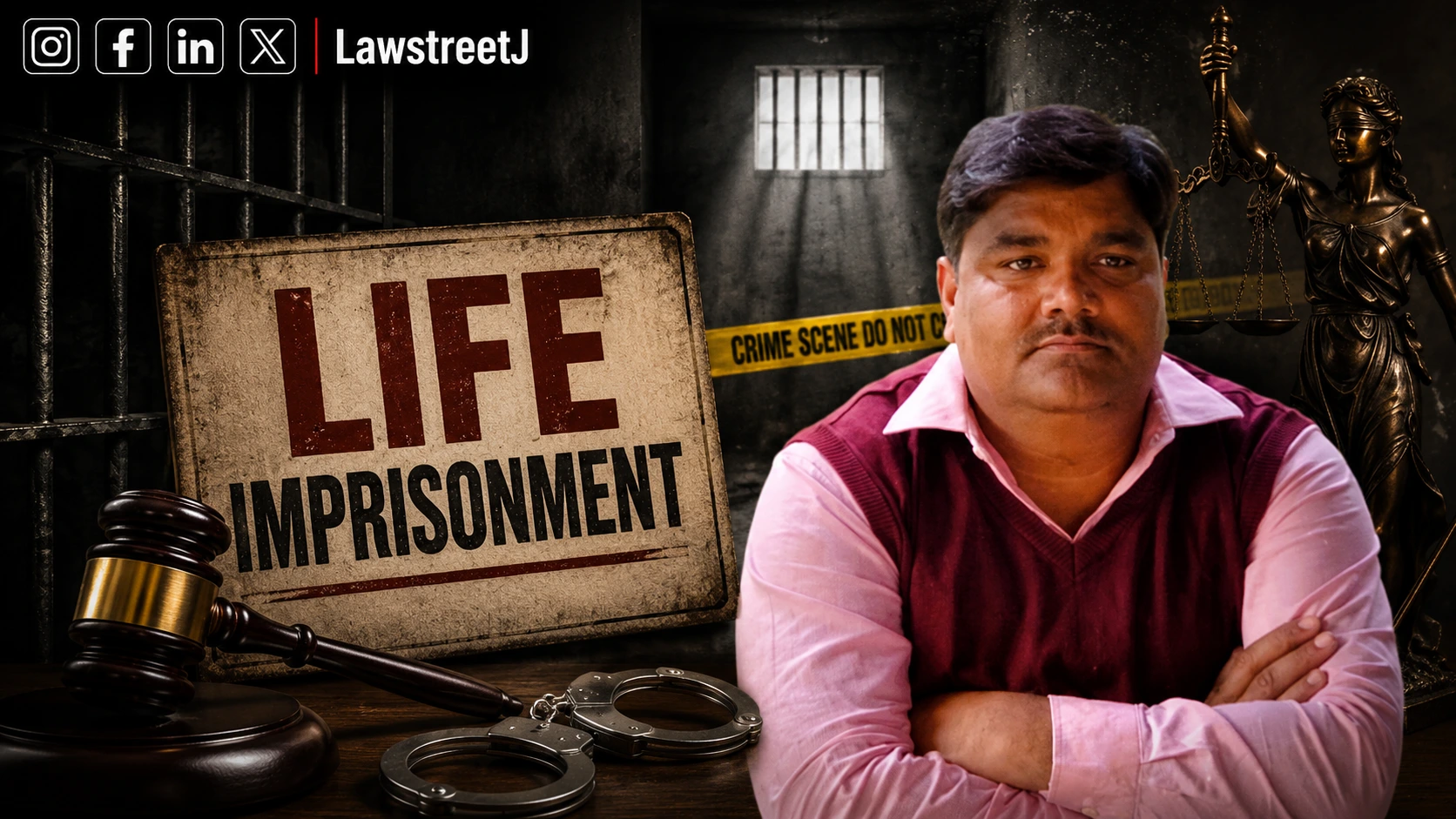
New Delhi: In a significant ruling concerning the 2020 Northeast Delhi communal violence, a Delhi court has sentenced former Aam Aadmi Party (AAP) councillor Tahir Hussain and four other convicts to life imprisonment for the murder of Intelligence Bureau (IB) officer Ankit Sharma.
Additional Sessions Judge Parveen Singh of the Karkardooma Courts pronounced the sentence, describing the nature of the crime as one of "utmost brutality" driven by religious animus.
The court convicted Hussain alongside Javed, Anas, Nazim, and Kasim under multiple provisions of the Indian Penal Code, including Section 302 (murder), Section 147 (rioting), Section 148 (rioting with deadly weapons), and Section 149 (unlawful assembly). Additionally, the convicts were found guilty of kidnapping with intent to secretly confine (Section 365), promoting enmity between different religious groups (Section 153A), and violating prohibitory orders (Section 188).
The victim, 26-year-old Ankit Sharma, was a security assistant with the Intelligence Bureau who went missing on February 25, 2020, during the height of the riots. His body was recovered the following day from a drain near Chand Bagh Pulia. Medical evidence revealed that Sharma had suffered 51 injuries, including 18 inflicted by sharp-edged weapons, with at least seven injuries independently sufficient to cause death. The judge noted the "nauseating and sickening" barbarity of the act, stating that the victim was dragged like an animal before his body was disposed of.
During the sentencing proceedings, the prosecution, led by Special Public Prosecutor Madhukar Pandey, strongly advocated for the death penalty. The state argued that the cold-blooded and meticulously planned nature of the murder placed it within the "rarest of rare" category. The prosecutor highlighted that Hussain, as an elected municipal councillor, held a heightened responsibility to protect citizens rather than participating in an unlawful assembly.
The court, however, rejected the plea for capital punishment. Judge Singh observed that while the crime was brutal, the prosecution failed to prove that the convicts were beyond the possibility of reformation, a mandatory threshold required by the Supreme Court for awarding the death penalty. The court noted that the convicts had no prior criminal records and concluded that they could be disciplined to follow a rule-based order in the future.
Counsel for Tahir Hussain, Senior Advocate Rajiv Mohan, had sought leniency by arguing that Hussain’s conviction rested on vicarious liability as a member of an unlawful assembly rather than evidence that he personally inflicted fatal injuries. The defence further contended that the prosecution had failed to establish a criminal conspiracy, a point the court ultimately accepted by acquitting the defendants of the Section 120B IPC charge.
While five men were convicted, the court acquitted six other accused individuals: Haseen @ Salman, Firoz, Gulfam, Shoaib Alam, Sameer Khan, and Muntazim @ Musa. The court held that the evidence against these individuals was insufficient or relied upon witnesses whose testimonies were found to be inconsistent or lacked credibility. Specifically, the judge pointed to "material improvements" in the statements of certain police and public witnesses that rendered their identification of these accused unreliable.
Tahir Hussain, who broke down in court following his conviction, has maintained his innocence and indicated through his legal team that he intends to appeal the verdict in the High Court. The 2020 Northeast Delhi riots, which formed the backdrop of this case, resulted in 53 deaths and hundreds of injuries during a period of intense communal violence linked to protests against the Citizenship (Amendment) Act.




![Kejriwal Govt's temporary appointments costing Rs. 30 cr per year axed by LG, decision upheld by Delhi High Court [Read Judgment]](/secure/uploads/2023/10/lj_3847_8da2bc6e-2fb2-4852-ad79-35f98380b3bf.jpg)