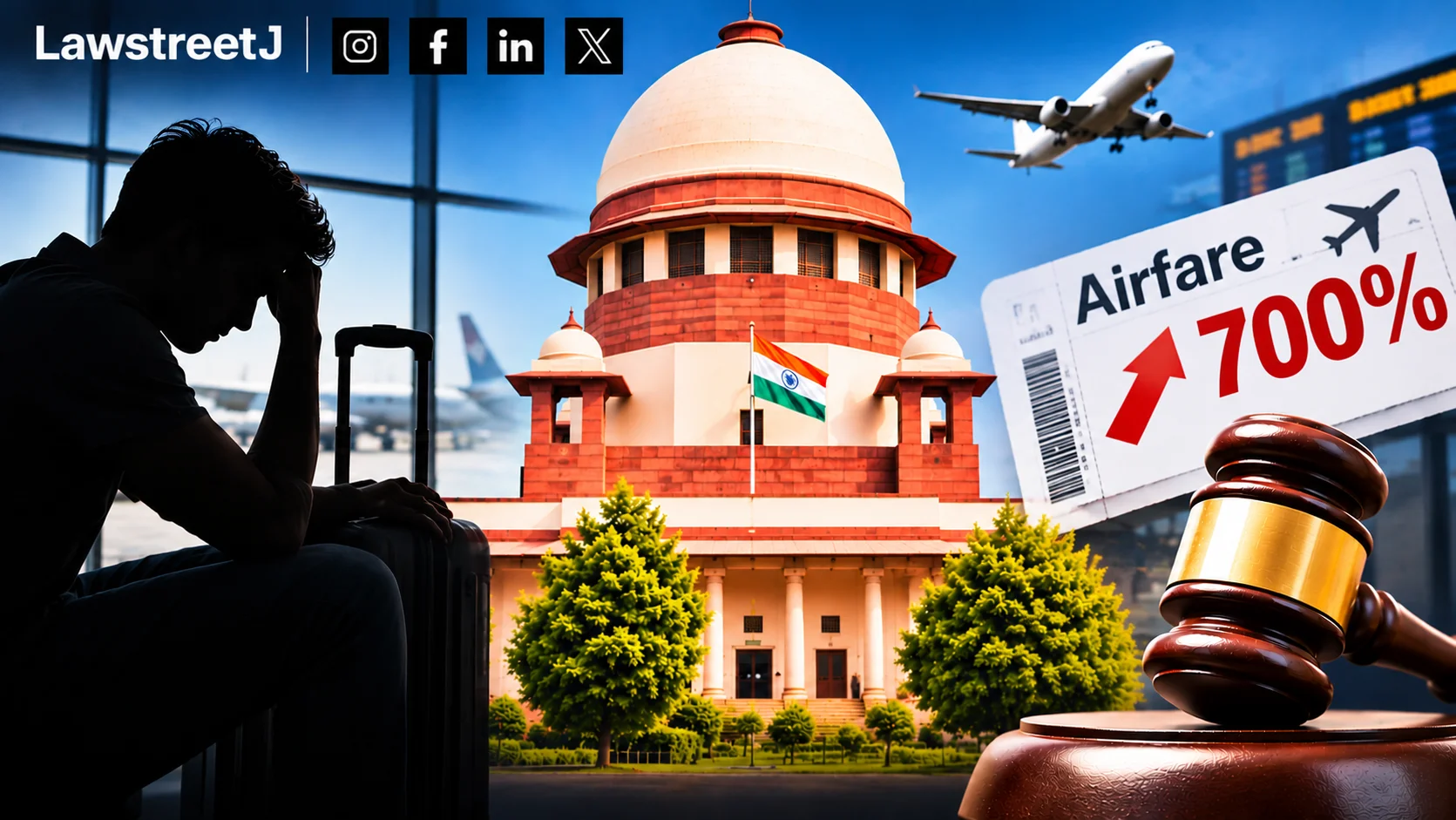
New Delhi: The Supreme Court of India declined an urgent hearing on an interlocutory application highlighting an alleged 700 per cent spike in domestic airfares ahead of the Diwali festival season.
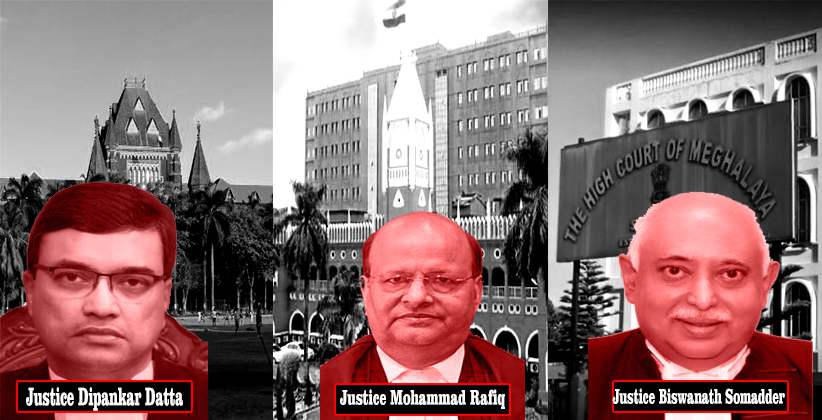
Mentioning the application before a bench comprising Justice Vikram Nath, Justice Sandeep Mehta, and Justice Aparesh Kumar Singh, counsel for the petitioner sought an urgent listing. Highlighting excessive price surges on major domestic routes, the petitioner argued that air travel has become an essential service and that unbridled price escalation violates Article 14 of the Constitution. Refusing to grant an urgent listing, the bench orally remarked, "Don't travel by air", before moving to the next case.
The interlocutory application was moved by social activist S. Laxminarayanan within his pending Public Interest Litigation (PIL) challenging algorithm-based dynamic pricing, steep fare hikes at short notice, and reduced free baggage allowances on domestic flights. The application requested immediate judicial intervention to cap airfares during the current festive period and the upcoming year-end travel season, while seeking the restoration of free checked baggage allowance from 15 kg back to 25 kg. Submitting specific fare data, the application pointed out that ticket prices on several high-demand routes had escalated between two to seven times their ordinary levels. For instance, a Delhi to Kolkata flight ticket normally priced around ₹10,000 to ₹11,000 reached ₹78,694 for travel dates surrounding the festival.
The petitioner contended that airlines cannot justify such extreme pricing merely by citing Aviation Turbine Fuel (ATF) costs, noting that flights operating on the same route on the same day consume comparable quantities of fuel. To demonstrate the arbitrary nature of dynamic pricing, the plea cited a Bengaluru to Delhi flight departing at 5:00 AM priced at ₹15,901, whereas a 3:45 PM flight on the same day was listed at ₹40,506. Similar steep variations were highlighted on the Mumbai–Delhi and Delhi–Mumbai sectors. The plea emphasized that unlike other essential public services such as Indian Railways' flexi-fares capped at 1.5 times the base fare, electricity tariffs, or essential medicine prices air travel remains unregulated, leaving stranded passengers vulnerable during peak periods.
While declining urgent listing for the interim application, the Supreme Court's broader hearing on Laxminarayanan's PIL remains scheduled for November 16, 2026.
In earlier hearings on the petition, the court had expressed serious concern over dynamic pricing, describing exorbitant fare surges during major events like the Kumbh Mela as exploitation of passengers and indicating its intention to intervene.
Following judicial push during the ongoing proceedings, the Ministry of Civil Aviation notified the Bharatiya Vayuyan Niyam, 2026, under Rule 192. Set to take effect on January 1, 2027, the new regulations empower the central government to intervene and cap fares during extraordinary situations in the public interest, while requiring transparent itemized fare disclosures.
The new regulatory framework marks a departure from market-determined airfare pricing in place since 1994, requiring airlines to submit tariff structures to the Directorate General of Civil Aviation (DGCA) and publish them transparently online. Meanwhile, airline carriers have pointed to industry-wide stress driven by escalating fuel costs, currency depreciation, and geopolitical disruptions affecting international flight corridors.
As the interim application for immediate price capping stands refused for urgent listing, relief for festival commuters now rests on the outcome of the main PIL listed for detailed hearing on November 16, 2026.
Case title: S. Laxminarayanan v. Union of India [W.P.(C) No. 1124/2025; Diary No. 44885/2025]