New Delhi: The Supreme Court has dismissed appeals by directly recruited Higher Secondary School Teachers, Junior, in Kerala's government-aided schools, seeking full-time pay parity with colleagues in the same cadre who were appointed by transfer or promotion, holding that the differing route of entry and length of prior teaching experience justified the difference in pay scales.
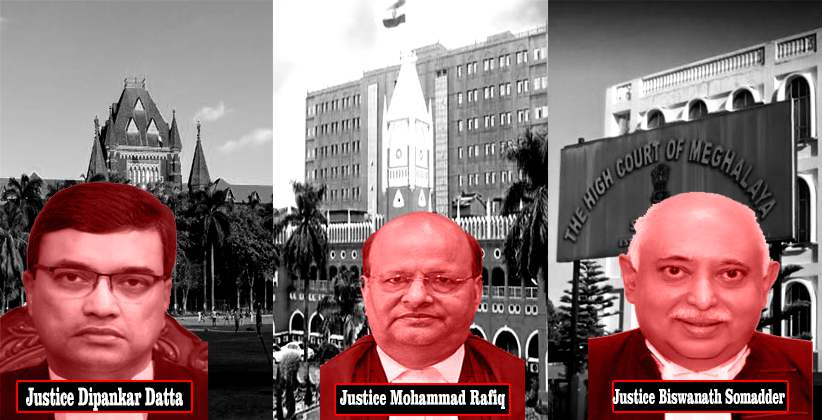
Justice Dipankar Datta, delivering the judgment for a Bench also comprising Justice Sheel Nagu, was hearing civil appeals filed by teachers appointed as HSST, Junior, through direct recruitment under a Government Order dated 13.05.1998, challenging a Division Bench judgment of the Kerala High Court dated 22.03.2011, which had reversed a Single Judge's order allowing their writ petitions and directing that they be paid the full-time pay scale extended to teachers appointed to the same post by transfer or promotion from lower schools.
The short question, as the Court framed it, was whether there could be a difference in pay scales within one and the same cadre of HSST, Junior teachers, where the qualifications, duties and responsibilities of the directly recruited and the promoted/transferred teachers were admittedly identical. The Division Bench of the High Court had held that the two groups could not be treated as equals, since those promoted to the post had, before their promotion, been full-time permanent teachers in high or lower schools with long years of service, and the extension of full-time pay to them on promotion was essentially a protection of the status they already held, rather than a fresh benefit extended over direct recruits, who were freshers.
The Supreme Court noted that the decisions relied upon by the Single Judge, including Randhir Singh v. Union of India, belonged to an earlier line of authority in which the equal pay for equal work doctrine was applied expansively, with mere sameness of designation sufficing to claim parity. The Court held that judicial interpretation of the doctrine had since undergone a significant shift, tracing the change through State Bank of India v. M.R. Ganesh Babu, Government of West Bengal v. Tarun Kumar Roy, State of Haryana v. Charanjit Singh and State of Bihar v. Bihar Secondary Teachers Struggle Committee, under which mere functional similarity of work is no longer sufficient, and a claimant must establish complete parity in source of recruitment, qualifications, experience, mode of appointment and nature of responsibilities.
The Court observed that "a mechanical application of the doctrine of equal pay for equal work has to be eschewed", and that while the doctrine remains enforceable where there is complete parity across all relevant factors, differentiation based on a valid and intelligible criterion having a nexus with the object sought to be achieved does not offend Article 14. On the facts, the Court held that the prior teaching experience of the transferee/promotee teachers, as against the direct recruits, furnished exactly such a valid differentia justifying the higher pay scale granted to the former.
The Court also declined to follow a Calcutta High Court decision in State of West Bengal v. Anirban Ghosh, relied upon by the appellants, holding it to be per incuriam to the extent it was inconsistent with the binding precedents noticed in Bihar Secondary Teachers Struggle Committee, and that the mere dismissal of a special leave petition against that decision did not require the Court to take a different view.
Finding no merit in the appeals, the Court held that the impugned judgment of the Division Bench did not warrant interference, and dismissed the appeals accordingly, with pending applications disposed of.
Case Title: G.P. Sangeetha and Others Etc. Etc. vs. State of Kerala and Others, with Sharafudden M. vs. Indu T.K. and Others, Civil Appeal Nos.7565-7567 of 2011 and Civil Appeal No.9060 of 2011, 2026 INSC 1004