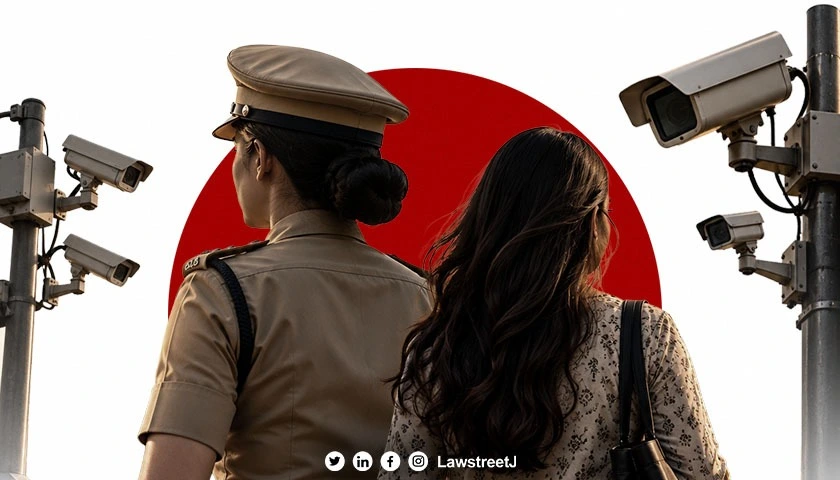
New Delhi: The Supreme Court has directed the Delhi Police and administrative authorities to take immediate and effective measures to curb sexual offences against women across the National Capital Region. The court stressed that law enforcement must prioritise preventing crimes and not merely apprehending offenders after incidents occur.
A Division Bench of Justice J.B. Pardiwala and Justice K. Vinod Chandran was hearing a suo motu case. The court had taken cognizance following multiple reports of sexual violence in the capital, including the alleged gang-rape of a 17-year-old at Aastha Kunj Park, an assault in Swaroop Nagar, and a sexual assault inside a moving sleeper bus.
The court observed that public spaces such as parks, roads, metro stations and bus stops cannot be allowed to become zones of high risk because of administrative deficiencies. It reiterated that the right to live with dignity and free from fear of violence is an intrinsic facet of Article 21 of the Constitution.
During the hearing, the Bench orally stressed the need to instil a strong sense of deterrence among anti-social elements. Justice Pardiwala remarked that police must create fear in potential offenders so that they hesitate before committing crimes, and urged officers to be strict without hesitation. The court noted that every woman and girl in the National Capital Territory must feel safe walking on streets or using public transport even at 10 pm or 11 pm.
Addressing police officers present in court, the Bench highlighted the need for active surveillance instead of relying only on installing CCTV cameras. It questioned how unmonitored cameras could prevent crime and suggested dedicated war rooms or monitoring cells for real-time tracking. It further directed police to intensify day-and-night patrolling around high-vulnerability locations such as railway stations, bus stands, subways and educational institution campuses. The court also flagged illegal eateries serving alcohol as potential breeding grounds for anti-social behaviour, recalling similar circumstances in the 2012 Nirbhaya case.
Solicitor General Tushar Mehta, appearing for the Delhi Police and central authorities, said the government did not treat the matter as adversarial. He informed the court that consultation meetings had been held among the Delhi Police, the Municipal Corporation of Delhi, the GNCTD and the Union Ministry of Women and Child Development, to formulate concrete suggestions and file compliance affidavits.
Senior Advocate Liz Mathew, assisting the court as Amicus Curiae, pointed to operational hurdles such as a 39 percent vacancy in beat patrolling units. She stressed the need for strict implementation of existing safety schemes.
The Bench urged officers to interact regularly with residents to restore public trust so that citizens feel comfortable approaching the police. While advocating strict preventive action, it also cautioned against police excesses during patrolling.
Urging the administration to rise to the challenge ahead of the upcoming festive season, the court posted the matter for further hearing in November 2026.
Appearances:
Amicus Curiae: Ms. Liz Mathew, Senior Advocate.
For the Delhi Police, GNCTD, MCD and Union Ministry of Women and Child Development: Mr. Tushar Mehta, Solicitor General.
Case Title: In Re: Recent Rape Incidents in Delhi NCR, Suo Motu Writ Petition (Criminal) No. 6 of 2026