New Delhi: The Supreme Court has reiterated the settled principle that a decision of the Court is retrospective in application unless it expressly states otherwise, while setting aside directions of the Karnataka High Court that had granted a private medical college subvention payments for the entire five-year course period, even for students admitted after the subvention scheme itself stood extinguished.
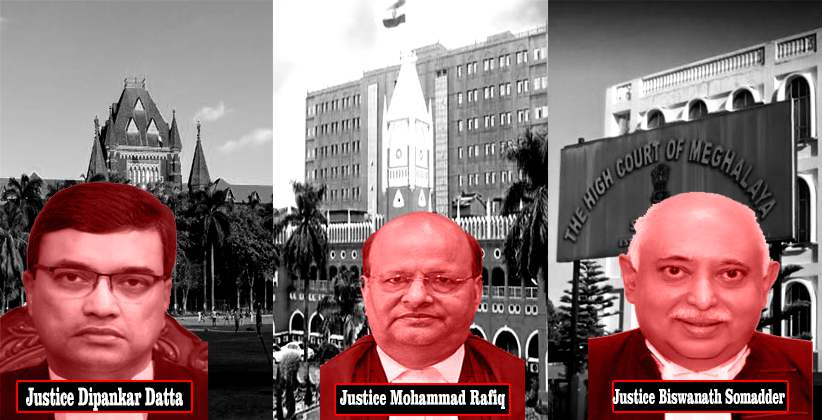
A Bench of Justice Dipankar Datta and Justice Sheel Nagu was hearing an appeal filed by the Government of India against the judgment of the Division Bench of the High Court of Karnataka, which had upheld a Single Bench order directing payment of the subvention amount to Sri Devraj Urs Medical College.
The dispute traced back to an interim order dated 11 August 1995 passed by the Supreme Court in TMA Pai Foundation v. State of Karnataka, under which the Central Government had extended a subvention of Rs. 5,000 per student annually to private professional colleges, meant to be paid until the student completed the course or for five years, whichever was earlier.
This interim arrangement was superseded when the 11-Judge Bench in TMA Pai Foundation & Ors. v. State of Karnataka delivered its final verdict on 31 October 2002, declaring the earlier subvention-linked scheme in Unni Krishnan unconstitutional. The Karnataka High Court had held that students admitted up to the academic year 2002-03 retained a vested right to the subvention for their full course duration, reading a clarificatory order of this Court dated 1 April 2003 as giving prospective effect to the TMA Pai verdict.
Rejecting this reading, the Court held: “If a decision of the Apex Court does not expressly provide its application to be prospective, then it is settled law that all decisions of this Court are retrospective in application.”
Examining the clarificatory order of 1 April 2003 relied upon by the High Court, the Bench found that it neither expressly nor impliedly conferred prospective effect on the TMA Pai verdict; it had merely remitted pending matters to the High Courts for fresh consideration in light of the larger Bench's ruling, while directing that all statutory enactments, orders, schemes and regulations be brought in conformity with it. Reading this alongside paragraph 393 of the TMA Pai judgment itself, the Court held that any prospective application contemplated by the Court was confined to statutory provisions running contrary to the TMA Pai ratio, and did not extend to executive schemes such as the subvention arrangement, which "died its own death" the moment the scheme was declared unconstitutional on 31 October 2002.
The Court also noted that the subvention scheme obligated the Central Government to pay the amount annually, not as a lump sum for the entire course, so that the High Court could not have directed release of the amount for the full five-year period even for students admitted in 2002-03. Further, on being asked whether any data had been placed on record to show that the college's revenue from tuition and other sources fell short of its expenditure, counsel for the respondent-college conceded that none had been furnished. Relying on Bharat Singh v. State of Haryana, the Bench held that a point of law dependent on facts cannot be entertained in the absence of pleadings and supporting material, whether raised by a writ petitioner or a respondent.
Accordingly, the Court partly allowed the appeal, setting aside the High Court's directions insofar as they extended subvention payments for the entire five-year course to students admitted in 2002-03, while upholding the denial of subvention for students admitted from academic year 2003-04 onwards. A connected appeal arising out of SLP (C) No. 9079 of 2011 was directed to be governed mutatis mutandis by the same order.
Case Title: Government of India & Anr. v. Sri Devraj Urs Medical College, Civil Appeal No. 10669 of 2010 with Civil Appeal No. … of 2026 (arising out of SLP (C) No. 9079 of 2011) (Supreme Court of India)