New Delhi: The Supreme Court has restored a trial court's dismissal of a suit for partition, holding that the plaintiffs' failure to examine the one witness with actual knowledge of the family's financial affairs, coupled with their selective challenge to only two of six ancestral properties sold by the deceased karta, was fatal to their claim that the sale lacked legal necessity.
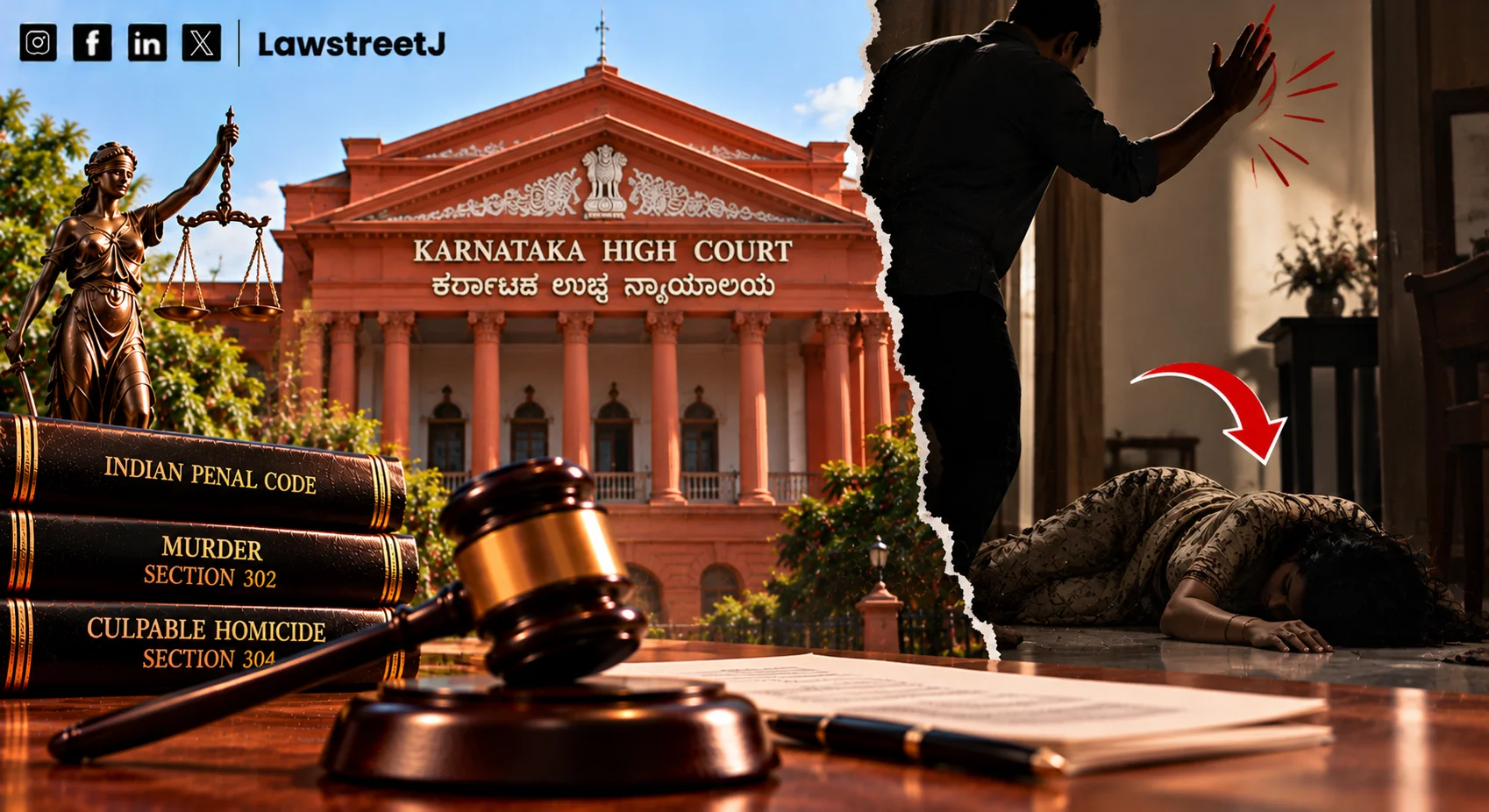
A bench of Justice Sandeep Mehta and Justice Augustine George Masih, was hearing an appeal filed by H.G. Pattabi against the judgment dated 23rd April, 2010 of the High Court of Karnataka at Bengaluru, which had allowed a first appeal filed by the respondents/plaintiffs and set aside the judgment of the Civil Judge (Senior Division), Chikmagalur dismissing their suit for partition.
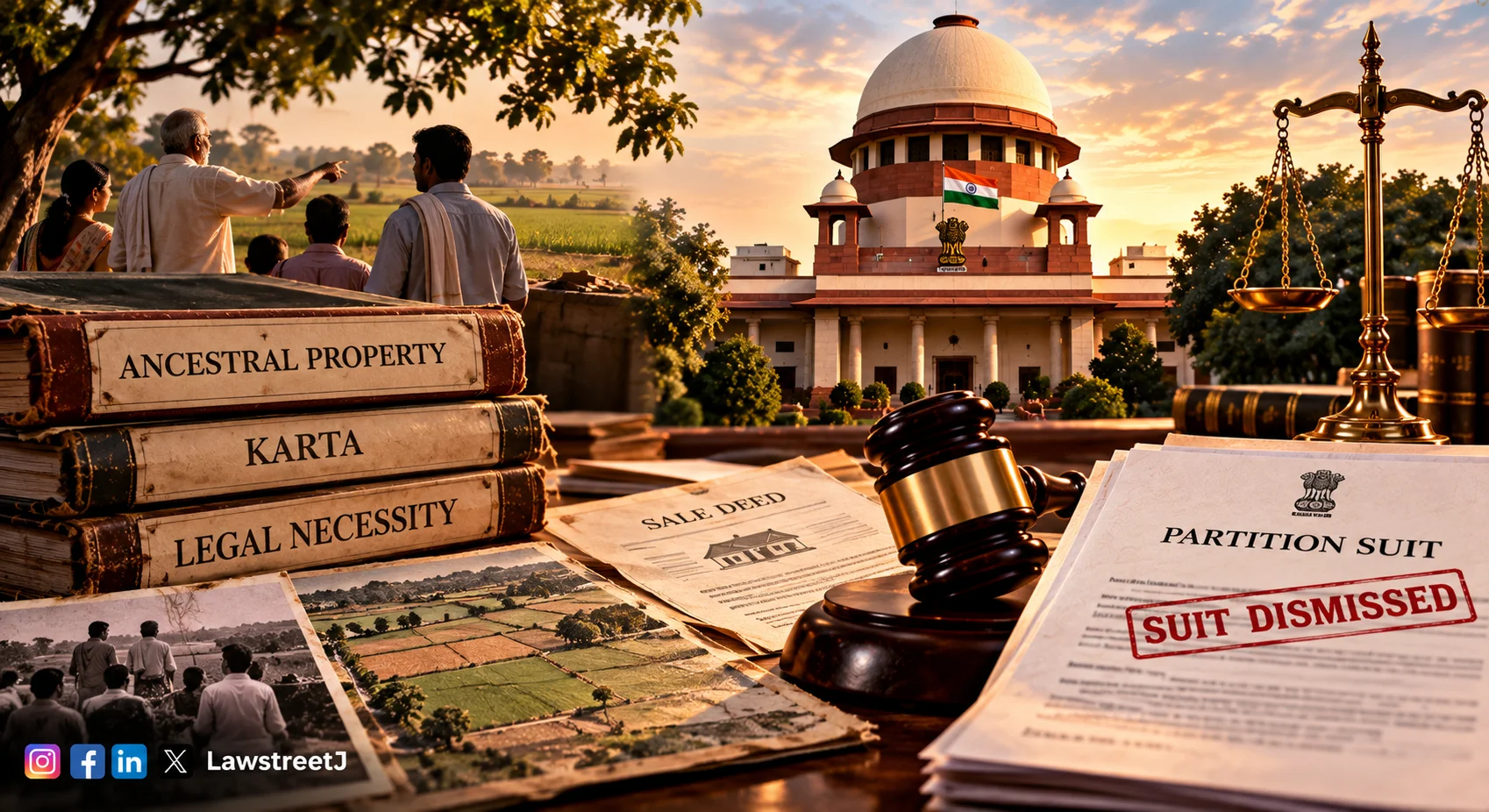
One Renukaiah had received six items of ancestral land in a family partition in 1983 and later settled in Bengaluru. In 1993, being unable to look after these lands and facing financial difficulty as recited in the sale deed, he sold two of them to one Ziauddin, who in turn sold them to one Uddegowda, from whom the appellant purchased the suit properties during the pendency of the litigation. After Renukaiah died in a road accident in 1995, his wife and two sons filed a suit for partition in respect of only these two properties, alleging the sale was made without legal necessity, while, six years into the litigation, admitting by way of replication that the remaining four properties had in the meantime been sold to Renukaiah's elder brother and were therefore not included in the suit.
The Trial Court dismissed the suit, holding that the sale proceeds had been utilised to discharge a loan raised for constructing the family's house in Bengaluru, and that legal necessity stood established. The High Court, in appeal, relied principally on the testimony of Renukaiah's son that his father had been addicted to gambling and drinking, and held on this basis that the alienation was not supported by bona fide necessity, thereby decreeing the suit for partition.
Examining the record, the Supreme Court found that the plaintiffs' assertion that the properties, sold for Rs.1.45 lakh, were actually worth Rs.5 lakh at the time remained wholly unsubstantiated, being based only on hearsay without any documentary or official evidence of the prevailing market rate. The son, who deposed as the principal witness, was found to have been a minor at the time of the sale with no personal knowledge of the family's financial circumstances, while his allegation regarding his father's vices went beyond the pleadings and stood uncorroborated. The Court noted that Renukaiah's wife, who alone would have had direct knowledge of both the family's financial affairs and her husband's alleged habits, was never examined as a witness by the plaintiffs.
The Court held: “Her non-examination, in the facts and circumstances of the present case, justified the drawing of an adverse inference against respondent Nos. 1-3/plaintiffs.”
The Court further held that the plaintiffs' selective institution of the suit in respect of only two of the six properties, coupled with their belated and unexplained disclosure that the remaining four had been sold to their uncle at whose instance the suit itself had reportedly been filed, and their omission to seek cancellation of the underlying sale deed, cumulatively cast serious doubt on the bona fides of their claim.
Holding that the Trial Court's finding of legal necessity rested on a plausible and reasoned appreciation of the evidence, and that the High Court was not justified in reversing it on the strength of an unsubstantiated allegation of personal vices, the Court set aside the High Court's judgment and restored the judgment and decree of the Trial Court dismissing the suit.
The appeal was accordingly allowed.
Case Title: H.G. Pattabi vs. K.R. Suraj and Others, Civil Appeal No(s). 659 of 2016